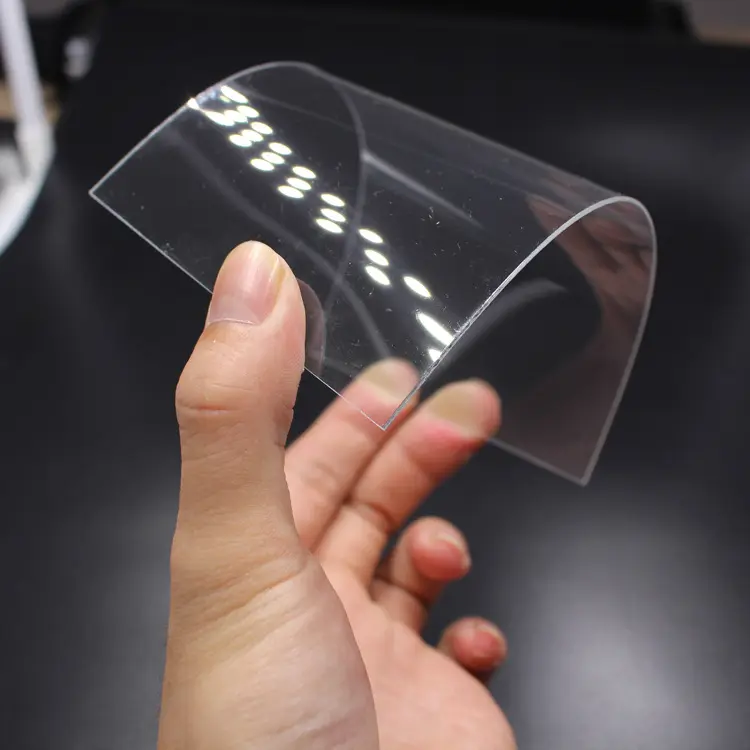
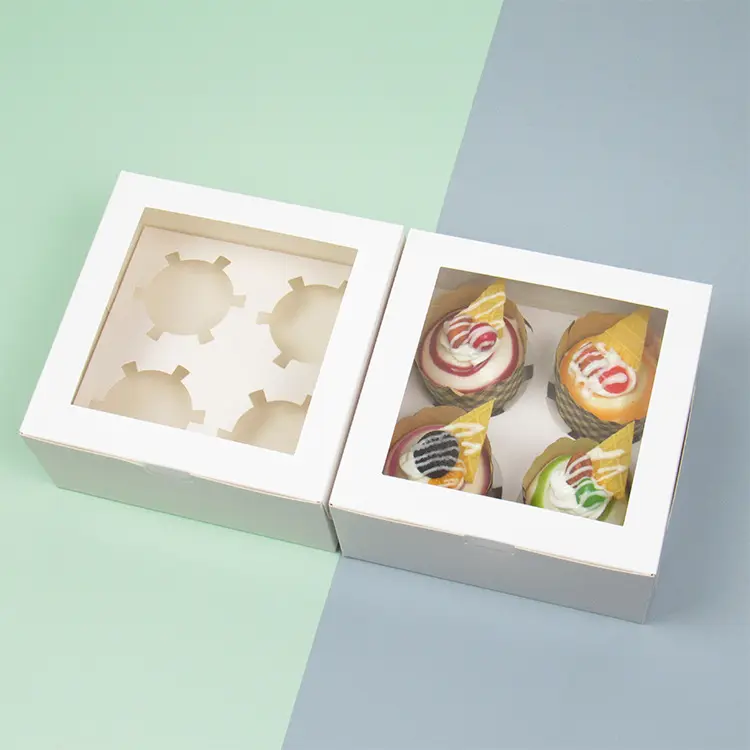
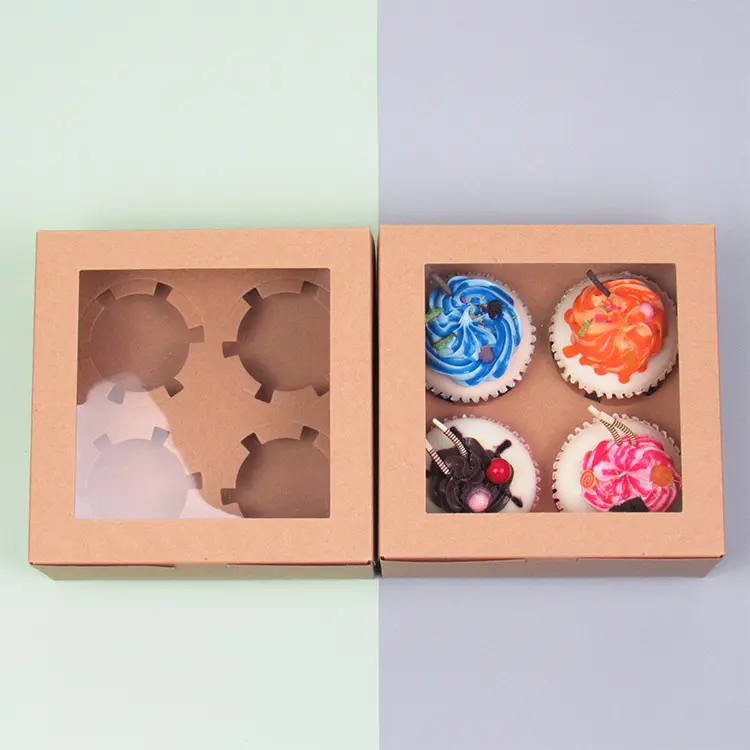
300 Micron Transparent PVC Sheet for Box Windows
HSQY manufactures 300 micron transparent rigid PVC sheets for clear windows in paperboard boxes, folding cartons, gift boxes, bakery packaging, confectionery boxes, cosmetic packaging and retail display cartons.
The standard 300 micron sheet provides higher stiffness than thinner packaging-window films while maintaining clear product visibility, easy cutting and compatibility with manual or automatic window-patching processes.
Standard sheet sizes include 700 × 1000mm, 750 × 1050mm, 915 × 1830mm and 1220 × 2440mm. Customized sheet dimensions and cut window pieces are available according to carton layout and converting requirements.
Available thicknesses include 125, 150, 180, 200, 220, 240, 250, 280 and 300 microns. The appropriate thickness depends on window dimensions, paperboard strength, packaged-product weight, required stiffness and window-patching equipment.
Natural clear and blue-tinted transparent grades can be produced with controlled thickness, smooth surfaces, reduced blocking and inspection for black spots, crystal points, scratches and other visible defects.
Printing, anti-static, anti-blocking, impact-modified and food-contact formulations are available as separate grades subject to the intended application and required test documents.
Explore the complete HSQY PVC sheet range for box windows, folding cartons, printing, binding and thermoforming applications.
Request PVC Sheet Pricing Request A4 Samples
Transparent PVC Box Window Sheet Images
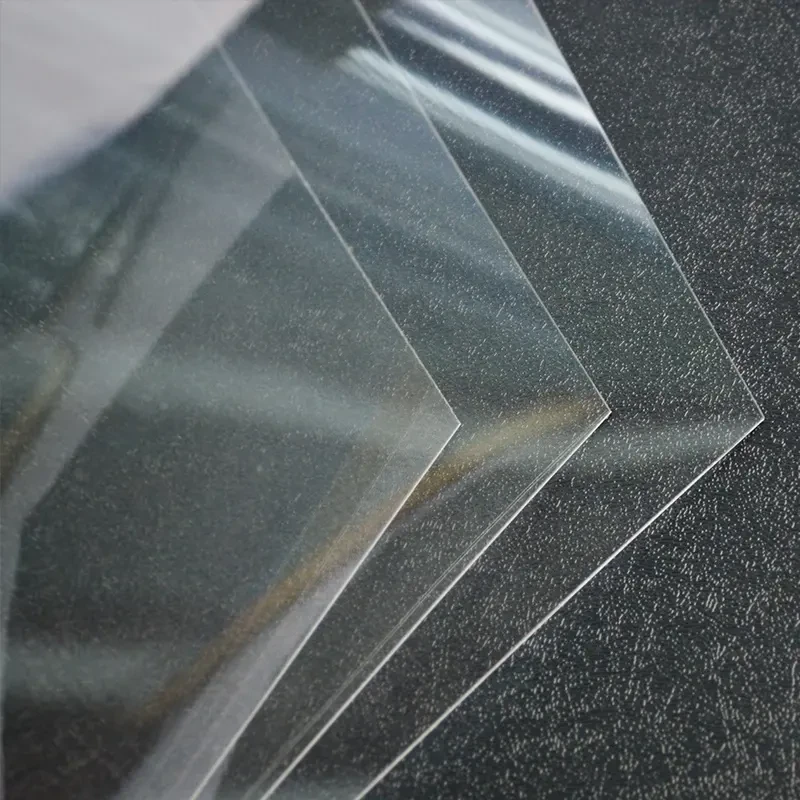
300 Micron Transparent PVC Sheet

Clear PVC Film for Packaging
What Is a PVC Box Window Sheet?
A PVC box window sheet is a thin transparent rigid plastic sheet attached to an opening in a paperboard or cardboard carton.
The transparent window allows consumers to view the packaged product while the paperboard structure provides branding, product information and mechanical support.
PVC is selected for many window-patching applications because it combines clarity, stiffness, dimensional stability, die-cutting performance and compatibility with suitable packaging adhesives.
The material can be supplied as full sheets, slit material or pre-cut window pieces according to the carton converter's production process.
Transparent PVC Sheet Specifications
| Property |
Available Specification |
| Product Name |
Transparent PVC Sheet for Box Windows |
| Alternative Names |
Clear PVC Window Film, Rigid PVC Packaging Sheet and Folding Carton Window Film |
| Material |
Rigid polyvinyl chloride / PVC |
| Featured Thickness |
300 microns / 0.30mm |
| Available Thicknesses |
125, 150, 180, 200, 220, 240, 250, 280 and 300 microns |
| Standard Sheet Sizes |
700 × 1000mm, 750 × 1050mm, 915 × 1830mm and 1220 × 2440mm |
| Customized Sizes |
Custom full sheets, slit widths and die-cut window pieces |
| Supply Format |
Flat sheets, cut pieces and selected roll specifications |
| Appearance |
Natural clear, blue-tinted transparent or customized appearance |
| Surface |
Smooth glossy surface or another confirmed finish |
| Hardness |
Rigid or semi-rigid according to formulation and thickness |
| Transparency |
High clarity subject to grade, thickness and test method |
| Standard Features |
Controlled thickness, smooth surface and inspection for visible defects |
| Optional Features |
Anti-static, anti-blocking, impact-modified, printable and food-contact grades |
| Converting Methods |
Guillotine cutting, slitting, die cutting, punching, scoring and window patching |
| Printing Methods |
Screen, UV offset, UV inkjet and other methods after adhesion testing |
| Main Applications |
Bakery boxes, confectionery cartons, cosmetics, gifts, toys, electronics and retail packaging |
| Reference MOQ |
Approximately 1000kg |
| Sample Availability |
Existing A4 sheets or small cut samples may be available, with freight collected |
| Payment Terms |
30% deposit and 70% balance before shipment, or agreed terms |
| Delivery Terms |
FOB, CIF, EXW and other agreed Incoterms |
| Reference Lead Time |
Approximately 5-20 days after specification, sample and deposit confirmation |
Final production specifications should identify thickness tolerance, sheet dimensions, diagonal tolerance, surface condition, color, transparency, packing quantity and intended converting process.
PVC Box Window Thickness Selection Guide
| Thickness |
General Characteristics |
Typical Packaging Use |
| 125-150 Microns |
Lightweight and flexible with lower material consumption |
Small windows, lightweight cartons, envelopes and simple display boxes |
| 180-200 Microns |
Balanced flexibility and stiffness |
Bakery boxes, confectionery cartons, cosmetic boxes and standard retail packaging |
| 220-250 Microns |
Higher body and improved resistance to buckling |
Larger carton windows, gift boxes and packaging requiring increased rigidity |
| 280-300 Microns |
Greater stiffness and shape retention |
Large display windows, premium cartons, heavier products and structural inserts |
These recommendations are general guidelines. The correct thickness should be verified using the actual box structure, window dimensions, paperboard grade, adhesive and packaged product.
Key Features of Clear PVC Window Film
Clear product visibility: Allows consumers to inspect the packaged product without opening the carton.
Controlled stiffness: Supports flat windows and helps reduce sagging in larger openings.
Smooth surface: Supports clean presentation, printing and adhesive bonding.
Thickness consistency: Helps improve die cutting, window patching and production stability.
Moisture resistance: PVC does not readily absorb ambient moisture under normal packaging conditions.
Easy converting: Can be cut, slit, punched, die cut, scored and bonded using suitable processes.
Custom dimensions: Full sheets and cut window pieces can be produced according to carton layouts.
Printable options: Suitable grades can support logos, decorative graphics and product information.
Optional anti-blocking: Helps improve sheet separation and automatic feeding.
Optional anti-static performance: Helps reduce dust attraction and feeding problems on packaging lines.
Cutting and Die-Cutting PVC Window Sheets
Transparent PVC sheets can be processed using guillotine cutting, rotary cutting, steel-rule die cutting, punching and CNC cutting.
Cutting tools should be sharp and correctly adjusted to reduce burrs, whitening, edge cracking and dimensional variation.
Confirm the required window dimensions and tolerances.
Allow sufficient overlap between the PVC window and carton opening.
Avoid sharp internal corners that can concentrate stress.
Confirm the material direction where repeated folding is required.
Inspect cut edges for burrs, chips and cracks.
Protect the sheet surface during stacking and transport.
Window Patching and Adhesive Compatibility
PVC window pieces can be attached to paperboard cartons using automatic window-patching machines or manual converting processes.
Adhesive performance depends on the PVC surface, paperboard coating, adhesive chemistry, application weight, drying conditions and package storage environment.
| Process Factor |
Why It Matters |
Recommended Check |
| Window Overlap |
Insufficient overlap can reduce bonding area |
Confirm overlap around the full carton opening |
| Adhesive Type |
Not every paper adhesive bonds effectively to PVC |
Use an adhesive approved for PVC-to-paperboard bonding |
| Surface Cleanliness |
Dust, oil or release substances can reduce adhesion |
Keep bonding surfaces clean and dry |
| Adhesive Application |
Uneven coating can create weak areas or visible marks |
Control adhesive weight and application pattern |
| Drying and Curing |
Premature handling can weaken the bond |
Follow the adhesive supplier's drying and curing conditions |
| Temperature and Humidity |
Storage conditions can change paperboard and adhesive performance |
Test finished cartons under expected distribution conditions |
Printing on Transparent PVC Packaging Sheets
Suitable PVC grades can be printed with logos, decorative patterns, instructions and promotional graphics.
Ink adhesion varies according to the PVC formulation, surface energy, printing method, curing conditions and ink chemistry.
Confirm whether printing is on the food-contact or non-food-contact side.
Test ink adhesion using the actual PVC grade.
Check curing, blocking and residual odor.
Evaluate abrasion and scratch resistance.
Confirm folding and die-cutting after printing.
Use suitable inks and migration controls for food-packaging projects.
Applications of Transparent PVC Box Window Sheets
Bakery boxes: Windows for cakes, cookies, pastries, bread and desserts.
Confectionery packaging: Chocolate, candy, gift sweets and seasonal products.
Cosmetic packaging: Skincare, makeup, perfume accessories and beauty products.
Gift boxes: Premium retail products, promotional products and seasonal gifts.
Toy packaging: Clear windows for toys, models, collectibles and children's products.
Electronics packaging: Windows for accessories, cables, small devices and components.
Apparel packaging: Boxes for socks, underwear, scarves, ties and accessories.
Stationery packaging: Pens, craft sets, notebooks and office products.
Household product packaging: Hardware, tools, kitchen accessories and small consumer goods.
PVC Window Sheet Application Images

PVC Window Sheet for Retail Packaging

Transparent PVC Sheet for Food Packaging Boxes
Food Packaging and Food-Contact Requirements
A PVC window in a bakery or confectionery box may be used with direct food contact, indirect food contact or no food contact, depending on the carton design.
Food-contact suitability cannot be established solely by using virgin PVC resin or by holding a general company certificate.
The complete PVC formulation, stabilizers, processing aids, pigments, printing inks, adhesives and intended conditions of use must be evaluated.
| Requirement |
Information to Confirm |
| Contact Type |
Direct food contact, indirect contact or separated by an inner bag or tray |
| Food Type |
Dry, aqueous, acidic, fatty, alcoholic or another food category |
| Contact Duration |
Maximum storage time before consumption |
| Temperature |
Packing, storage, transport and display temperature |
| Printing and Adhesive |
Ink location, adhesive type and possible migration pathways |
| Destination Market |
United States, European Union, United Kingdom or another market |
Relevant documents may include a declaration of compliance, formulation statement, migration report, restricted-substance report and supporting regulatory information for the approved grade.
PVC Recycling and Sustainability Considerations
Standard PVC should not be described as biodegradable unless the claim is supported by an applicable certification for a specifically modified material.
Rigid PVC can be recycled where suitable collection, identification, sorting and processing systems exist.
The recyclability of a finished window carton depends on whether the PVC can be separated from the paperboard and whether the local recycling system accepts PVC packaging.
Reduce unnecessary PVC window thickness while maintaining package performance.
Design the window so that consumers or recyclers can separate it from the carton where practical.
Avoid unnecessary coatings, labels and incompatible materials.
Confirm local recycling rules before publishing recyclability claims.
Evaluate PET, PP or cellulose-film alternatives when required by a customer's packaging strategy.
Recommended Quality-Control Tests
Material and formulation verification.
Thickness and thickness tolerance.
Sheet length, width and dimensional tolerance.
Diagonal and squareness measurement.
Transparency, haze and light transmission.
Color and yellowness inspection.
Gloss and surface appearance.
Black spots, crystal points, gels, bubbles and contamination.
Scratches, pressure marks, flow lines and waviness.
Sheet blocking and separation performance.
Static behavior for automatic feeding.
Tensile strength and elongation.
Impact and cold-crack performance where required.
Guillotine-cut and die-cut edge quality.
Punching, scoring and folding performance.
Printing-ink adhesion and abrasion resistance.
PVC-to-paperboard adhesive testing.
Window-patching machine feeding and registration.
Food-contact migration testing where applicable.
Packing, pallet and shipment inspection.
Custom Transparent PVC Sheet Options
125-300 micron packaging-window thicknesses.
300 micron high-stiffness box-window grade.
700 × 1000mm sheets.
750 × 1050mm sheets.
915 × 1830mm sheets.
1220 × 2440mm sheets.
Customized full-sheet dimensions.
Slit widths and die-cut window pieces.
Natural clear and blue-tinted transparent grades.
Printable and non-printable surfaces.
Anti-static and anti-blocking grades.
Impact-modified grades.
Food-contact grades subject to documentation.
Customized sheet count, bags, cartons and pallet packing.
Information Required for a PVC Sheet Quote
Required thickness and tolerance.
Required sheet length and width.
Full sheets, slit material or cut window pieces.
Window dimensions and carton drawing.
Paperboard type and carton construction.
Natural clear or blue-tinted appearance.
Required transparency and haze.
Printing, anti-static or anti-blocking requirements.
Cutting, die-cutting or window-patching process.
Adhesive type and bonding process.
Direct, indirect or no food-contact requirement.
Required compliance documents and destination market.
Sheets per bag and preferred pallet packing.
Initial order quantity and estimated annual demand.
Destination port and required delivery date.
Send Your PVC Window Sheet Requirements
Packaging and Delivery
Sample packaging: A4 sheets and small cut samples can be protected with PE film and kraft paper and packed in rigid cartons.
Sheet packaging: A reference package is approximately 30kg per bag using PE film and kraft paper, or another agreed packing method.
Sheet separation: Packing quantity and interleaving can be adjusted to reduce scratching, blocking and pressure marks.
Pallet packaging: Approximately 500-2000kg can be packed on a plywood or fumigation-free pallet according to sheet size and handling limits.
Container loading: A reference load is approximately 20 tons, subject to pallet dimensions, container type and legal weight limits.
Storage: Store the sheets indoors in clean, dry and ventilated conditions away from direct sunlight, excessive heat, heavy pressure and sharp objects.
Delivery terms: FOB, CIF, EXW and other agreed Incoterms are available.
Lead time: Standard production generally requires approximately 5-20 days after specifications, samples, deposit and packing are confirmed.
Certificates and Compliance Documents
Available documents may include technical data sheets, safety data sheets, restricted-substance reports, migration reports and quality-management certificates.
SGS should be described according to the exact test performed and should not be presented as a universal product or food-safety certification.
ISO 9001 relates to the manufacturer's quality-management system and does not independently establish clarity, food-contact compliance, recyclability or packaging performance.
ISO 9001:2008 is withdrawn. The current certificate version, holder, manufacturing address, certification scope and validity period should be verified before publication.
Why Choose HSQY as Your PVC Window Sheet Supplier?
Transparent rigid PVC sheets for packaging-box windows.
Standard gauges from 125 to 300 microns.
300 micron sheets for larger or higher-stiffness windows.
Sheet sizes up to 1220 × 2440mm.
Customized sheets, slit widths and cut window pieces.
Natural clear and blue-tinted transparent grades.
Inspection for thickness, clarity and surface defects.
Printable, anti-static and anti-blocking options.
A4 samples for cutting, bonding and window-patching tests.
Customized bags, cartons, labels and export pallets.
International B2B production and delivery support.
Before bulk production, HSQY recommends testing the selected PVC grade with the customer's actual paperboard, adhesive, cutting tools, window-patching machine and finished carton design.
Contact HSQY for Samples and Pricing
Frequently Asked Questions About PVC Box Window Sheets
What is a transparent PVC box window sheet?
It is a clear rigid PVC sheet attached behind an opening in a paperboard box to display and protect the packaged product.
What is 300 micron PVC sheet in millimeters?
Three hundred microns is equal to 0.30mm.
Is 300 micron PVC suitable for packaging windows?
Yes. It is suitable for larger windows and packaging that requires more stiffness than thinner 125-250 micron sheets.
Which PVC thickness should I use for a box window?
The correct thickness depends on the window size, paperboard strength, package shape, product weight and required stiffness.
What sheet sizes are available?
Standard sizes include 700 × 1000mm, 750 × 1050mm, 915 × 1830mm and 1220 × 2440mm.
Can HSQY produce customized PVC sheet sizes?
Yes. Customized full sheets, slit widths and pre-cut window pieces can be produced according to the carton design.
Is the PVC sheet completely rigid?
It is a rigid or semi-rigid packaging material, but thin sheets remain flexible enough for cutting, patching and handling.
Can transparent PVC sheet be die cut?
Yes. It can be guillotine cut, rotary cut, punched or steel-rule die cut using suitable tool clearance and sharp blades.
Can PVC window film run on automatic window-patching machines?
Yes, after the thickness, static level, sheet separation, cut dimensions and adhesive are matched to the machine.
Which adhesive should be used for PVC window sheets?
Use an adhesive specifically approved for bonding PVC to the selected coated or uncoated paperboard.
Can transparent PVC sheet be printed?
Yes. Suitable grades can be screen printed, UV offset printed or UV inkjet printed after ink-adhesion and curing tests.
Is anti-static PVC window film available?
Yes. Anti-static grades can be supplied according to the required resistance range, test conditions and effective duration.
What is anti-blocking PVC sheet?
Anti-blocking PVC is designed to reduce sticking between adjacent sheets and improve separation during manual or automatic feeding.
Is transparent PVC sheet suitable for bakery boxes?
Yes, provided the PVC formulation, contact type, food, temperature, duration, ink and adhesive meet the applicable food-packaging requirements.
Does SGS automatically prove that PVC is food safe?
No. The report must cover the exact PVC formulation, applicable regulation and intended conditions of use.
Does ISO 9001 prove food-contact compliance?
No. ISO 9001 is a quality-management-system standard and does not independently prove food-contact compliance.
Is PVC box window film biodegradable?
Standard PVC should not be described as biodegradable without certification for a specifically modified material.
Is rigid PVC packaging recyclable?
Rigid PVC can be recycled where suitable collection, sorting and processing systems exist, but acceptance varies by location.
What defects should be inspected on clear PVC sheets?
Inspect thickness, clarity, haze, color, black spots, crystal points, scratches, bubbles, flow lines, waviness and edge damage.
What is the minimum order quantity?
The reference MOQ is approximately 1000kg. Customized formulations, dimensions or packing may require a different quantity.
Are PVC window sheet samples available?
Existing A4 sheets or small cut samples may be available for clarity, cutting, adhesive and window-patching tests, with courier charges collected.
What is the production lead time?
Standard production generally requires approximately 5-20 days after specifications, samples, deposit and packing are confirmed.
What information is required for a quotation?
Provide the thickness, sheet size, window dimensions, transparency, surface, processing method, food-contact requirement, quantity, packing and destination.
Get a PVC Box Window Sheet Quote
About HSQY Plastic Group
HSQY Plastic Group supplies transparent PVC window sheets, PVC folding-box sheets, PVC printing sheets, PET sheets, PP sheets and customized packaging materials to international B2B customers.
HSQY supports carton manufacturers, window-patching companies, printing companies, packaging converters, importers and distributors with material selection, samples, customized production, quality inspection and export packing.
Request a Quote and Sample