PET/PE Laminated Thermoforming Film for Food Packaging
HSQY manufactures clear PET/PE laminated thermoforming film for food trays, form-fill-seal packaging, fresh meat, fish, seafood, cheese, delicatessen products and other chilled-food applications.
The film combines a rigid PET-based forming layer with a polyethylene sealing layer. The PET layer provides transparency, stiffness, impact resistance and thermoforming performance, while the PE layer provides heat-sealing capability, flexibility and moisture resistance.
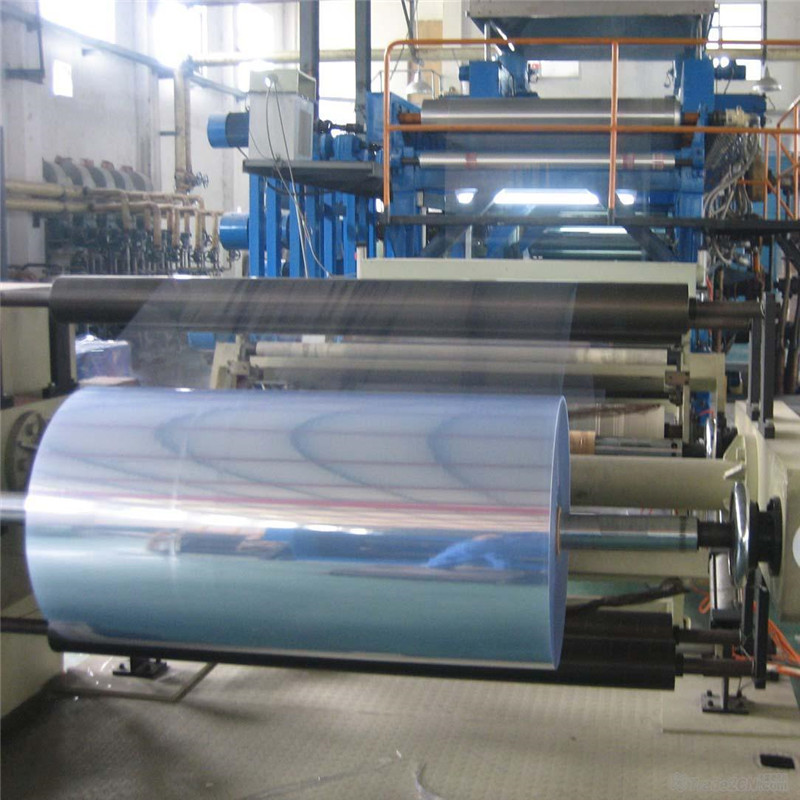
The featured PET/PE laminated film is available in a total thickness range of approximately 0.23mm to 0.28mm. It is supplied in clear roll form with customized width, roll diameter, roll weight and either a 3-inch or 6-inch core.
Standard PET/PE is primarily selected for reliable thermoforming and PE-compatible heat sealing. Products requiring a defined high oxygen barrier, modified-atmosphere shelf life or aroma protection may require a PET/EVOH/PE or another tested high-barrier structure.
HSQY can customize the PET thickness, PE sealing layer, film width, surface treatment, anti-block level, anti-fog performance, color, weld-seal performance and easy-peel behavior according to the customer's packaging equipment and product requirements.
Request PET/PE Film Pricing Request Thermoforming Samples
PET/PE Thermoforming Film Video
Watch the video below to learn more about HSQY PET/PE laminated films, roll production, thermoforming performance and food-packaging applications.
What Is PET/PE Laminated Thermoforming Film?
PET/PE laminated thermoforming film is a multilayer rigid or semi-rigid packaging material composed of a PET-based structural layer and a polyethylene heat-sealing layer.
The PET layer forms the body of a tray or bottom web. It provides clarity, dimensional support and sufficient rigidity for high-speed thermoforming and form-fill-seal production.
The PE layer is normally positioned on the food-contact and sealing side. It allows the formed package to seal with a compatible PE-sealant lidding film.
PET/PE laminated film is commonly used as the bottom web in horizontal form-fill-seal systems. The web is heated, formed into cavities, filled with the product and sealed with a top film during one continuous packaging process.
PET/PE should not be confused with flexible PET/PE pouch film or a thin PET/PE lidding film. This product is designed primarily as a rigid or semi-rigid forming web.
PET/PE Laminated Film Images
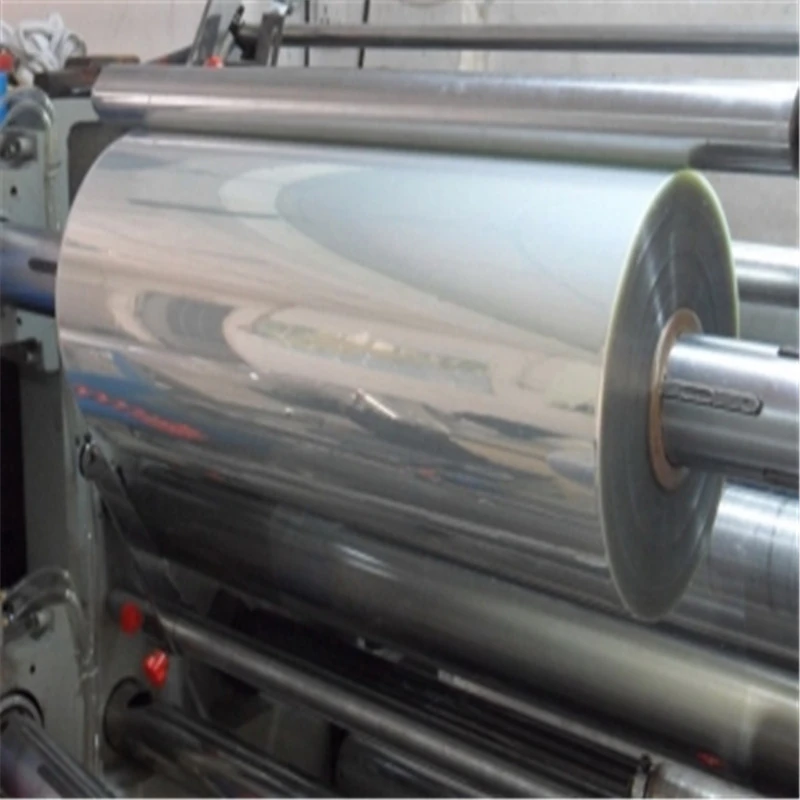
Clear PET/PE Laminated Film

PET/PE Thermoforming Roll
PET/PE Laminated Film Specifications
| Property |
Available Specification |
| Product Name |
PET/PE Laminated Thermoforming Film |
| Alternative Names |
APET/PE Film, PET/PE Bottom Web, Rigid Thermoforming Film and Heat-Sealable PET Sheet |
| Product Model |
PET/PE Laminated Film |
| Product Code |
PET/PE Laminated Film-02 |
| Standard Structure |
PET-based forming layer laminated with a PE heat-sealing layer |
| Optional Barrier Structure |
PET/EVOH/PE or another customized barrier structure subject to technical confirmation |
| Total Thickness |
Approximately 0.23-0.28mm |
| Individual Layer Thickness |
Customized according to forming, sealing and barrier requirements |
| Supply Form |
Master rolls and slit rolls |
| Core Size |
3-inch / 76mm or 6-inch / 152mm paper core |
| Roll Width |
Customized according to the thermoforming or FFS machine |
| Roll Diameter |
Customized according to machine capacity and handling requirements |
| Roll Weight |
Customized according to width, thickness, core and lifting limits |
| Color |
Clear standard; white, black or customized colors subject to specification |
| Transparency |
High-clarity transparent film subject to thickness and structure |
| Surface Options |
Glossy, anti-block, anti-fog, silicone-coated or customized |
| Sealing Options |
Weld seal, easy peel or customized controlled-peel performance |
| Processing Methods |
Thermoforming, vacuum forming, form-fill-seal, cutting, trimming and heat sealing |
| Main Applications |
Fresh meat, fish, seafood, cheese, delicatessen products, chilled food and food trays |
| Barrier Specification |
OTR and WVTR should be specified for the complete selected structure and test conditions |
| Food-Contact Option |
Available using application-specific materials and documentation for the target market |
| Pharmaceutical Option |
Requires a separately qualified formulation and application-specific documentation |
| Minimum Order Quantity |
Approximately 1,000kg |
| Samples |
A4 sheets or limited roll samples may be available for evaluation |
| Typical Lead Time |
Approximately 10-14 working days, subject to specification and quantity |
| Delivery Terms |
EXW, FOB, CNF, CIF, DDU and other agreed terms |
Final structure, total thickness, individual-layer thickness, width tolerance, roll diameter, winding direction, sealing side and food-contact requirements should be confirmed in an approved specification before production.
How the PET and PE Layers Work
PET Forming Layer
The PET-based layer provides transparency, rigidity, tensile strength, impact resistance and the structural body required to form a food tray or bottom web.
PE Sealing Layer
The polyethylene layer provides a heat-sealable surface and contributes flexibility, moisture resistance, hot tack and contamination tolerance.
Tie or Lamination Layer
A tie resin or adhesive may be used to create reliable interlayer adhesion between PET and PE. Bond strength should remain stable after forming, sealing, chilling and storage.
Optional EVOH Barrier Layer
EVOH may be added when the package requires lower oxygen transmission, improved aroma retention or more stable modified-atmosphere conditions.
EVOH performance varies according to its grade, thickness, humidity, temperature and protection from adjacent layers.
PET/PE vs. PET/EVOH/PE Thermoforming Film
| Comparison |
PET/PE |
PET/EVOH/PE |
| Main Structure |
PET forming layer and PE sealing layer |
PET forming layer, EVOH oxygen barrier and PE sealing layer |
| Oxygen Barrier |
Standard structure; measured OTR must be confirmed |
Lower oxygen transmission when properly designed and tested |
| Heat Sealing |
PE-compatible weld or peel seal |
PE-compatible weld or peel seal |
| Typical Shelf-Life Requirement |
General chilled-food and moderate-barrier applications |
Oxygen-sensitive and extended-shelf-life packaging |
| Typical Applications |
General trays, fresh food, cheese portions and FFS packs |
MAP meat, fish, cheese, delicatessen products and oxygen-sensitive food |
| Final Selection |
Select according to required OTR, WVTR, shelf life, gas mixture, storage temperature and package validation |
Key Features of PET/PE Thermoforming Film
High Transparency
Clear PET provides product visibility and allows consumers to inspect the appearance, color and quality of the packaged food.
Reliable Thermoforming
The rigid PET layer provides a stable forming body for shallow trays and packaging cavities when the heating profile and mold design are correctly matched.
PE-Compatible Sealing
The PE surface can create a strong weld seal or controlled easy-peel seal with a compatible PE-sealing lidding film.
Moisture Resistance
The PE layer contributes resistance to moisture-vapor transmission and helps protect the seal area in chilled-food applications.
Impact and Handling Performance
PET provides useful impact strength and dimensional stability during forming, filling, sealing, transport and retail handling.
Custom Functional Options
Anti-fog, anti-block, easy-peel, weld-seal, customized color and high oxygen-barrier options can be evaluated for different packaging systems.
Thermoforming and Form-Fill-Seal Processing
Film Heating
The PET/PE web is heated until it reaches the forming window required by the selected PET grade and total thickness.
One universal forming temperature should not be applied to every structure. Heater zoning, dwell time, web speed and ambient conditions can affect the correct setting.
Cavity Formation
Vacuum, compressed air or plug assistance draws the heated film into the mold to create the required tray or package cavity.
Product Filling
The formed cavities are filled with meat, fish, cheese or another product before sealing.
Vacuum or Gas Flushing
Depending on the package design, air may be removed or replaced with a controlled modified-atmosphere gas mixture before the lid is sealed.
Heat Sealing
A compatible top film is sealed to the PE surface using controlled temperature, pressure and dwell time.
Cutting and Separation
The sealed packs are cut and separated into the required retail or distribution format.
Forming Depth and Thickness Selection
| Selection Factor |
Effect on Film Selection |
| Cavity Depth |
Deeper cavities require greater material distribution and may need a thicker or more formable structure |
| Corner Radius |
Tight corners can produce excessive thinning, whitening or cracking |
| Product Weight |
Heavier products require stronger walls, flanges and impact resistance |
| Package Size |
Larger unsupported areas may require greater stiffness |
| Machine Speed |
High-speed lines require stable heating, forming, unwinding and indexing |
| Minimum Wall Thickness |
Finished corner and wall thickness should remain sufficient for transport and handling |
The featured 0.23-0.28mm film is generally positioned for relatively thin thermoforming applications. Deep trays, sharp corners or heavy products may require a different total thickness or layer structure.
Weld-Seal and Easy-Peel Options
| Seal Type |
Opening Performance |
Typical Applications |
| Weld Seal |
Strong permanent seal that normally requires cutting or tearing |
Leak-resistant packs, transport packs and tamper-evident packaging |
| Easy Peel |
Controlled peel force for convenient consumer opening |
Meat, fish, cheese, delicatessen and convenience-food packaging |
| Burst Peel |
Strong seal that opens at a defined force |
Packs requiring transport security and controlled opening |
| Resealable |
Allows repeated opening and closing when paired with a compatible lidding film |
Sliced meat, sliced cheese and multi-portion packaging |
Seal behavior depends on the bottom web, top film, sealing temperature, pressure, dwell time, flange cleanliness and product contamination.
Oxygen and Moisture Barrier Performance
Oxygen Transmission Rate
Oxygen transmission rate measures the amount of oxygen passing through a film under specified temperature and humidity conditions.
Lower OTR values indicate greater resistance to oxygen transmission. The result must be reported with the test method, film thickness, temperature and relative humidity.
Water-Vapor Transmission Rate
Water-vapor transmission rate measures the amount of moisture vapor passing through the film under defined test conditions.
The PE sealing layer contributes useful moisture resistance, but final WVTR depends on the entire structure and total thickness.
Package-Level Barrier
Shelf life depends on more than the bottom film. The lidding film, seal integrity, package geometry, gas mixture, product respiration and storage temperature all affect final performance.
Applications of PET/PE Food Packaging Film
Fresh Meat Packaging
PET/PE film can be thermoformed into clear bottom packs for beef, pork, poultry, sausages and processed meat.
The barrier structure should be selected according to meat color, required shelf life, gas mixture, drip level and storage conditions.
Fish and Seafood Packaging
Applications include fish fillets, smoked fish, shellfish and prepared seafood. Puncture resistance, liquid containment, odor barrier and low-temperature performance should be evaluated.
Cheese Packaging
PET/PE bottom webs can be used for cheese blocks, slices and portions. Barrier and peel performance should be matched to the cheese type and expected respiration.
Delicatessen Products
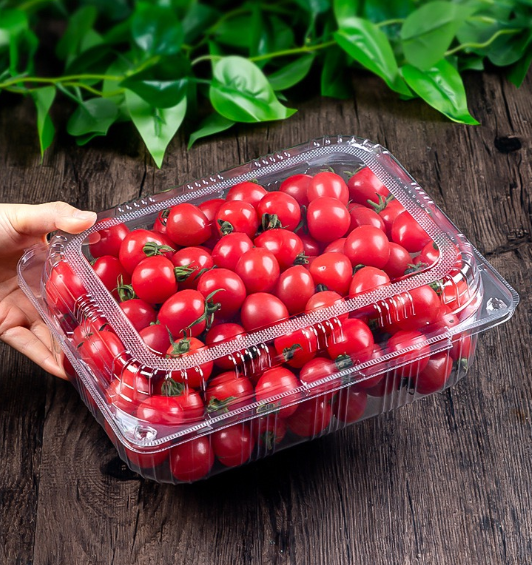
Clear thermoformed packs are used for sliced meats, antipasti, prepared salads and other chilled convenience products.
Fresh Produce
Fresh produce packaging requires consideration of respiration, condensation, ventilation and anti-fog performance. A maximum barrier is not always the correct solution.
Ready Meals
Standard PET/PE should not automatically be described as suitable for microwave reheating, hot filling, pasteurization, retort processing or conventional ovens.
These applications require a separately tested heat-resistant structure and validated complete package.
PET/PE Thermoforming Application Images

PET/PE Thermoformed Food Tray

Sealed Food Packaging Application
Modified-Atmosphere and Vacuum Packaging
Modified-Atmosphere Packaging
Modified-atmosphere packaging replaces the air in the package with a selected mixture of oxygen, carbon dioxide, nitrogen or other permitted gases.
The required barrier depends on the product, gas mixture, target shelf life and storage temperature. Oxygen-sensitive MAP applications commonly require an EVOH-containing structure.
Vacuum Packaging
Vacuum packaging removes air before sealing. The film must provide reliable seal strength, puncture resistance and sufficient forming performance.
Highly irregular, sharp or bone-in products may require a more flexible PA-based forming film rather than a thin rigid PET/PE web.
Vacuum-Skin Packaging
Vacuum-skin packaging requires a suitable rigid bottom web and a dedicated flexible skin film. The skin film, bottom-web sealing layer and heating system must be validated as one package.
Anti-Fog, Anti-Block and Surface Options
Anti-Fog Treatment
Anti-fog treatment helps reduce the formation of small water droplets that obstruct the view of chilled food.
Performance depends on product moisture, package temperature, storage humidity and the selected treatment.
Anti-Block Treatment
Anti-block additives improve roll unwinding and reduce the tendency of adjacent film layers to stick together.
The anti-block level should be balanced against transparency, gloss, seal integrity and surface appearance.
Silicone-Coated Surface
Silicone treatment can improve mold release, tray denesting and surface handling. Compatibility with printing, lamination and sealing must be confirmed.
Colored Film
Clear is the standard appearance. White, black and customized colors can be evaluated for branding, light protection or product differentiation.
Food-Contact and Regulatory Requirements
PET/PE film should only be described as food-contact compliant when the exact PET layer, PE sealant, tie layer, adhesive, pigment and recycled-content structure are supported by appropriate documentation.
Buyers should specify the destination market, food type, direct-contact side, contact temperature, contact duration and filling or storage conditions.
Freezing, hot filling, microwave reheating, pasteurization, retort processing and sterilization require separate material and package validation.
ISO 9001 and ISO 14001 are management-system standards. They do not by themselves establish food-contact or pharmaceutical compliance for a specific film.
RoHS documentation addresses restricted substances for relevant electrical and electronic products and should not be used alone as proof of food-contact safety.
Pharmaceutical and Medical Packaging
Standard food-packaging PET/PE film should not automatically be used for pharmaceutical or medical-device packaging.
These applications may require controlled raw materials, validated cleanliness, traceability, sterilization compatibility, barrier testing and application-specific regulatory documentation.
The packaged product, sterilization process, required shelf life and applicable standard should be provided before selecting a film.
Recyclability and Sustainability
PET/PE is a multi-material laminate. Its actual recyclability depends on the proportion of each polymer, adhesive, tie layers, coatings, pigments, labels and the recycling infrastructure in the destination market.
The use of individually recyclable PET and PE polymers does not automatically make the finished multilayer package recyclable in practice.
Recycled PET may be incorporated into selected structures when permitted by the application and supported by an appropriate functional-barrier design and documentation.
Sustainability improvements may include reducing total film thickness, increasing approved recycled content, reducing pigments and selecting a PET-dominant or mono-material alternative where technically practical.
Claims such as recyclable, eco-friendly or sustainable should be supported by the exact film structure, packaging format, destination market and applicable assessment method.
Recommended Quality-Control Tests
Total thickness and individual-layer thickness.
Roll width, diameter, weight, core and winding direction.
Transparency, haze, gloss and color consistency.
Surface scratches, gels, black spots and visible impurities.
Roll flatness, edge alignment and unwinding performance.
Interlayer adhesion and resistance to delamination.
Thermoforming temperature window and cavity definition.
Wall-thickness distribution and minimum corner thickness.
Flange flatness, shrinkage and dimensional stability.
Seal-initiation temperature and hot-tack performance.
Weld or easy-peel seal strength.
Leak, burst, vacuum-decay or dye-penetration testing.
OTR and WVTR under specified test conditions.
Impact, puncture and low-temperature performance.
Anti-fog, anti-block and machine-running performance.
Product shelf-life and distribution trials.
Custom PET/PE Film Options
Standard PET/PE thermoforming film.
PET/EVOH/PE high oxygen-barrier film.
Customized total thickness and layer ratio.
Total thickness of approximately 0.23-0.28mm for the featured grade.
Customized roll width, diameter and roll weight.
3-inch or 6-inch paper core.
Weld-seal and easy-peel sealing surfaces.
Clear, white, black or customized colors.
Anti-fog, anti-block and silicone-coated surfaces.
Virgin PET or selected recycled-PET structures.
Food-contact options subject to target-market requirements.
A4 sheets or limited roll samples for machine testing.
Information Required for a Quotation
Packaged product and required shelf life.
PET/PE, PET/EVOH/PE or current material structure.
Required total thickness and layer composition.
Roll width, diameter, weight and core size.
Thermoforming-machine brand and model.
Cavity length, width, depth and corner radius.
Minimum required wall and corner thickness.
Weld-seal, easy-peel or resealable requirement.
Top-film structure and sealing-layer material.
Sealing temperature, pressure and dwell time.
Required OTR and WVTR with test conditions.
Vacuum, MAP or normal-atmosphere packaging.
Anti-fog, anti-block or color requirements.
Destination market and food-contact documents.
Trial quantity, first order and annual volume.
Destination port and requested delivery date.
Send Your PET/PE Film Requirements
Packaging and Delivery
Sample packing: A4-size film samples can be sealed in a PP bag and packed in a protective carton.
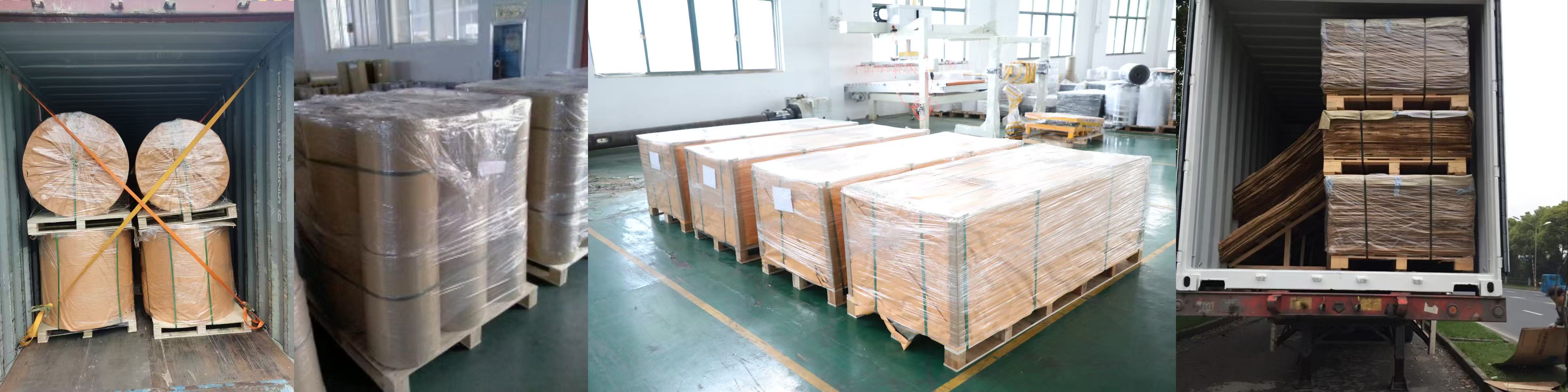
Roll packing: Rolls can be wrapped with protective film, kraft paper or moisture-resistant packaging and secured on export pallets.
Core protection: Roll ends and paper cores can be protected to reduce damage during handling and transportation.
Sheet packing: Where cut sheets are supplied, a reference package weight is approximately 30kg or can be customized.
Pallet packing: Approximately 500-2,000kg can be packed on a plywood pallet according to roll or sheet dimensions.
Container loading: Reference loading is approximately 20 tons, subject to pallet configuration and legal weight limits.
Delivery terms: EXW, FOB, CNF, CIF, DDU and other agreed terms are available.
Lead time: Standard production normally takes approximately 10-14 working days after specification, quantity, packaging and payment confirmation.

PET/PE Laminated Film Technical Data
Download the available technical data sheet for reference. Confirm that the document applies to the exact structure, total thickness, PET grade, PE sealant and production batch being ordered.
![PET PE laminated film data sheet PDF icon]() Download PET/PE Laminated Film Data Sheet
Download PET/PE Laminated Film Data Sheet
Certificates and Quality Documents
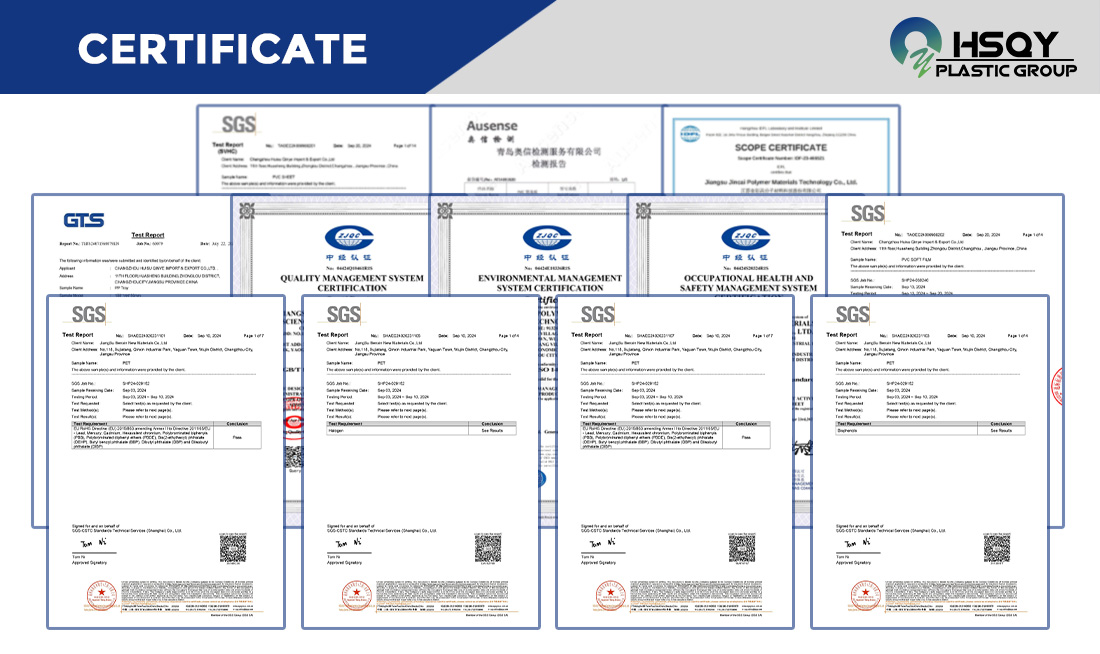
HSQY can provide available product test reports, restricted-substance documents and management-system certificates for review.
Buyers should confirm that each document corresponds to the exact PET layer, PE sealant, adhesive, color, total thickness and intended application.
A general certificate should not be treated as proof that every PET/PE film meets all food-contact, pharmaceutical, medical, freezer, microwave or high-temperature requirements.

Why Choose HSQY as Your PET/PE Film Supplier?
HSQY Plastic Group supplies PET/PE laminated films, PET/EVOH/PE barrier films, thermoforming sheets, lidding films and food-packaging trays to food manufacturers, packaging converters and distributors.
PET/PE and PET/EVOH/PE structure development.
Featured 0.23-0.28mm thermoforming film.
Customized PET and PE layer thicknesses.
Custom roll width, diameter, weight and core.
Weld-seal and easy-peel options.
Anti-fog and anti-block surfaces.
Samples for forming and sealing trials.
Food-contact documentation subject to specification.
Export packaging and international-delivery support.
Before bulk production, HSQY recommends validating the film using the customer's actual product, thermoforming machine, mold, lidding film, gas mixture and sealing parameters.
Explore more PET/PE lamination film products or review the PET thermoforming film range.
Contact HSQY for Samples and Pricing
HSQY Global Exhibitions
HSQY presents PET/PE thermoforming films, barrier laminates, lidding films and food-packaging products at international plastics and packaging exhibitions.

Frequently Asked Questions About PET/PE Thermoforming Film
What is PET/PE laminated thermoforming film?
It is a multilayer film that combines a rigid PET-based forming layer with a PE heat-sealing layer for food trays and form-fill-seal packaging.
What is the thickness of this PET/PE film?
The featured film has a total thickness of approximately 0.23-0.28mm. Other structures may require different thicknesses.
What does the PET layer do?
PET provides transparency, rigidity, impact resistance and the structural body required for thermoforming.
What does the PE layer do?
PE provides heat-sealing capability, flexibility, moisture resistance and the required weld or peel behavior.
Is standard PET/PE film a high oxygen-barrier material?
Standard PET/PE should not automatically be classified as an ultra-high oxygen-barrier film. Its measured OTR should be compared with the required shelf-life specification.
What is the difference between PET/PE and PET/EVOH/PE?
PET/EVOH/PE includes an EVOH layer that provides greater resistance to oxygen, aromas and gases than a standard PET/PE structure.
Is PET/PE suitable for thermoforming?
Yes. Suitable PET/PE grades can be thermoformed into trays and bottom webs using a validated heating profile and mold design.
Can PET/PE film run on form-fill-seal equipment?
Yes. Roll width, core, diameter, forming temperature, indexing and sealing conditions must be matched to the FFS machine.
Can PET/PE film be used for fresh meat packaging?
Yes. It can be used for fresh and processed meat when the barrier level, seal system, gas mixture and storage conditions meet the package requirements.
Can PET/PE film be used for fish and seafood?
Yes. Puncture resistance, liquid containment, odor barrier and low-temperature impact performance should be tested for the specific seafood product.
Can PET/PE film be used for cheese packaging?
Yes. It can be used for sliced, block and portioned cheese when the barrier and peel properties are matched to the cheese type.
Can PET/PE film be used for modified-atmosphere packaging?
It may be used when its measured barrier performance meets the MAP specification. Oxygen-sensitive applications may require PET/EVOH/PE.
What is OTR?
OTR is oxygen transmission rate. It measures how much oxygen passes through a film under specified temperature and humidity conditions.
What is WVTR?
WVTR is water-vapor transmission rate. It measures moisture-vapor transmission under defined test conditions.
What is the difference between weld seal and easy peel?
Weld seal provides a strong permanent bond. Easy peel opens at a controlled force for improved consumer convenience.
Can anti-fog treatment be added?
Yes. Anti-fog treatment can be added for chilled and moisture-generating products where condensation reduces visibility.
Is PET/PE film suitable for freezing?
Freezer suitability depends on the PET formulation, impact performance, PE layer, seal strength and storage temperature. Low-temperature testing is required.
Is PET/PE film microwave or oven safe?
Standard PET/PE should not automatically be used in a microwave, conventional oven, retort process or high-temperature filling application. A validated heat-resistant structure is required.
Is PET/PE laminated film recyclable?
PET/PE is a multi-material laminate. Actual recyclability depends on the layer ratio, adhesives, additives and local recycling infrastructure.
Can recycled PET be used?
Selected structures may include recycled PET when permitted by the food-contact application, functional-barrier design and target-market requirements.
Is the film safe for food packaging?
Food-contact suitability must be confirmed for the exact PET, PE, adhesive and additive structure under the intended food type, temperature and destination-market regulations.
Is PET/PE film suitable for pharmaceutical packaging?
Pharmaceutical packaging requires a separately qualified grade with appropriate production controls, testing and regulatory documentation.
What core sizes are available?
The film can be supplied on a 3-inch or 6-inch paper core. Core size should be matched to the customer's machine and roll weight.
Can the roll width and diameter be customized?
Yes. Roll width, diameter, weight, core and winding direction can be customized according to the packaging line.
What is the minimum order quantity?
The standard MOQ is approximately 1,000kg. Special structures, colors and coatings may require a different minimum quantity.
Are samples available?
A4 sheets or limited roll samples may be available for checking clarity, thermoforming, sealing and machine compatibility. Courier freight is normally paid by the buyer.
What is the production lead time?
Standard production normally takes approximately 10-14 working days after the specification, quantity, packaging and payment are confirmed.
What information is needed for a quotation?
Provide the packaged product, shelf life, film structure, thickness, roll width, forming depth, barrier requirement, seal type, lidding film, quantity and destination.
Get a Custom PET/PE Film Quote
About HSQY Plastic Group
Changzhou Huisu Qinye Plastic Group Co., Ltd. supplies PET/PE laminated films, high-barrier thermoforming films, PET sheets, lidding films and food-packaging trays to international B2B customers.
HSQY supports food manufacturers, thermoforming companies, packaging converters, importers and distributors with material selection, sample testing, customized production, technical documentation and export delivery.
Request a Quote and Sample