Frosted Polycarbonate Sheet for Privacy & Interior Panels
HSQY frosted polycarbonate sheet combines a matte or frosted surface with the toughness of solid polycarbonate, providing reduced direct visibility while allowing light to pass through the panel.
Available in 1.5-12mm thicknesses and widths from 1220mm to 2100mm, the sheet is suitable for privacy partitions, bathroom screens, interior decoration, decorative panels, ceilings, sunshades and other applications requiring a translucent or visually obscured surface.
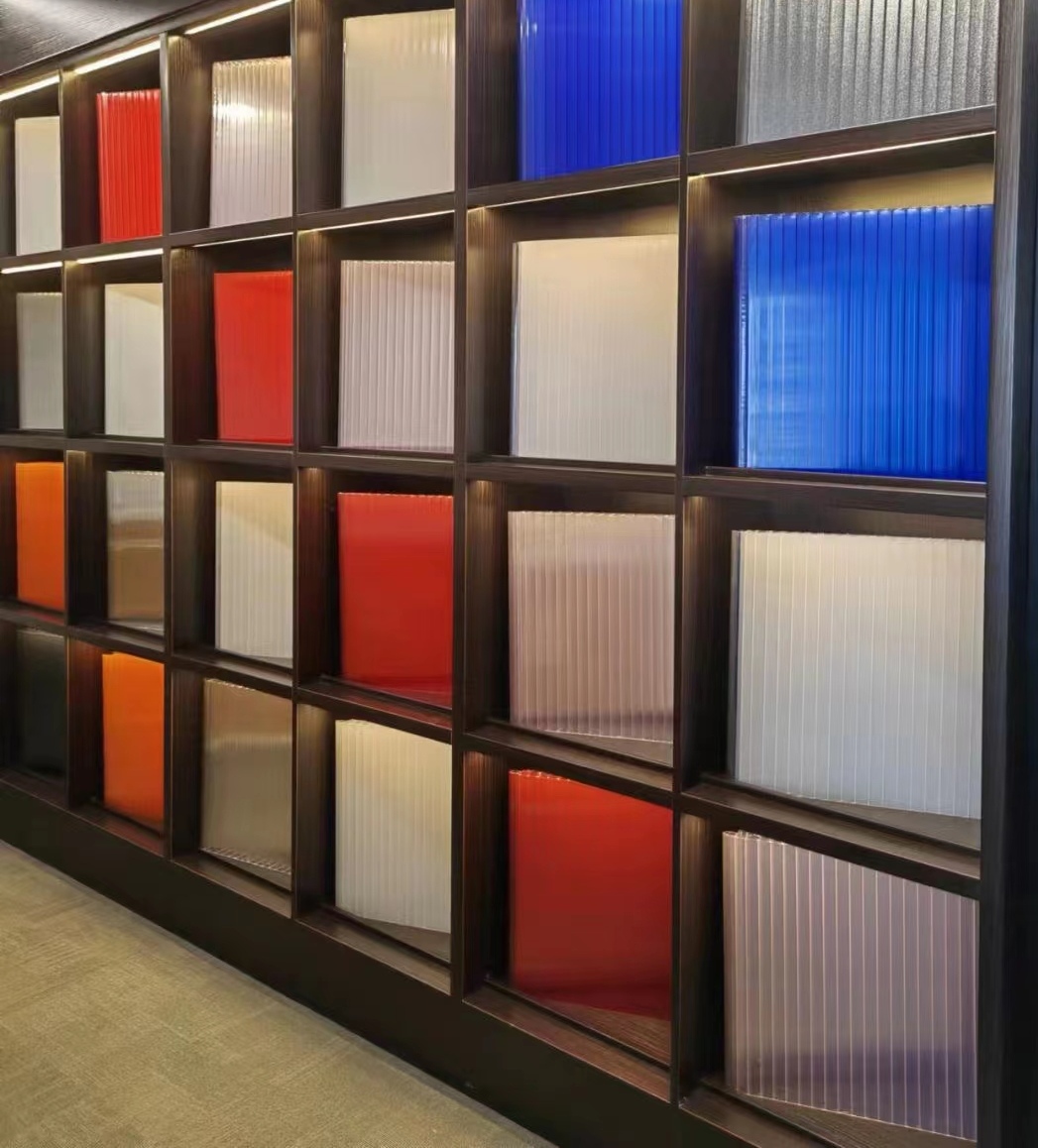
Clear, smoky, gray, blue, green, brown and customized colors are listed in the current HSQY range. The final level of privacy, light transmission and visual appearance depends on color, thickness and the selected frosted surface.
![HSQY frosted polycarbonate sheet with matte privacy surface]()
Frosted Polycarbonate Sheet
![Matte frosted polycarbonate privacy panel]()
Matte Polycarbonate Privacy Panel
Frosted Polycarbonate Sheet Specifications
| Property |
Specification |
| Product Item |
Frosted Polycarbonate Sheet |
| Material |
Polycarbonate (PC) |
| Surface |
Frosted / Matte |
| Colors |
Clear, Smoky, Gray, Blue, Green, Brown, Custom |
| Width |
1220-2100mm |
| Thickness |
1.5-12mm, Custom |
| Length |
Current source lists 600mm for thickness ≥4.5mm; confirm the required sheet length before ordering |
| Published Light Transmission |
Current product information states up to / above 85%; exact value should be confirmed by color, thickness and surface |
| Typical Applications |
Privacy Partitions, Bathrooms, Screens, Interior Decoration, Ceilings, Sunshades, Decorative Panels and Project-Specific Touchscreen Applications |
Specification Note: The current source lists “600mm” for length when thickness is ≥4.5mm but does not provide a complete length range. Confirm standard sheet length, cut-to-size capability and dimensional tolerances for the required thickness before ordering.
What Is Frosted Polycarbonate Sheet?
Frosted polycarbonate is a solid PC sheet with a matte or frosted surface designed to reduce direct visual clarity through the panel while maintaining useful light transmission.
Unlike conventional clear polycarbonate, which is selected when visibility through the sheet is important, a frosted surface is used when privacy, reduced glare or a decorative translucent appearance is preferred.
The final result depends on the sheet color, thickness, texture and lighting conditions on each side of the panel. Buyers should evaluate samples where a specific privacy level is required.
Privacy Without Completely Blocking Light
One of the main reasons to specify a frosted polycarbonate panel is to reduce direct visibility while retaining transmitted light.
This makes frosted PC useful in spaces where an opaque panel would block too much light but a clear transparent sheet would provide insufficient privacy.
For projects with a defined privacy requirement, specify whether silhouettes, colors or object details may remain visible and evaluate the panel under the intended front and back lighting conditions.
Matte Surface for Reduced Glare
A matte surface reduces sharp surface reflections compared with a smooth glossy panel and can provide a softer visual appearance in interior spaces.
This characteristic is useful for partitions, decorative glazing, signage and other applications where strong reflections from windows or artificial lighting may be undesirable.
Light Transmission & Privacy Balance
The original HSQY product information states that light transmission can exceed 85%. This should be treated as a product-range reference rather than a universal value for every color and thickness.
Clear frosted material, smoky gray, blue, green and brown sheets will not necessarily provide identical optical performance. Increasing thickness or selecting a darker tint may also change the amount of transmitted light.
Buyers with architectural daylight or illumination requirements should request light-transmission data for the exact color, thickness and surface finish included in the order.
Frosted Polycarbonate for Office Partitions
Frosted PC can be used in office dividers, meeting-room partitions, privacy panels and decorative interior screens where daylight needs to pass between spaces without providing unrestricted visibility.
Its solid polycarbonate construction also makes it relevant where a tougher plastic panel is preferred to conventional decorative glazing materials.
Frosted Polycarbonate for Bathrooms & Privacy Screens
Bathroom panels and privacy screens are listed applications in the existing HSQY product information.
For wet-area projects, the entire installation should consider edge sealing, fixing method, cleaning chemicals and expansion allowances in addition to the sheet itself.
![Frosted polycarbonate privacy partition application]()
Privacy Partition Application
![Frosted polycarbonate decorative interior panel application]()
Decorative Interior Panel Application
Frosted Polycarbonate for Interior Decoration
The frosted surface can be used as a decorative architectural element in partitions, wall panels, ceiling features, screens and other interior applications.
Clear and tinted color options allow designers and fabricators to combine privacy with different visual effects. Physical samples are recommended where exact color or translucency is important.
Frosted Polycarbonate for Ceilings & Screens
Ceilings and screens are included among the current HSQY applications. A frosted panel can provide transmitted light together with a visually softened surface.
Structural support spacing, fastening, thermal expansion and applicable building requirements should be determined according to panel dimensions, thickness and installation conditions.
Frosted Polycarbonate for Sunshades & Outdoor Panels
The original HSQY page includes sunshades among the applications and states that the sheet surface receives UV-resistant weathering treatment.
Outdoor projects should nevertheless confirm whether the selected grade has UV protection on one side or both sides, which side must face outdoors, the relevant weathering data and any applicable warranty.
Color Options for Frosted Polycarbonate
| Color |
Selection Consideration |
| Clear Frosted |
Useful where higher light transmission and visual privacy are both required |
| Smoky / Gray |
Provides a darker decorative appearance and may reduce transmitted light compared with clear grades |
| Blue / Green |
Decorative colored panels for architectural and interior design applications |
| Brown |
Suitable where a warmer tinted appearance is required |
| Custom Color |
Provide target color reference, required translucency and order quantity for confirmation |
1.5-12mm Thickness Range
The current HSQY specification lists thicknesses from 1.5mm to 12mm, with customized thicknesses also referenced.
Thin sheets may be selected where lower panel weight and easier fabrication are priorities, while thicker sheets may be appropriate where greater panel rigidity is required.
Final thickness selection should consider panel dimensions, support spacing, mounting method, expected load and the required level of stiffness.
Widths from 1220mm to 2100mm
Published widths range from 1220mm to 2100mm, allowing buyers to select wider panels for partitions, decorative installations and other fabricated applications.
The current source does not provide a complete standard length table. Confirm the required width, length, thickness and cutting tolerance when requesting a quotation.
Published UV & Weathering Reference
The existing HSQY product information states that the sheet surface receives a UV-resistant weathering treatment intended to reduce yellowing caused by UV exposure.
Because the page does not state UV-layer thickness, one-side or two-side protection, test method or warranty period, outdoor buyers should request the applicable grade documentation before specifying the material for long-term exterior exposure.
Published Impact Resistance Reference
The current HSQY source states that impact strength is approximately 10 times that of ordinary glass, 3-5 times that of ordinary corrugated sheet and 2 times that of tempered glass.
These comparison values are retained from the current product information, but the page does not identify material thicknesses, test standards or impact-test conditions. Buyers with impact requirements should request test data for the exact grade and thickness.
Published Flame-Retardant Reference
The original product information references “Class I” flame-retardant performance and states that there are no fire drops or toxic gas.
No specific test standard, sample thickness or certification number is provided for this statement. Projects requiring UL 94, EN 13501, ASTM, GB or another defined fire classification should state the exact standard and required rating for confirmation.
Published Temperature Reference
The existing HSQY product description states that the product does not deform within a range of approximately -40℃ to +120℃.
Continuous service temperature, short-term temperature exposure and heat-deflection temperature are different engineering parameters. Buyers with temperature-critical applications should request grade-specific technical data rather than relying only on the published range.
Lightweight & Fabrication
The original product information describes the sheet as lightweight and suitable for carrying, drilling, construction and processing.
For cutting, drilling or forming, use tooling and fabrication procedures suitable for polycarbonate. Fabricators should account for thermal expansion and avoid excessive clamping stress around drilled holes and fixed edges.
Surface Scratch & Abrasion Considerations
The original HSQY description references scratch resistance for office, home and printed-product applications.
The current source does not publish a pencil-hardness, Taber abrasion or hard-coating specification. A frosted finish should therefore not automatically be treated as an abrasion-resistant hard-coated polycarbonate grade.
Applications exposed to frequent wiping, public contact or abrasive cleaning should specify the required scratch or abrasion performance separately.
Frosted vs. Clear Polycarbonate Sheet
| Selection Factor |
Frosted Polycarbonate |
Clear Polycarbonate |
| Visibility |
Designed to obscure direct vision |
Designed for higher visual clarity |
| Surface Appearance |
Matte / frosted |
Smooth / transparent |
| Glare |
Reduced sharp reflections |
More reflective glossy appearance |
| Typical Applications |
Privacy screens, partitions, decorative panels and interior features |
Transparent glazing, guards, windows and visibility panels |
Frosted Polycarbonate vs. LED Diffuser Sheet
Frosted polycarbonate and LED diffuser sheet can both scatter light, but they are selected for different primary functions.
| Feature |
Frosted PC Sheet |
LED Diffuser PC Sheet |
| Primary Purpose |
Privacy, reduced glare and decorative translucency |
Optical light diffusion and LED hotspot reduction |
| Typical Selection Data |
Privacy level, color, transmission, surface and sheet dimensions |
Transmission, haze, LED hiding, optical distance and lighting geometry |
| Main Applications |
Partitions, bathrooms, screens and decorative panels |
LED panel lights, lighting lenses and illuminated light boxes |
How to Select Frosted Polycarbonate Sheet
| Parameter |
What to Confirm |
| Thickness |
1.5-12mm according to panel size, rigidity and fabrication requirement |
| Width & Length |
Required finished dimensions and cutting tolerance |
| Color |
Clear, smoky, gray, blue, green, brown or custom |
| Privacy Level |
Required level of visual obscuration under actual lighting conditions |
| Light Transmission |
Request exact value for selected color and thickness when daylight performance matters |
| Indoor / Outdoor |
Specify UV and weathering requirements for exterior applications |
| Fire Requirement |
State required fire test standard, rating and thickness |
| Abrasion Requirement |
Specify hard-coat or abrasion-test requirement if frequent cleaning or contact is expected |
| Fabrication |
Cutting, drilling, bending, thermoforming or printing requirements |
What Information Should You Provide for a Quote?
Required thickness
Required width and length
Clear frosted or required color
Required privacy level or sample reference
Indoor or outdoor application
Partition, bathroom, screen, ceiling, signage or other application
Required light-transmission value if applicable
Required UV/weathering performance
Required fire classification if applicable
Cutting, drilling, printing or thermoforming requirements
Order quantity and expected annual demand
Destination country and port
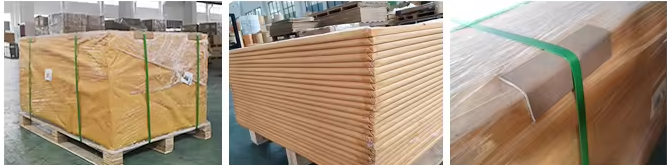
Packaging and Delivery for Frosted Polycarbonate Sheet
Sample Packaging: Sheets in PE bag with kraft paper, packed in cartons.
Sheet Packaging: 30kg per bag or as per client requirements.
Pallet Packaging: 500-2000kg per plywood pallet.
Container Loading: 20 tons, optimized for 20ft/40ft containers.
Delivery Terms: FOB, CIF, EXW.
Lead Time: 7-15 days after deposit, depending on order volume.
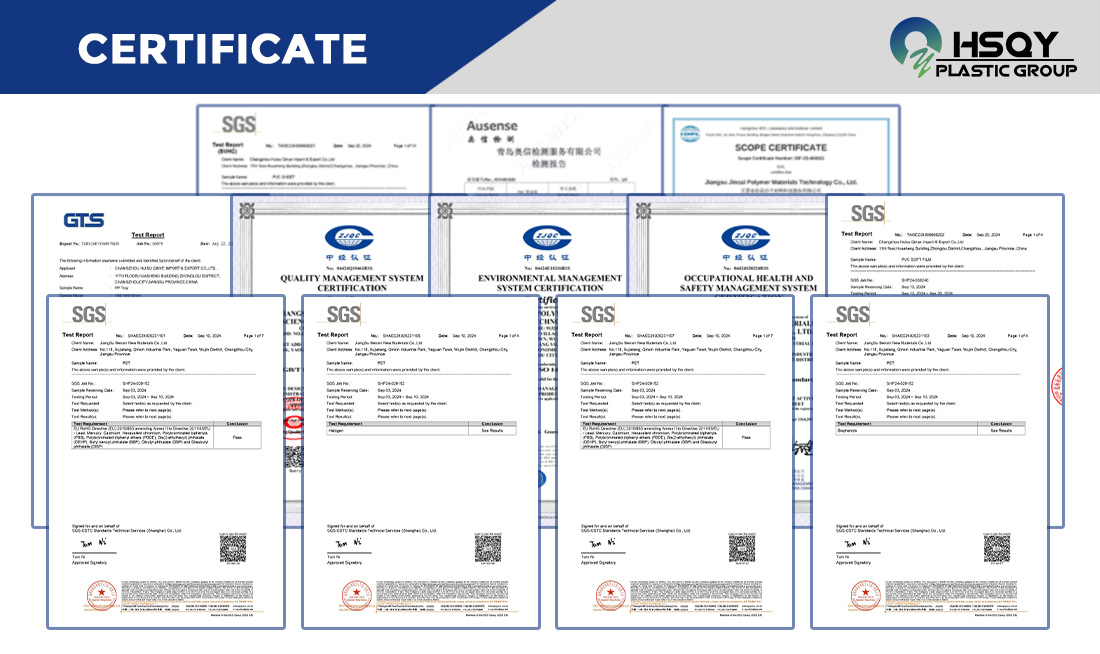
Certification Documents
HSQY displays certification documentation with its polycarbonate products. Buyers requiring a particular certification, test report or performance grade should confirm that the document applies to the exact frosted polycarbonate specification included in the order.
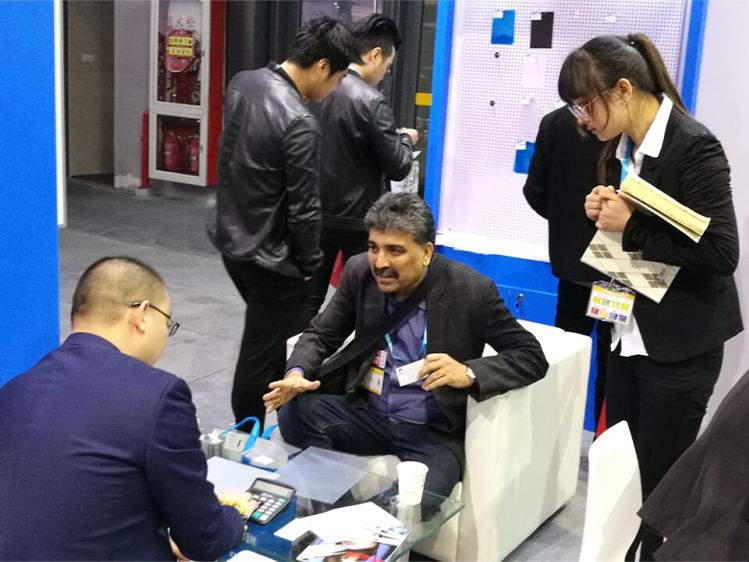
HSQY Global Exhibitions
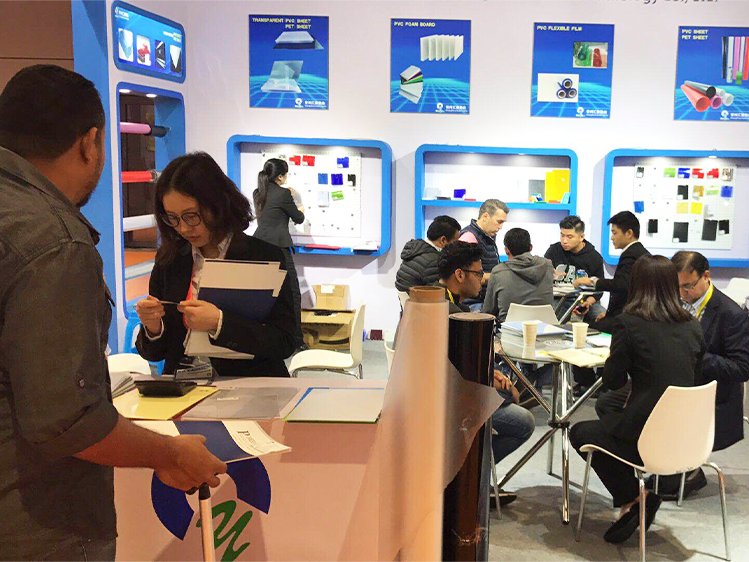
![HSQY Plastic Group at 2017 Shanghai Exhibition]()
2017 Shanghai Exhibition
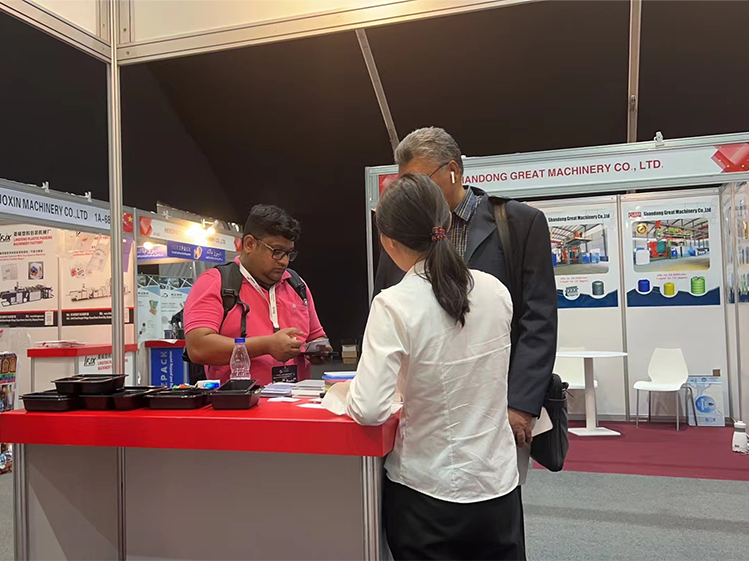
![HSQY Plastic Group at 2018 Shanghai Exhibition]()
2018 Shanghai Exhibition
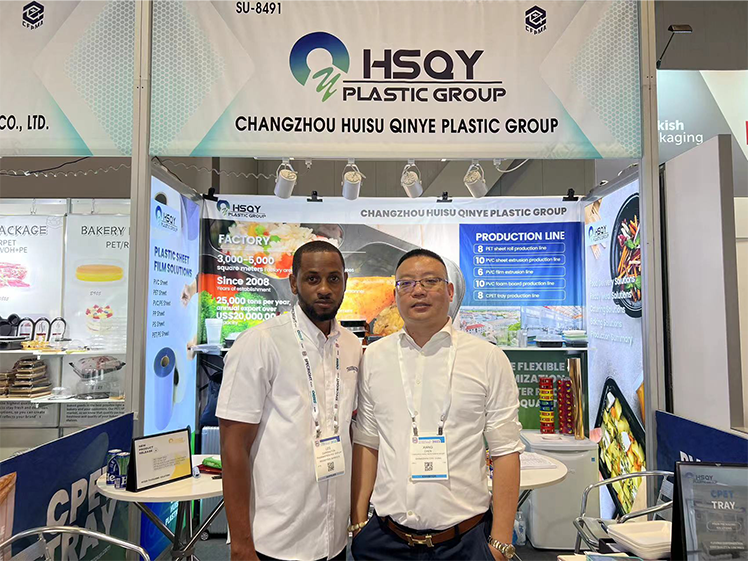
![HSQY Plastic Group at 2023 Saudi Exhibition]()
2023 Saudi Exhibition
![HSQY Plastic Group at 2023 American Exhibition]()
2023 American Exhibition
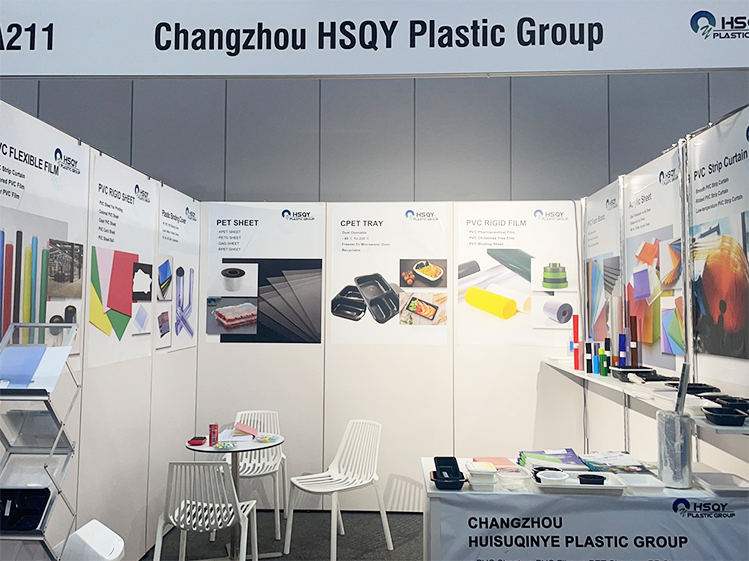
![HSQY Plastic Group at 2024 Australian Exhibition]()
2024 Australian Exhibition
![HSQY Plastic Group at 2024 American Exhibition]()
2024 American Exhibition
Frequently Asked Questions About Frosted Polycarbonate Sheet
What is frosted polycarbonate sheet?
It is a solid polycarbonate panel with a matte or frosted surface that reduces direct visual clarity while allowing light to pass through the material.
Is frosted polycarbonate suitable for privacy partitions?
Yes. Interior partitions and privacy screens are among the primary applications listed for this product. The required privacy level should be evaluated under the intended lighting conditions.
Can light still pass through frosted polycarbonate?
Yes. Frosting obscures direct vision rather than making the sheet completely opaque. The existing HSQY source references light transmission above 85%, but the exact value should be confirmed for the selected color and thickness.
What thicknesses are available?
The current HSQY specification lists 1.5-12mm thicknesses, with customized options also referenced.
What widths are available?
The current product range lists widths from 1220mm to 2100mm.
What colors are available?
The existing specification lists clear, smoky, gray, blue, green and brown, with customized colors also available.
Is clear frosted polycarbonate transparent?
It remains light-transmitting but the frosted surface reduces direct visual clarity. It should therefore be considered translucent or privacy-oriented rather than equivalent to smooth clear polycarbonate glazing.
Can frosted polycarbonate be used in bathrooms?
Bathroom applications are included in the current HSQY product information. The final installation should also consider cleaning chemicals, edge sealing, fixing methods and thermal movement.
Can frosted polycarbonate be used for office partitions?
Yes. It is suitable for office dividers, privacy panels and meeting-room partitions where light transmission is required together with reduced visibility.
Does the matte finish reduce glare?
A matte surface reduces sharp reflections compared with a smooth glossy surface and can provide a softer visual appearance.
Is frosted polycarbonate the same as an LED diffuser sheet?
No. Frosted polycarbonate is primarily selected for privacy, reduced glare and decorative translucency. A dedicated LED diffuser sheet is selected using optical parameters such as transmission, haze and LED hotspot hiding.
Is the sheet UV resistant?
The original HSQY information states that the surface receives UV-resistant weathering treatment. Outdoor projects should confirm the exact UV-protected grade, protected side and applicable weathering documentation.
Can frosted polycarbonate be used outdoors?
The original application list includes sunshades and references UV weathering treatment. Confirm the exact exterior grade and UV configuration before long-term outdoor use.
Is frosted polycarbonate scratch resistant?
The original HSQY description references scratch resistance, but no abrasion or hard-coat test value is published. Applications requiring defined abrasion resistance should request a tested hard-coated grade if available.
What is the impact resistance?
The current HSQY source publishes comparative impact-strength claims versus ordinary glass, corrugated sheet and tempered glass, but does not provide the associated test method or thickness. Request grade-specific test data where impact performance is critical.
What is the fire rating?
The existing page references “Class I” flame-retardant performance but does not state the test standard or thickness. Provide the required fire standard and rating for confirmation before specifying the sheet for regulated applications.
What temperature range is listed?
The current product information references approximately -40℃ to +120℃. Temperature-critical projects should request grade-specific service-temperature and heat-performance data.
Can the sheet be cut or drilled?
The original product information describes the material as suitable for cutting, drilling and fabrication. Use tooling and fabrication practices appropriate for polycarbonate.
How should I choose the correct color and thickness?
Select according to required privacy, light transmission, appearance, panel dimensions, structural support and indoor or outdoor use. Physical samples are recommended for visual evaluation.
What is the listed lead time?
The current HSQY information lists 7-15 days after deposit depending on order volume. Final lead time should be confirmed against the required color, thickness, size and quantity.
What information should I provide for a quotation?
Provide thickness, width, length, color, application, required privacy and light-transmission level, indoor or outdoor use, UV requirements, fire requirements, fabrication needs, quantity and destination.