CPET Food Tray Product Video
Watch the video below to learn more about HSQY CPET food trays for frozen meals, ready meals, airline catering, institutional food service, bakery products and heat-and-serve packaging.
CPET Food Tray Manufacturer and Supplier
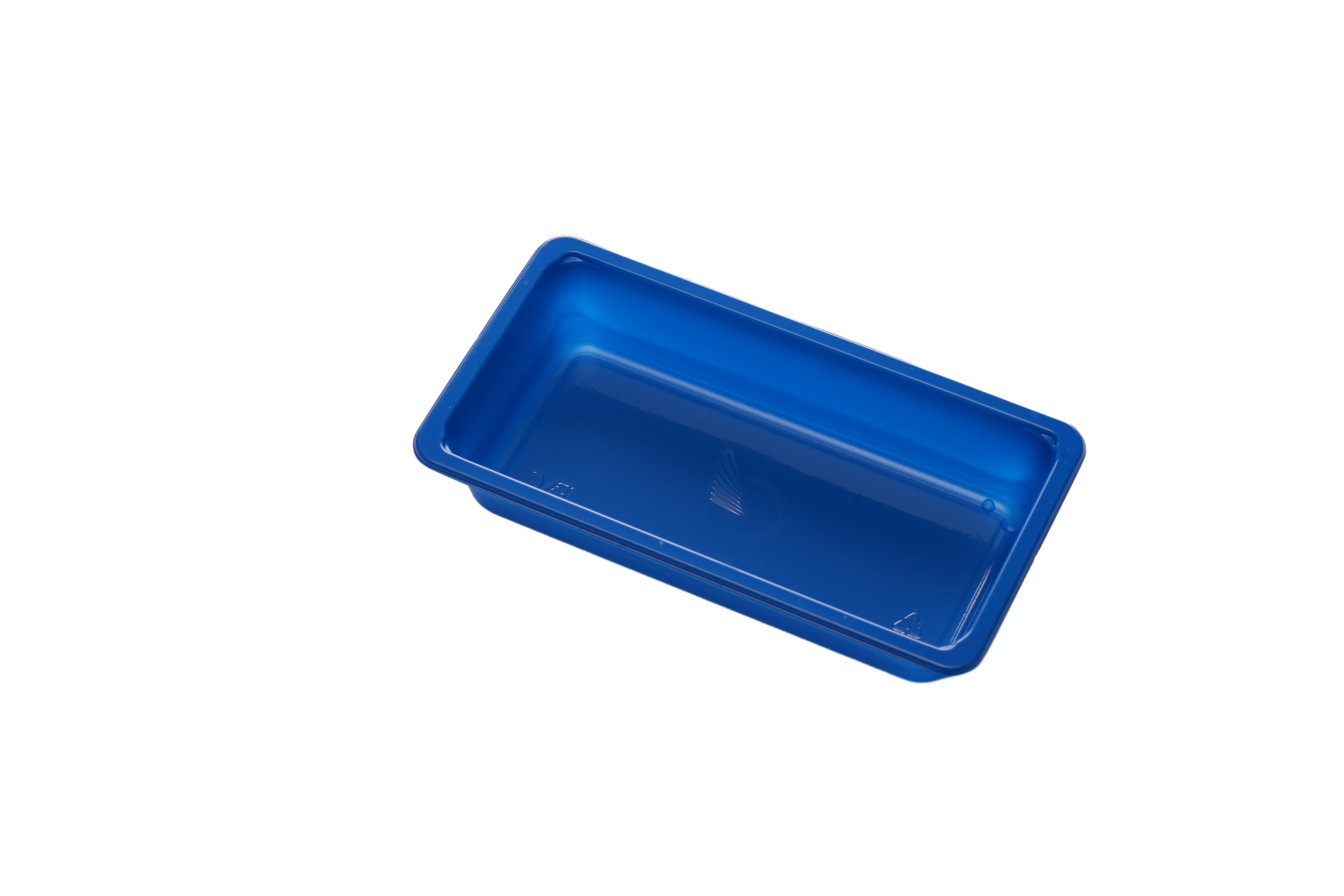
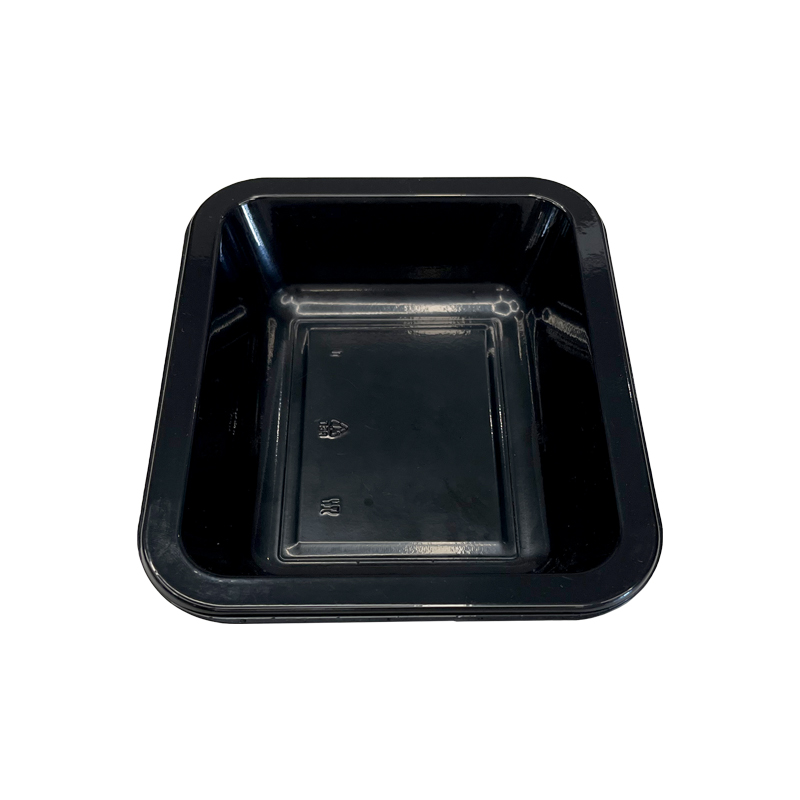
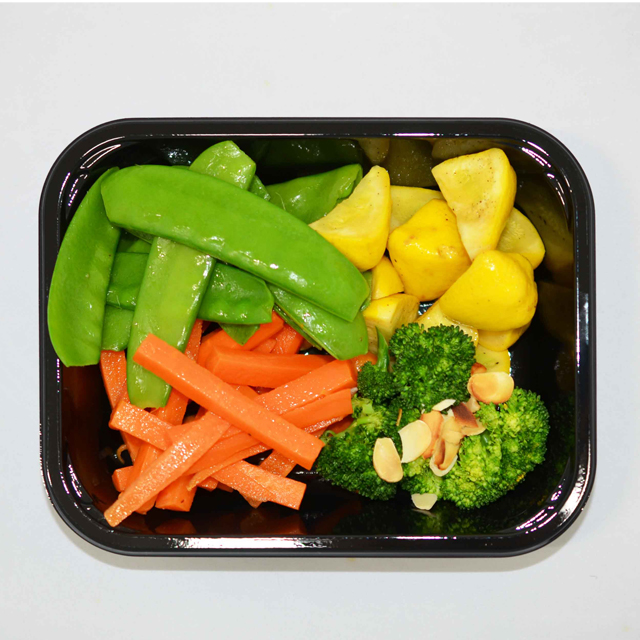
HSQY Plastic is a manufacturer and bulk supplier of CPET food trays for frozen meals, chilled prepared foods, airline meals, school meals, hospital catering, meal delivery, bakery products and other ovenable food packaging applications.
CPET stands for Crystalline Polyethylene Terephthalate. The controlled crystalline structure gives a properly designed CPET tray better high-temperature dimensional stability than standard APET packaging, allowing it to be used in selected freezer, microwave and conventional-oven applications.
HSQY offers more than 50 tray designs, including single-compartment, two-compartment and three-compartment formats. Available capacities range from approximately 300 ml to 6000 ml, with black, white and customized colors available according to order quantity and production feasibility.
CPET trays can support a convenient prepare, fill, seal, chill or freeze, transport and reheat workflow. The final tray, lidding film and heating instructions must be validated together using the actual food, fill weight, sealing equipment, storage conditions, oven temperature and heating time.
Standard designs can reduce tooling time and initial project cost. Customized dimensions, depths, capacities, compartment layouts, tray weights, colors, sealing flanges and embossed branding can also be developed for qualified bulk projects.
Request CPET Tray Pricing Request Samples and Sizes

CPET Food Tray Specifications
| Property |
Available Specification |
| Product Name |
CPET Food Tray / Dual-Ovenable Ready Meal Tray |
| Material |
Crystalline Polyethylene Terephthalate (CPET) |
| Tray Formats |
Single-compartment, two-compartment and three-compartment trays |
| Capacity Range |
Approximately 300 ml-6000 ml |
| Shapes |
Rectangular, square, round, oval and custom shapes |
| Colors |
Black, white, gold-face, silver-face and customized colors subject to confirmation |
| Dimensions |
Standard stock designs and customized length, width, depth and flange dimensions |
| Tray Weight |
Selected according to dimensions, rigidity, food weight and heating conditions |
| Typical Design Temperature Range |
Approximately -40°C to +220°C for suitable grades and validated applications |
| Heating Methods |
Conventional oven and microwave, subject to validated time and temperature instructions |
| Storage |
Chilled and frozen storage after application testing |
| Sealing Method |
Heat sealing with compatible CPET lidding film |
| Lidding Film Options |
Easy-peel, anti-fog, ovenable and application-specific barrier films |
| Packaging System |
Standard heat sealing, vacuum-related applications or MAP subject to tray and film validation |
| Production Process |
Extrusion and thermoforming |
| Custom Options |
Size, depth, capacity, compartments, tray weight, color, flange, embossing and carton packing |
| Sample |
Existing-design samples available; courier freight is normally collected |
| Minimum Order Quantity |
50,000 pieces for standard products; customized projects may require a different MOQ |
| Packaging |
PE inner bag and export carton, customized according to tray dimensions and stacking |
| Lead Time |
Confirmed according to tray design, quantity, tooling, color and production schedule |
Temperature performance is not determined by CPET material alone. Tray dimensions, wall thickness, crystallinity, food load, oven type, heating time, lidding film and support conditions can affect final performance.
Final dimensions, capacity, tray weight, tolerances and food-contact requirements should be confirmed through an approved sample, drawing, specification sheet and purchase agreement.
Key Benefits of CPET Food Trays
Dual-Ovenable Food Packaging
Properly designed CPET trays can be used in both microwave and conventional-oven applications. This allows food manufacturers to offer flexible heating instructions for consumers, food-service operators and institutional catering programs.
Freezer-to-Oven Workflow
Validated CPET packaging can support chilled or frozen storage followed by microwave or conventional-oven heating. The tray should be tested with the actual food and heating program before commercial launch.
Dimensional Stability During Heating
The crystalline structure helps a suitable CPET tray maintain practical shape and rigidity at temperatures that would deform many standard cold-food PET containers.
Single and Multi-Compartment Designs
One-compartment trays are suitable for entrees, pasta, rice dishes and bakery products. Two-compartment and three-compartment trays help separate proteins, vegetables, rice, sauces and side dishes.
Heat-Sealable Flange
CPET trays can be designed with a consistent sealing flange for compatible lidding films. A stable seal can support product protection, transportation, tamper evidence and consumer convenience.
Grease and Food Resistance
CPET trays can be used with oily, moist and sauced foods when the material, tray structure and sealing system are selected for the intended recipe and storage conditions.
Automated Filling and Sealing Compatibility
Tray dimensions, nesting, denesting, flange flatness and sealing tolerance can be designed for manual, semi-automatic or automatic food-filling and tray-sealing lines.
Custom Branding Options
Customized color, embossed logos, molded product codes, cavity identification and carton labels can support private-label and branded food-packaging programs.
Single, Two and Three-Compartment CPET Trays
| Tray Type |
Best Suited For |
Important Selection Factors |
| Single-Compartment CPET Tray |
Lasagna, pasta, rice dishes, casseroles, meat entrees, bakery products and family-size meals |
Total capacity, food depth, portion weight, sauce level and heating uniformity |
| Two-Compartment CPET Tray |
Main dish with rice, pasta, vegetables, potatoes or another side |
Compartment ratio, divider height, sauce migration and equal heating requirements |
| Three-Compartment CPET Tray |
Airline meals, school meals, hospital meals, portion-controlled meals and institutional catering |
Portion balance, divider strength, sealing across compartment walls and denesting performance |
| Large Family-Size Tray |
Multi-portion entrees, catering meals, roast dishes, casseroles and bakery products |
Load-bearing strength, rim support, lifting behavior and oven handling |
How to Select the Right CPET Tray Capacity
Tray capacity should be selected using the actual food weight and fill volume rather than relying only on the nominal milliliter or ounce rating.
| Selection Factor |
Information to Evaluate |
| Portion Weight |
Total grams or ounces of the finished meal |
| Food Density |
Dense foods such as meat differ from rice, pasta, vegetables and aerated bakery products |
| Headspace |
Space required below the lidding film for sealing, expansion and product appearance |
| Sauce Content |
Liquid movement, splash risk and required sealing strength |
| Heating Expansion |
Expansion, steam generation and consumer venting instructions |
| Presentation |
Desired fill level, visual appearance and portion perception |
CPET Tray Lidding Film and Sealing Compatibility
A CPET tray should be selected together with the lidding film and tray-sealing process. Tray material alone does not determine seal strength, leak resistance, peel performance or shelf life.
Easy-Peel Lidding Film
Easy-peel films are designed to provide a secure seal while allowing consumers to remove the film without excessive force. Peel strength should be matched to the tray flange, food type and cold-storage conditions.
Anti-Fog Film
Anti-fog performance can improve product visibility when moisture condenses inside chilled food packaging. Performance depends on the film, food moisture, temperature and storage period.
Ovenable Lidding Film
Some applications require the film to remain on the tray during heating, while others instruct consumers to remove or vent the film. The selected film and consumer instructions must be validated for the intended oven and microwave conditions.
High-Barrier and MAP Applications
Extended-shelf-life or modified-atmosphere projects may require a specific tray structure, sealant layer and high-barrier lidding film. Shelf life must be established through product-specific testing rather than assumed from tray material alone.
Sealing Parameters
Sealing temperature, pressure, dwell time, tooling flatness and flange cleanliness affect seal quality. Tests should include peel strength, channel leaks, burst resistance, chilled storage, frozen storage and reheating.
Ask About CPET Sealing Film
CPET Tray Cold-Chain and Heating Workflow
| Process Stage |
Key Packaging Considerations |
| Food Filling |
Fill temperature, food weight, sauce level, headspace and flange cleanliness |
| Tray Sealing |
Film compatibility, sealing window, flange flatness and leak inspection |
| Chilling or Freezing |
Cooling rate, tray brittleness, stack pressure and cold-chain temperature |
| Transport and Storage |
Carton strength, vibration, pallet stacking, seal integrity and temperature control |
| Microwave Heating |
Film removal or venting, heating power, time, food uniformity and hot spots |
| Conventional-Oven Heating |
Oven temperature, heating duration, rack support, film instructions and tray deformation |
| Consumer Handling |
Hot-surface warnings, lifting instructions, cooling time and serving method |
Applications of CPET Food Trays
Frozen Ready Meals
CPET trays are commonly selected for frozen pasta, rice dishes, curries, meat entrees, vegetables, casseroles and portion-controlled meals that will be reheated by the consumer.
Chilled Prepared Meals
Chilled meal manufacturers can use sealed CPET trays for heat-and-eat dishes distributed through supermarkets, convenience stores, food-delivery services and institutional kitchens.
Airline and Railway Catering
Compact single and multi-compartment CPET trays can be designed for portion-controlled airline meals, railway catering and other transport-food programs requiring efficient stacking and reheating.
School, Hospital and Institutional Meals
Compartmented trays can separate the main course and side dishes for schools, hospitals, care homes, prisons, workplace catering and meal-support programs.
Meals on Wheels and Home Delivery
Sealed CPET trays can support prepared-meal delivery programs where meals are chilled or frozen and reheated later by the recipient.
Bakery and Dessert Products
Suitable CPET trays can be used for cakes, pastries, pies, crumbles, bread products and desserts that require baking, reheating, frozen storage or oven-to-shelf presentation.
Meat, Poultry, Seafood and Vegetable Dishes
CPET packaging can be developed for marinated meat, poultry dishes, seafood meals, vegetables and side dishes, subject to recipe-specific sealing and heating tests.
Retail and Food-Service Meal Kits
Single-serve and family-size CPET trays can be used for supermarket meal kits, prepared dishes, restaurant take-home meals, catering and central-kitchen production.

CPET vs. PP, APET and Aluminum Food Trays
| Comparison |
CPET Tray |
PP Tray |
APET Tray |
Aluminum Tray |
| Conventional Oven |
Suitable for validated dual-ovenable applications |
Generally not selected for conventional-oven temperatures |
Primarily used for cold-food and lower-temperature applications |
Suitable for conventional ovens |
| Microwave |
Suitable after application validation |
Commonly selected for microwave reheating |
Depends on product design and heating conditions |
Generally unsuitable for standard microwave use |
| Frozen Storage |
Suitable when the tray is designed and tested for freezing |
Suitable for many frozen applications |
Suitable for selected chilled and frozen applications |
Suitable for frozen storage |
| Product Visibility |
Usually opaque black, white or colored |
Usually translucent or opaque |
High clarity available |
Opaque |
| Main Use |
Frozen and chilled ovenable ready meals |
Microwave meals, takeaway and chilled foods |
Fresh food, produce, bakery and cold display packaging |
Baking, roasting and ovenable food service |
The correct tray material should be selected according to heating method, storage temperature, shelf-life target, product appearance, sealing system, recycling requirements and total packaging cost.
Standard CPET Trays vs. Custom CPET Trays
| Comparison |
Existing Standard Tray |
Custom Tray Development |
| Tooling |
Existing production tooling |
New drawing, prototype and production tooling may be required |
| Development Time |
Generally shorter |
Includes design review, tooling, sampling and testing |
| Dimensions |
Fixed existing dimensions |
Customized length, width, depth, flange and compartments |
| Branding |
Standard tray appearance |
Embossed logo, coding area and customized color may be available |
| MOQ |
Usually lower than a custom project |
Determined by tooling, color, material and production efficiency |
Custom CPET Tray Development Process
1. Application Review
Provide the food type, portion weight, storage conditions, heating method, target market, lidding film and packaging equipment information.
2. Tray Design and Drawing
HSQY reviews the proposed dimensions, capacity, depth, compartment ratio, corner radius, flange width, stacking and denesting requirements.
3. Tooling Evaluation
Tooling cost, cavity layout, production efficiency, sample timing and expected order volume are reviewed before mold production.
4. Sample Production
Samples are evaluated for dimensions, capacity, wall distribution, flange flatness, stacking, denesting, sealing and heating performance.
5. Customer Line Trial
The customer tests the trays with the actual food, filling system, denester, sealing film, sealing machine, cold chain and heating instructions.
6. Specification Approval
The final drawing, tray weight, tolerances, color, packing quantity, carton dimensions, labeling and inspection requirements are approved before mass production.
CPET Tray Testing and Quality Checks
External dimensions, internal dimensions, depth and capacity.
Tray weight and weight tolerance.
Color and visual consistency.
Flange flatness and sealing-surface cleanliness.
Nesting and automatic-denesting performance.
Compression, stacking and transport resistance.
Frozen-drop and low-temperature handling performance.
Microwave heating using the actual meal and heating instructions.
Conventional-oven heating using the actual time, temperature and food load.
Seal strength, peel behavior and leak resistance.
Migration or food-contact testing required by the destination market.
Food-Contact and Regulatory Requirements
Food-packaging compliance depends on the exact CPET resin, additives, color masterbatch, recycled-content level, manufacturing specification and destination market.
Buyers should specify the target country, food type, contact duration, storage temperature, heating conditions and required standards before ordering.
Supporting documents should be reviewed against the exact tray specification. A general resin report or management-system certificate does not automatically prove compliance for every finished CPET tray and application.
Consumer heating instructions, maximum temperature, maximum heating time, film removal or venting instructions and hot-surface warnings should be validated by the finished-meal producer.
CPET Tray Recycling and Sustainability Considerations
CPET belongs to the PET material family, but actual collection and recycling acceptance vary by country, municipality, tray color, food contamination, labels, lidding film and local sorting infrastructure.
The tray should not be described as universally recyclable unless the claim has been verified for the target market and final package structure.
Recycled-content CPET may be available for selected projects. The allowable recycled content depends on regulatory requirements, color, appearance, mechanical performance and the supplier's validated material system.
Optimizing tray weight, nesting efficiency, carton utilization, pallet loading and product protection can reduce packaging and transportation impacts without compromising food safety or tray performance.
CPET Tray Packaging and Delivery
Inner packaging: Trays are nested and packed in protective PE bags to reduce dust and contamination during handling.
Outer packaging: Export cartons are selected according to tray dimensions, nesting height, stack pressure and transportation requirements.
Carton quantity: The number of trays per carton depends on the tray size, depth, compartment layout and nesting pitch.
Palletization: Pallet configuration can be developed according to carton dimensions, warehouse handling and container-loading requirements.
Custom labels: Cartons can include product codes, dimensions, quantity, production information, barcodes and customer-specific shipping marks.
Lead time: Production timing depends on whether the tray uses an existing mold or requires custom tooling, as well as order quantity, color and packaging requirements.
Information Required for a CPET Tray Quotation
Food type and finished meal description.
Portion weight and required tray capacity.
Required length, width, depth and flange dimensions.
Single, two or three-compartment layout.
Black, white, metallic-face or customized color.
Chilled or frozen storage temperature.
Microwave and conventional-oven heating conditions.
Lidding-film type and tray-sealing-machine model.
MAP, high-barrier, anti-fog or easy-peel requirements.
Required tray weight, rigidity and stacking strength.
Trial quantity, first order and annual forecast.
Destination country and food-contact standards.
Carton quantity, palletization and labeling requirements.
Send Your CPET Tray Requirements
Why Choose HSQY as Your CPET Tray Supplier?
HSQY Plastic Group supplies plastic sheet materials, thermoformed food trays, lidding films and customized food-packaging solutions to international distributors, food manufacturers, packaging converters and catering suppliers.
More than 50 existing CPET tray designs.
Single, two and three-compartment options.
Capacities from approximately 300 ml to 6000 ml.
Black, white and customized color options.
Ready-meal, airline, bakery and institutional catering solutions.
Compatible easy-peel, anti-fog and application-specific lidding films.
Existing designs for faster sampling and project evaluation.
Custom tray design, tooling and OEM development.
Export carton, pallet and customer-label customization.
Bulk production support for food manufacturers and distributors.
HSQY recommends completing tray, sealing-film, storage and heating tests before commercial production. The approved tray should be controlled through a final drawing and product specification.
Contact HSQY for Samples and Pricing
Frequently Asked Questions About CPET Food Trays
What is a CPET food tray?
A CPET food tray is a thermoformed container made from Crystalline Polyethylene Terephthalate. It is commonly used for chilled and frozen prepared meals that may be reheated in a microwave or conventional oven.
What does dual-ovenable mean?
Dual-ovenable means the validated packaging can be used in both microwave and conventional-oven heating applications. The approved maximum temperature and heating time depend on the tray design and finished food product.
What temperature can CPET trays withstand?
Suitable CPET trays are commonly designed for conditions ranging from frozen storage to high-temperature reheating. HSQY uses a typical design reference of approximately -40°C to +220°C, but the final range must be validated for the exact tray, food and heating program.
Can a CPET tray go directly from the freezer to the oven?
A properly designed and tested CPET meal pack may support freezer-to-oven use. Frozen-drop resistance, thermal shock, oven support, food load and heating instructions must be verified before making this claim.
Are CPET trays microwave safe?
Suitable CPET trays can be used for microwave reheating after the tray, food, lidding film and consumer instructions have been validated together.
Are CPET trays safe for conventional ovens?
CPET is selected for conventional-oven applications because of its heat stability. The manufacturer of the finished meal must establish the maximum oven temperature, heating duration and handling instructions.
Should the sealing film be removed before heating?
This depends on the lidding-film specification and meal design. Some films are removed, some are pierced or vented, and some are designed for specific heating conditions. Follow the validated instructions for the finished package.
Can CPET trays be heat sealed?
Yes. CPET trays can be heat sealed with a compatible film. Seal temperature, pressure, dwell time, flange cleanliness and tooling must be optimized for the selected tray and film.
What lidding film is used for CPET trays?
Options include easy-peel, anti-fog, ovenable and application-specific barrier lidding films. The film must be matched to the CPET sealing surface, tray sealer and food-packaging requirements.
Can CPET trays be used for MAP packaging?
Selected CPET systems may be used for modified-atmosphere packaging when the tray structure, sealant layer, lidding film, gas mixture and sealing process are designed and tested together.
Do CPET trays extend food shelf life?
Shelf life depends on the food formulation, hygiene, filling process, seal integrity, barrier structure, storage temperature and distribution conditions. It should be established through product-specific shelf-life testing.
Are single, two and three-compartment CPET trays available?
Yes. HSQY supplies single, two and three-compartment formats for ready meals, airline meals, school meals, hospital meals and portion-controlled food service.
What capacities are available?
HSQY's available range covers approximately 300 ml to 6000 ml, including single-serve, multi-portion and family-size formats.
What colors are available?
Standard options include black and white. Gold-face, silver-face and other customized colors may be available according to the tray structure, color requirements and minimum order quantity.
Can CPET trays be customized?
Yes. Custom options include length, width, depth, capacity, compartment layout, flange, tray weight, color, embossing, carton quantity and labeling.
Can HSQY make a tray from my drawing or sample?
HSQY can evaluate a drawing, physical sample or application requirement. New tooling may be required, and the project will need drawing approval and production testing.
What information is needed to develop a custom CPET tray?
Provide the food type, portion weight, required dimensions, capacity, compartments, heating conditions, lidding film, tray-sealer model, annual quantity and target market.
Are CPET trays suitable for airline meals?
Yes. Compact CPET trays are widely used for airline catering because they can support portion control, efficient stacking, sealing, chilled or frozen storage and reheating.
Can CPET trays be used for bakery products?
Suitable CPET trays can be used for pies, cakes, pastries, crumbles, bread and other bakery products requiring freezing, baking or reheating.
Are CPET trays recyclable?
CPET belongs to the PET family, but actual recycling acceptance depends on local collection systems, tray color, food contamination, labels and the complete package structure. Local recycling guidance should be checked.
Can CPET trays contain recycled material?
Recycled-content options may be available for selected specifications. The allowable content depends on food-contact requirements, appearance, performance and destination-market regulations.
What is the MOQ for CPET food trays?
The standard MOQ for existing products is generally 50,000 pieces. Custom tooling, special colors or customized structures may require a higher quantity.
Are CPET tray samples available?
Existing-design samples can be supplied for checking dimensions, capacity, stacking, sealing and heating performance. Courier freight is normally paid by the buyer.
How should CPET trays be tested before ordering?
Test the tray with the actual food, fill weight, lidding film, tray sealer, cold-storage conditions, transportation method, microwave instructions and conventional-oven instructions.
What is the production lead time?
Lead time depends on whether an existing tray design is selected or new tooling is required. Quantity, color, packing and production scheduling also affect delivery.
How can I get a CPET tray quotation?
Send the required tray dimensions, capacity, compartments, color, quantity, food application, heating conditions, sealing-film information, destination and compliance requirements.
Get a Custom CPET Tray Quote