CPET Food Trays for Microwave and Conventional Oven Use
HSQY manufactures CPET food trays for microwave reheating, conventional oven cooking, frozen ready meals, airline catering, institutional meals, bakery products and foodservice packaging. Crystalline polyethylene terephthalate provides the heat resistance and dimensional stability required for freezer-to-oven and freezer-to-microwave applications.
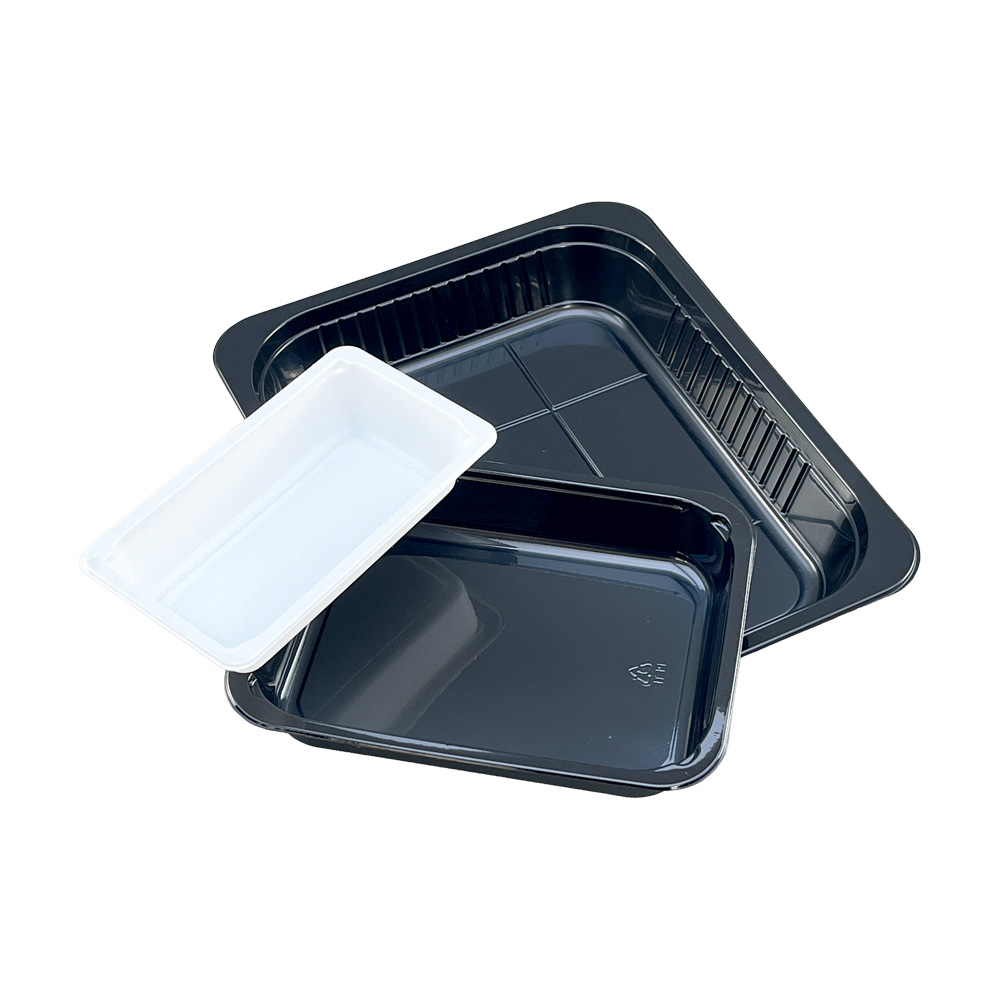
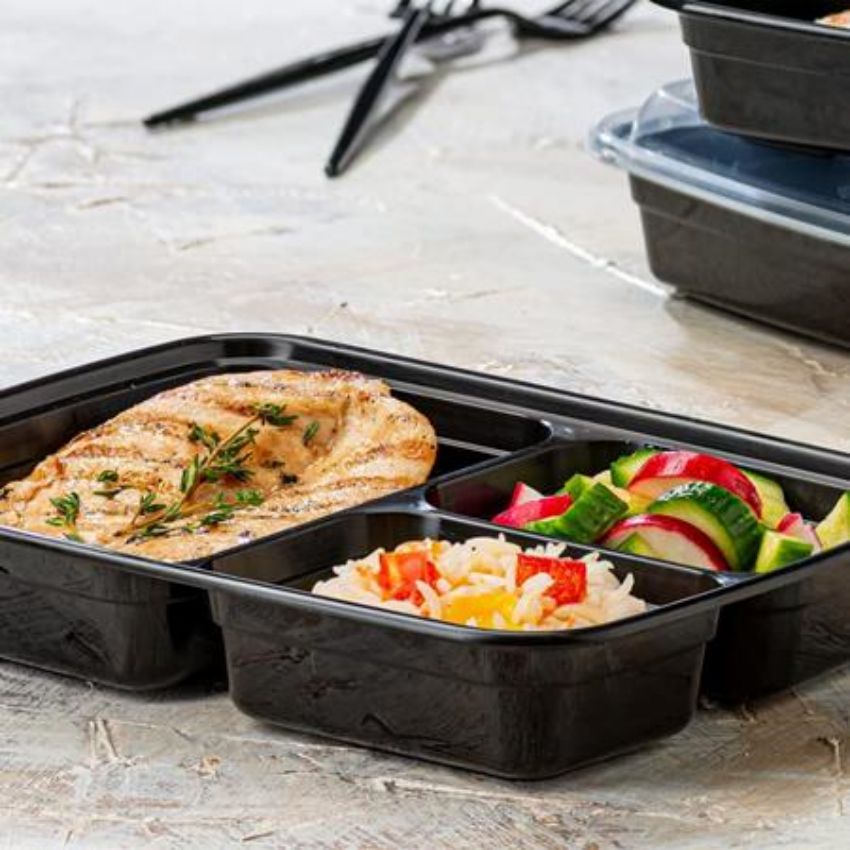
Standard and custom trays are available in one-, two- and three-compartment designs, with black, white, gold, silver and custom color options subject to project requirements. Tray dimensions, capacity, flange design, wall thickness, compartment layout, lidding film and carton packing can be customized for the food, filling line and heating instructions.
Material: Food-contact CPET
Typical service range: Approximately -40°C to 220°C, subject to tray design and validation
Heating methods: Microwave oven and conventional oven
Compartments: One, two or three compartments; custom layouts available
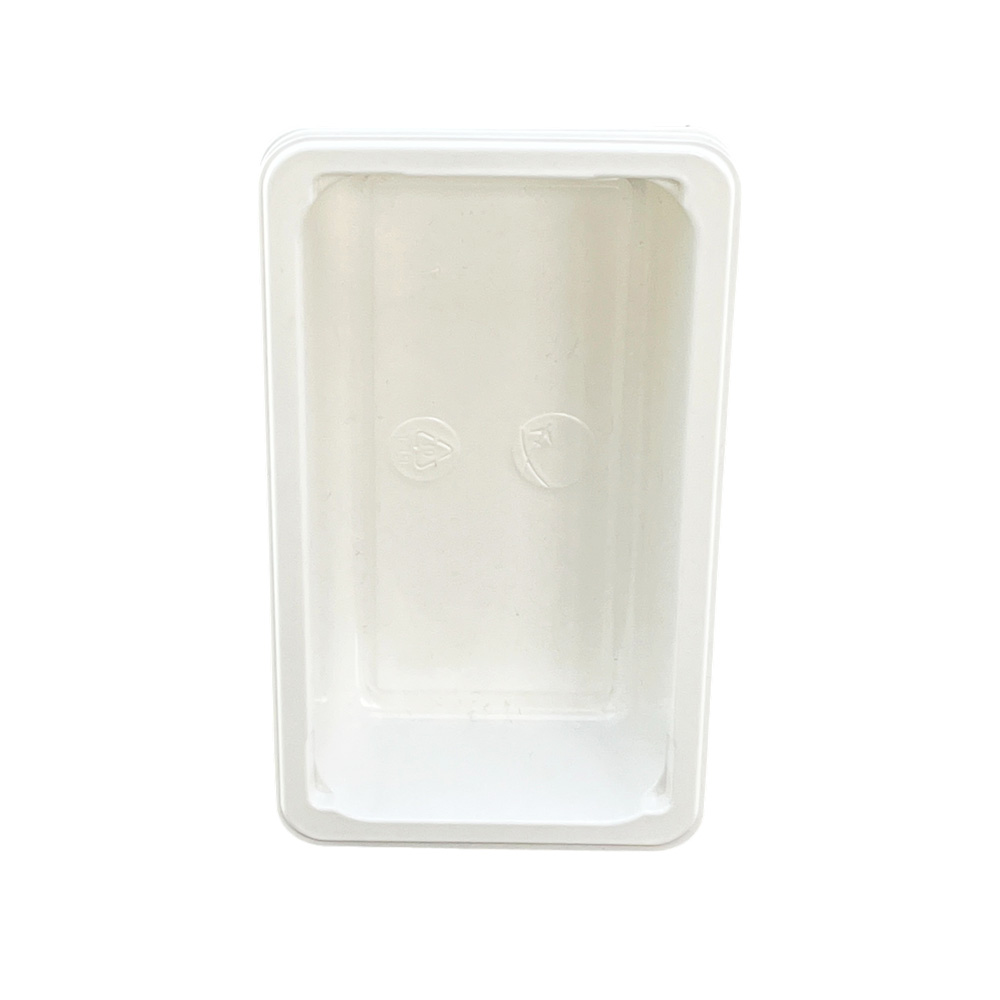
Colors: Black, white, gold, silver or customized
MOQ: 50,000 pieces for the current listing; custom tooling and colors are confirmed separately
CPET Food Tray Video
CPET Ready Meal Tray

What Is a CPET Food Tray?
CPET means crystalline polyethylene terephthalate. During production, PET sheet is crystallized and thermoformed so that the finished tray can maintain its shape at temperatures much higher than standard APET packaging.
CPET trays are commonly called dual-ovenable trays because an approved tray can be used in both a conventional oven and a microwave oven. They are also suitable for chilled and frozen storage, allowing food producers to fill, seal, freeze, distribute, reheat and serve the meal in the same package.
Important: Actual heating performance depends on the tray design, food load, oven type, time, temperature, lidding system and validation. CPET trays should not be used under a broiler, on a stovetop, over an open flame or in direct contact with heating elements unless specifically tested.
CPET Food Tray Specifications
| Property |
Details |
| Product name |
CPET Food Tray for Microwave and Conventional Oven Use |
| Material |
Crystalline polyethylene terephthalate |
| Typical temperature range |
Approximately -40°C to 220°C, subject to the exact tray, heating cycle and test conditions |
| Heating compatibility |
Microwave oven and conventional oven; not intended for broilers, stovetops or direct flame |
| Storage compatibility |
Chilled and frozen food storage |
| Shape |
Rectangular, square, round, oval or custom |
| Compartments |
One, two or three compartments; custom layouts available |
| Size and capacity |
Multiple standard sizes and custom dimensions based on the meal portion and filling line |
| Color |
Black, white, gold, silver or customized |
| Production process |
CPET sheet extrusion, crystallization and thermoforming |
| Lidding options |
Peelable or lock-seal ovenable lidding film, aluminum foil lid or custom sealing system |
| Sealing methods |
Manual, semi-automatic or automatic tray sealing; MAP and skin-pack options require project validation |
| Main applications |
Frozen ready meals, chilled meals, airline meals, railway catering, hospitals, schools, bakery and foodservice |
| Packing |
Nested trays in PE bags and export cartons, with pallet packing as required |
| MOQ |
50,000 pieces for the current listing; stock trays, custom tools and custom colors are quoted separately |
CPET Tray Structure and Appearance
CPET trays are generally opaque because the crystallization process changes the optical appearance of PET. Black and white are common ready-meal colors, while gold and silver surfaces are used for premium bakery, catering and retail applications.

Key Benefits of CPET Food Trays
1. Dual-ovenable performance: Approved CPET trays can be used in microwave and conventional ovens, allowing consumers to reheat or cook food without transferring it to another container.
2. Freezer-to-oven convenience: The tray can support chilled or frozen distribution and subsequent reheating in the same package.
3. Dimensional stability: CPET retains rigidity during filling, freezing, transport and heating when the tray is correctly designed.
4. Grease and moisture resistance: CPET performs well with sauces, oils, meat juices and prepared foods under validated conditions.
5. Reliable tray sealing: A flat and consistent flange can support peelable or lock-seal lidding film for leak control and tamper evidence.
6. Stackability: Nested empty trays save storage space, while filled trays can be designed for stable stacking and transport.
7. Custom meal presentation: Compartments, colors, embossing and shapes can be matched to retail, airline, catering or bakery programs.
One-, Two- and Three-Compartment CPET Trays
| Tray Type |
Typical Foods |
Main Advantage |
| One compartment |
Pasta, lasagna, rice dishes, casseroles, bakery products and single-portion meals |
Maximum usable volume and simple filling |
| Two compartments |
Main dish with rice, pasta, vegetables or sauce |
Keeps two food components separated during storage and heating |
| Three compartments |
Complete meals with protein, starch and vegetables |
Portion control and organized meal presentation |
Microwave and Conventional Oven Instructions
Microwave use: Follow the meal producer's instructions for time, power and venting. The lidding film may need to be pierced, peeled back or removed depending on its structure.
Conventional oven use: Place the tray on a baking sheet or oven rack as specified by the food producer. Do not exceed the validated temperature or heating time.
Frozen meals: Freezer-to-oven use must be validated for the exact food load, tray and lidding system.
Uneven heating: Meal composition, fill depth, sauces and microwave power can affect temperature distribution.
Restricted uses: Do not use under a broiler, in a toaster oven, on a grill, on a stovetop, over an open flame or directly against a heating element unless specifically approved.
Consumer labeling: Print clear storage, venting, heating and handling instructions on the package.
Lidding Film and Tray Sealing Options
The lidding film must be selected according to the tray flange, food type, storage condition, heating method, peel requirement and tray-sealing machine. A film that seals to one CPET tray may not provide the same peel or seal strength on a different tray formulation.
| Lidding Option |
Typical Function |
Important Checks |
| Peelable PET lidding film |
Consumer-friendly opening and clear product presentation |
Peel strength, seal integrity, oven or microwave suitability and anti-fog requirement |
| Lock-seal film |
Strong permanent seal and tamper evidence |
Opening method, puncture resistance, seal temperature and heating instructions |
| Ovenable lidding film |
Allows the complete pack to move from chilled or frozen storage into an oven |
Maximum temperature, venting, ink, adhesive, shrinkage and seal performance |
| Aluminum foil lid |
Light barrier and conventional oven applications |
Not suitable for microwave use unless the complete packaging system is specifically designed and validated |
Review HSQY's lidding films for CPET trays and provide the tray-sealer model, film width, seal temperature and required peel strength when requesting a recommendation.
CPET Food Tray Applications
CPET Food Trays for Airline Catering
Compact CPET airline meal trays are used for prepared meals that are filled, sealed, chilled or frozen, transported and reheated before cabin service. Tray dimensions and flange geometry should match airline ovens, carts and catering equipment.

CPET Food Trays for Railway and Institutional Meals
Railway catering, hospitals, care facilities, schools and centralized kitchens use CPET trays for portion-controlled meals that require reliable sealing, chilled or frozen distribution and convenient reheating.

CPET Food Trays for Microwave Ready Meals
Microwave-ready CPET trays are used for pasta, rice dishes, meat meals, vegetables, sauces and complete prepared meals. The food producer must validate microwave power, heating time, venting and safe serving temperature.

Other CPET Tray Applications
Frozen retail ready meals: Lasagna, pasta, curries, rice dishes, meat meals and vegetables packed for supermarket distribution.
Bakery products: Cakes, pies, desserts, bread and bake-in-pack applications using a validated tray and process.
Catering and foodservice: Portion-controlled meals for hotels, restaurants, contract caterers and meal-prep companies.
Meals on Wheels: Sealed single-portion meals requiring dependable transport and reheating convenience.
Premium presentation: Gold, silver or dual-color CPET trays for bakery, airline and branded ready-meal programs.
Custom CPET Tray Development
A custom tray should be developed around the food, portion size, fill temperature, sealing machine, distribution method and consumer heating instructions. Sending only the outside dimensions is usually not sufficient.
Tray dimensions: Outside length, width, height, flange width and corner radius
Food capacity: Fill volume, product weight, headspace and sauce content
Compartment layout: Number of sections, capacity split and separation-wall height
Heating cycle: Frozen or chilled starting temperature, oven type, time and maximum temperature
Sealing line: Machine brand, model, tool drawing, seal area and target production speed
Lidding film: Peel or lock seal, clear or printed, anti-fog, barrier and ovenable requirements
Logistics: Nested stack height, carton size, pallet pattern and container loading target
Quality Control for CPET Trays
Dimensions and capacity: Outside dimensions, flange width, cavity depth, volume and compartment layout.
Wall and flange consistency: Thickness distribution, flange flatness and seal-area cleanliness.
Crystallization and heat performance: Oven deformation, shrinkage and dimensional stability under agreed conditions.
Impact and handling: Tray cracking, corner strength, denesting and filled-pack transport performance.
Seal testing: Seal strength, peel consistency, leakage, burst performance and contamination tolerance.
Food-contact and traceability: Approved resin, batch records, inspection data and relevant compliance documentation.
Packing and Delivery
Nested packing: Empty trays are stacked in a controlled orientation to reduce carton volume and support automatic denesting.
Inner protection: Tray stacks can be packed in clean PE bags before carton loading.
Export cartons: Carton dimensions and quantity per carton are matched to the tray size and stack height.
Pallet packing: Cartons can be secured on export pallets when required by the destination or handling process.
Container planning: HSQY can optimize carton and pallet configuration for high-volume shipment.
Information Required for an Accurate Quotation
1. Tray model or drawing: Provide an existing HSQY model, sample or dimensioned drawing.
2. Capacity and food type: State the fill volume, food weight, oil or sauce content and number of compartments.
3. Heating conditions: Provide microwave power or oven temperature, heating time and frozen or chilled starting condition.
4. Lidding system: State peel or lock seal, film structure, seal machine and required barrier or anti-fog properties.
5. Color and appearance: Confirm black, white, gold, silver, embossing or custom branding requirements.
6. Compliance: Specify the destination market and required food-contact, recycled-content or retailer documentation.
7. Quantity and logistics: Provide trial quantity, annual demand, destination port and required delivery schedule.
Frequently Asked Questions
Can CPET food trays be used in a microwave oven?
Yes. Properly manufactured and validated CPET trays are suitable for microwave reheating. The food producer should specify power, time, venting and lid instructions.
Can CPET trays be used in a conventional oven?
Yes. CPET is used for conventional oven applications, commonly up to approximately 200–220°C depending on the tray and validated heating cycle.
Can CPET trays go directly from freezer to oven?
CPET is designed for freezer-to-oven applications. The exact food, tray, lidding film, starting temperature and heating cycle must be tested before commercial use.
What is the difference between CPET and APET trays?
CPET is crystallized for high-temperature oven use and is usually opaque. APET is normally clear and used for chilled or ambient packaging but is not designed for conventional oven temperatures.
What is the difference between CPET and PP ready meal trays?
PP trays are commonly used for microwave heating and hot filling but generally have a lower maximum service temperature. CPET is selected when the same tray must also withstand conventional oven cooking.
Are CPET trays available with multiple compartments?
Yes. HSQY supplies one-, two- and three-compartment CPET trays for single dishes and complete portion-controlled meals.
Which lidding film should be used for CPET trays?
Use a lidding film specifically designed to seal to CPET. The film must match the storage temperature, oven or microwave conditions, peel requirement, barrier target and sealing machine.
Can CPET trays be used for MAP packaging?
MAP may be possible with a compatible tray, barrier lidding film and tray-sealing process. Shelf life and gas retention must be validated with the actual food.
Are black, white, gold and silver CPET trays available?
Yes. Black and white are standard options, while gold, silver and customized appearances can be developed according to order quantity and technical requirements.
Can HSQY manufacture a custom CPET tray?
Yes. Provide the tray drawing, capacity, compartment layout, heating cycle, lidding film, sealing machine and annual volume for tooling evaluation.
Are CPET trays recyclable?
CPET is a PET-based material and is technically recyclable. Actual collection and recycling depend on local infrastructure, color, labels, lidding film and food contamination.
Can recycled PET be used in CPET trays?
Recycled-content CPET is available in some markets and product systems. Food-contact use requires an approved supply chain and applicable regulatory documentation.
What is the MOQ for CPET food trays?
The current listing states 50,000 pieces. MOQ depends on whether the tray is a stock model, custom color or newly tooled design.
How do I get an accurate quotation?
Send the tray model or drawing, dimensions, capacity, compartments, food type, heating conditions, color, lidding film, sealing machine, quantity and destination port.
Why Choose HSQY as Your CPET Tray Manufacturer?
HSQY Plastic Group supplies CPET trays, CPET sheet, compatible lidding films and tray-sealing solutions for ready-meal producers, airlines, caterers, distributors, bakeries and institutional foodservice customers.
HSQY can support stock-tray selection, custom tooling, color development, tray and film matching, sample trials, carton optimization and export logistics. Providing the complete packaging and heating requirements allows the technical team to recommend a more reliable tray system.
Need a CPET tray for microwave or oven-ready meals?
Send your dimensions, capacity, compartments, heating cycle, lidding requirement, quantity and destination for tray selection or custom development.
Contact HSQY Plastic