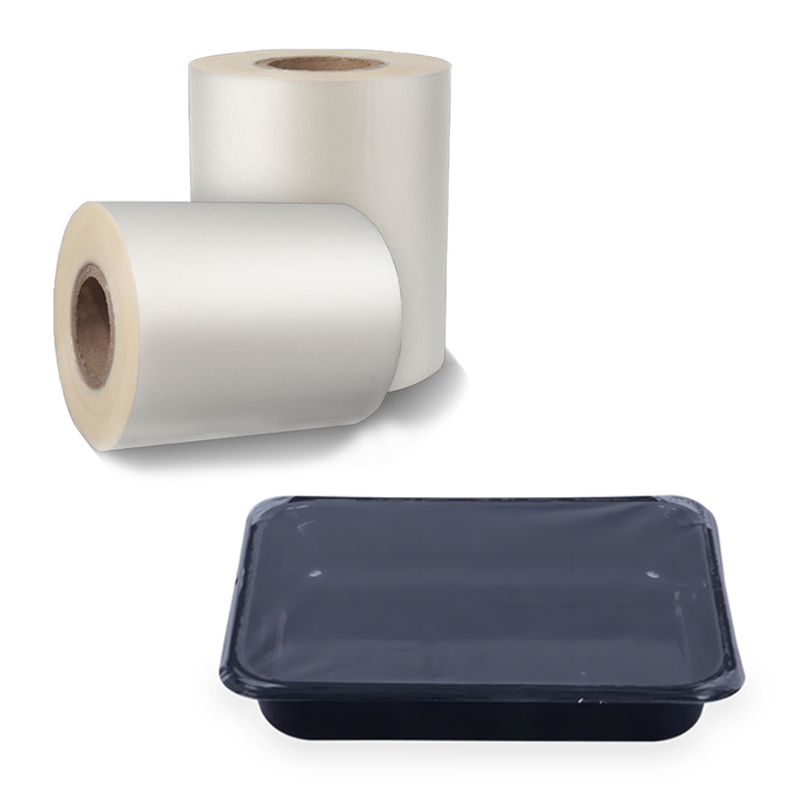
BOPET Coated Lidding Film Overview Video
What Is BOPET Coated Lidding Film?
BOPET coated lidding film is a heat-sealable polyester film made from a biaxially oriented PET substrate with a functional sealing coating on one side. The BOPET base provides clarity, tensile strength, dimensional stability, puncture resistance, printability, and stable web handling. The coating provides the seal interaction with a compatible tray flange.
Unlike a conventional BOPET/PE or BOPET/CPP laminate, a coated BOPET film obtains its sealing function from a purpose-designed surface coating. Different coating chemistries can be developed for APET, CPET, PP, PE, or PS trays and for lock-seal, easy-peel, or anti-fog performance.
The phrase “compatible with multiple trays” should describe a family of coated grades, not one universal film that automatically seals every substrate. The correct grade must be selected using the actual tray material, flange surface, food application, sealing machine, and processing conditions.
BOPET Coated Lidding Film Image
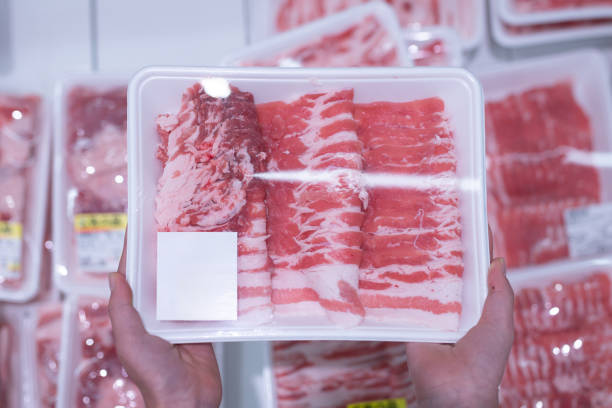
BOPET Coated Lidding Film Data Sheets
Download the available product documents below. Before ordering, confirm that each document corresponds to the exact coating grade, tray substrate, seal type, thickness, and intended conditions of use.
 Download BOPET Coated Lidding Film Data Sheet
Download BOPET Coated Lidding Film Test Report
How a Heat-Seal Coating Works
| Film Component | Primary Function | What Must Be Specified |
| BOPET Base Film | Provides strength, clarity, stiffness, thermal dimensional stability, printability, and machinability. | Gauge, haze, gloss, shrinkage, tensile properties, surface treatment, and recycled-content requirement. |
| Heat-Seal Coating | Creates adhesion or controlled peel to the selected tray sealing surface. | Tray substrate, coating chemistry, coating weight, seal initiation temperature, seal window, and target seal strength. |
| Optional Anti-Fog System | Reduces discrete condensation droplets and maintains clearer chilled-food presentation. | Anti-fog side, test temperature, humidity, test duration, coating durability, and food-contact conditions. |
| Printing or Primer Surface | Supports ink, adhesive, branding, coding, and reverse-print laminating processes. | Surface energy, corona treatment, primer type, print method, colors, repeat, and ink compatibility. |
| Optional Barrier or Lamination | Adds oxygen, moisture, aroma, puncture, or thermal performance not provided by the base coated film. | OTR, WVTR, thermal cycle, complete structure, adhesive, and shelf-life target. |
Available Coating Grades
| Coating Grade | Primary Performance | Typical Application |
| PET-Compatible Lock Seal | Strong permanent seal to a qualified APET, rPET, PETG, or CPET sealing surface. | Tamper-evident trays, liquid-containing foods, and distribution-sensitive packs. |
| PET-Compatible Easy Peel | Controlled peel force with reduced tearing, shredding, or residue. | Produce, salads, dairy, desserts, chilled foods, and consumer-ready meals. |
| Polyolefin-Compatible Grade | Special coating developed for qualified PP or PE sealing surfaces. | PP or PE trays where a standard PET seal coating would not provide a reliable bond. |
| PS-Compatible Grade | Coating chemistry matched to PS or HIPS tray flanges. | Dairy, bakery, desserts, chilled foods, and specialist trays. |
| Universal Multi-Substrate Grade | Specially engineered coating designed to seal to several material families. | Converters and packers using multiple tray types; every substrate still requires validation. |
| Anti-Fog Grade | Adds chilled-display clarity to a compatible lock-seal or peel-seal coating. | Fresh produce, salads, meat, seafood, dairy, bakery, and ready meals. |
BOPET Coated Lidding Film Specifications
The following values retain the current page information while separating the standard commercial specification from grade-specific performance. Final values should be confirmed in the approved technical data sheet and purchase specification.
| Property | Standard or Available Option | Selection Note |
| Product Type | Coated BOPET tray lidding film | Rollstock for tray-sealing equipment |
| Base Material | BOPET with functional heat-seal coating | Confirm whether the grade is coated, coextruded, laminated, or a combination |
| Thickness | 0.052–0.09mm, customizable | Confirm nominal gauge and tolerance |
| Standard Widths | 180mm, 320mm, 400mm, and 640mm | Broader custom range: 150–900mm |
| Roll Length | 500m, customizable | Depends on thickness, width, core, roll weight, and maximum outer diameter |
| Color | Clear or custom printed | Confirm haze, gloss, print coverage, transparent windows, and eye marks |
| Seal Type | Lock seal, easy peel, or other grade by project | Seal type is determined by coating chemistry and tray surface |
| Anti-Fog | Optional | Specify test conditions, duration, anti-fog side, and acceptance criteria |
| Tray Compatibility | APET, CPET, PP, PE, and PS grades available | Do not assume one grade seals every listed substrate |
| Microwave / Oven Use | No for the current standard grade | A separately qualified thermal grade is required |
| Freezer Use | No for the current standard grade | A low-temperature grade requires separate validation |
| Reference Density | Approximately 1.36g/cm³ for the listed product | Finished density depends on coating and complete structure |
| Printing | Flexographic or gravure printing by project | Confirm surface or reverse printing, colors, repeat, eye mark, and annual volume |
| MOQ | 1000kg | Trial quantity depends on available stock, width, coating grade, and printing |
| Payment Terms | T/T: 30% deposit and 70% before shipment; L/C | Confirm in the commercial quotation |
| Delivery Terms | FOB, CIF, EXW, and DDU | Subject to destination, order size, and commercial agreement |
| Lead Time | 10–15 days after specification approval and deposit | Custom coating, printing, or specialty grades may require more time |
Tray Compatibility Matrix
| Tray Material | Coating Requirement | Validation Focus |
| APET / rPET / PETG | PET-compatible coating or qualified universal sealant. | Low seal initiation temperature, tray distortion, peel force, residue, and seal consistency. |
| CPET | CPET-compatible coating; a separate thermal grade is required when the lid remains on during heating. | Tray crystallinity, coating chemistry, seal strength, peel after heating, and complete oven or microwave cycle. |
| PP | PP-compatible or universal coating. | PP resin grade, additives, flange geometry, sealing window, and peel or weld behaviour. |
| PE / PE-Coated Tray | PE-compatible or universal coating. | PE grade, contamination tolerance, seal initiation, package distortion, and leakage. |
| PS / HIPS | PS-compatible coating. | Tray stiffness, flange condition, seal strength, clean peel, and stress cracking. |
A tray name alone is not enough to confirm compatibility. The actual flange surface may include coatings, tie layers, recycled content, slip agents, pigments, or other additives that change sealing behaviour.
Lock Seal vs. Easy Peel
| Seal Type | Opening Behaviour | Typical Use |
| Lock Seal / Permanent Seal | Creates a strong bond; opening may tear the film or visibly damage the tray flange. | Tamper-evident packs, liquids, transport-sensitive foods, and institutional packaging. |
| Hard Peel | Peelable seal with higher opening force. | Products requiring stronger distribution security with later manual opening. |
| Easy Peel | Controlled consumer opening with reduced film shredding, tray deformation, or residue. | Produce, salads, dairy, desserts, ready meals, meat, seafood, and food-to-go packaging. |
Critical Coating and Seal Parameters
| Parameter | Why It Matters | Recommended Control |
| Coating Weight | Influences seal strength, peel behaviour, coverage, cost, and consistency. | Define target and tolerance using the approved coating grade. |
| Coating Adhesion | Poor anchorage can cause coating transfer, delamination, or inconsistent peeling. | Test tape adhesion, bond integrity, ageing, and post-seal performance. |
| Seal Initiation Temperature | Determines the lowest practical temperature for an acceptable seal. | Define using the actual tray, dwell time, pressure, and test method. |
| Sealing Window | A wide window supports stable commercial production as conditions fluctuate. | Establish lower and upper temperature limits at commercial line speed. |
| Seal Strength or Peel Force | Controls package integrity and consumer opening. | Specify specimen width, angle, speed, conditioning, and acceptable range. |
| Coefficient of Friction | Affects unwinding, web tracking, cutting, and machine transport. | Set inside and outside COF targets where required. |
| Blocking Resistance | Coated surfaces must unwind without sticking or transferring. | Validate after storage under expected temperature and winding pressure. |
| Surface Energy | Influences print, adhesive, and coating adhesion. | Confirm treatment level at production and after storage. |
Anti-Fog, Barrier, and Thermal Options
| Optional Function | What It Provides | Important Limitation |
| Anti-Fog | Improves visibility by spreading condensed moisture into a more transparent layer. | Does not eliminate moisture; performance depends on temperature, humidity, orientation, and duration. |
| High Barrier | Adds defined oxygen, moisture, or aroma protection using EVOH or another barrier structure. | Standard coated BOPET should not be described as high barrier without measured OTR and WVTR. |
| Microwave Grade | Supports specified microwave reheating with a qualified tray and package design. | Requires validation of film, coating, ink, tray, food, venting, power, and time. |
| Ovenable Grade | Supports specified conventional-oven use, commonly with qualified CPET or aluminium systems. | The current standard grade is listed as non-ovenable. |
| Freezer Grade | Maintains seal and mechanical performance at the specified low temperature. | The current standard grade is listed as non-freezer; low-temperature testing is required. |
Production-Line and Tray-Sealer Compatibility
Provide the tray-sealer brand and model, film width, core inside diameter, maximum outer diameter, roll weight, winding direction, coating side, seal-side orientation, eye-mark sensor, tooling layout, commercial line speed, sealing temperature, pressure, and dwell time.
Line trials should evaluate web tracking, tension, cutting, coating transfer, blocking, seal initiation, seal continuity, peel force, film shredding, leakage, flange contamination, print registration, anti-fog performance, and consistency across every tooling cavity.
Common Problems and Corrective Actions
| Problem | Possible Cause | Recommended Check |
| Film Does Not Seal | Incorrect coating grade, low temperature, insufficient pressure or dwell, or incompatible tray surface. | Confirm tray chemistry, coating code, coated side, and sealing window. |
| Seal Is Too Strong | Excessive heat, excessive coating interaction, long dwell time, or wrong peel grade. | Reduce thermal input and select the correct peel coating. |
| Film Shreds During Peeling | High peel force, unsuitable base-film stiffness, weak coating anchorage, or poor peel-tab geometry. | Review coating, film gauge, bond strength, peel angle, and tray design. |
| Coating Transfers to the Tray | Insufficient coating adhesion, excessive sealing conditions, incomplete cure, or incompatible chemistry. | Check coating anchorage, storage, ageing, and application conditions. |
| Roll Blocks During Unwinding | Excessive storage heat, high winding pressure, insufficient cure, or unsuitable slip. | Review storage, winding hardness, coating cure, and COF. |
| Seal Leaks Through Contamination | Food particles, oil, moisture, sauce, damaged flange, or uneven tooling. | Run contaminated-seal, vacuum, pressure-decay, dye, or bubble tests. |
Applications of BOPET Coated Lidding Film
Fresh fruits, berries, vegetables, and prepared salads
Chilled ready meals and food-to-go products
Fresh meat, poultry, seafood, and processed protein
Dairy products, yogurt, desserts, butter, cheese, and dips
Bakery products, confectionery, jelly, snacks, and portion packs
APET, rPET, PETG, CPET, PP, PE, and PS trays using the corresponding coated grade
Private-label packs requiring custom printing, barcodes, or transparent windows
Perforated produce packs requiring moisture and respiration control
Tamper-evident lock-seal or consumer-friendly easy-peel packaging
Explore HSQY's PET tray sealing film category, lidding film range, and tray sealing film solutions.
Information Required for an Accurate Quotation
Tray material, supplier, product code, layer structure, drawing, or physical sample
Tray dimensions, flange width, peel tab, compartments, and fill weight
Required lock seal, hard peel, easy peel, or universal seal behaviour
Food type, filling temperature, oil, moisture, powder, sauce, and contamination risks
Storage temperature, distribution conditions, target shelf life, and retail display requirements
Need for anti-fog, high barrier, MAP, perforation, printing, freezer, microwave, or oven performance
Tray-sealing machine brand, model, tooling layout, commercial speed, pressure, temperature, and dwell time
Film thickness, width, length, core ID, maximum outer diameter, roll weight, and winding direction
Coating side, seal side, print orientation, eye-mark position, and print repeat
Target seal strength or peel-force range and the required test method
Required food-contact, migration, quality, barrier, coating, and destination-market documents
Trial quantity, annual volume, delivery destination, and requested launch date
Request Coated BOPET Film Samples and Pricing
Customization Services
Custom 0.052–0.09mm thickness and tolerance
Custom 150–900mm roll widths
Custom roll length, core, roll weight, maximum outer diameter, and winding direction
PET-, CPET-, PP-, PE-, PS-, or multi-substrate-compatible coatings
Lock-seal, hard-peel, easy-peel, and application-specific coating grades
Anti-fog, high-barrier, MAP, low-temperature, microwave, and ovenable development
Flexographic or gravure printing for branding, instructions, and traceability
Custom eye marks, print repeats, transparent windows, coding areas, microperforation, and macro perforation
Tray compatibility, seal-window, peel-force, coating adhesion, blocking, leak, and production-line trials
Custom cartons, roll labels, pallet marks, and international delivery
Production Images for BOPET Coated Lidding Film
 Production Line
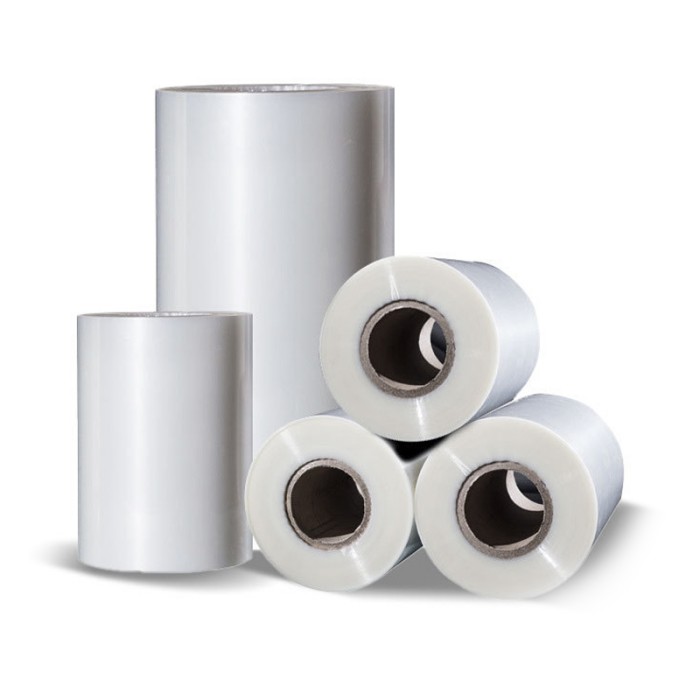
 Film Roll
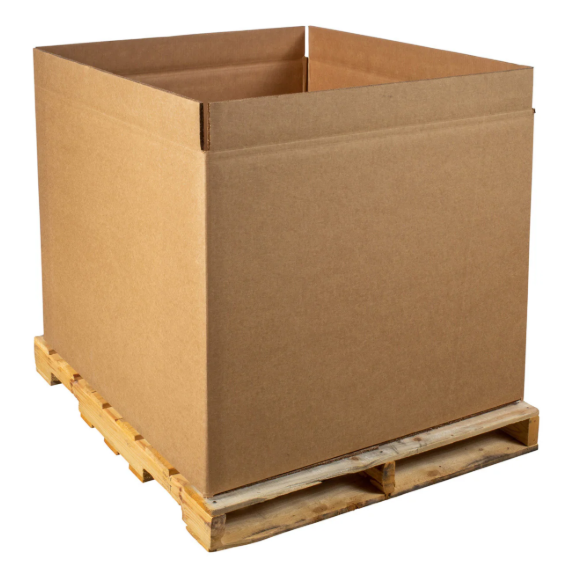
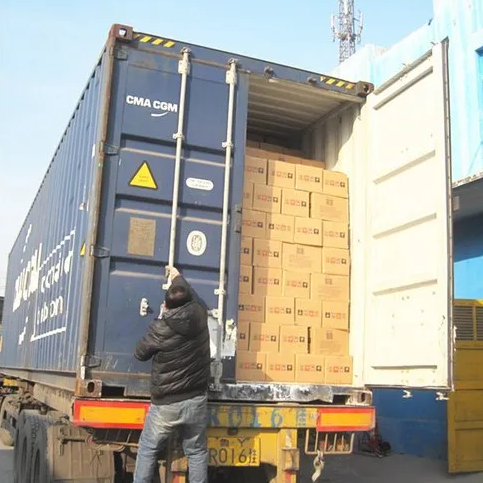 Packaging
Packaging and Delivery Options
| Packaging Item | Standard Arrangement | Customization |
| Sample Packaging | Small trial rolls protected in PE bags and cartons. | Label with coating grade, tray substrate, seal side, and winding direction. |
| Roll Packaging | Rolls wrapped in PE film and packed in suitable cartons. | Custom cartons, labels, core plugs, moisture protection, and edge protection. |
| Pallet Packaging | Approximately 500–2000kg per plywood pallet. | Pallet weight and stacking according to roll size and transport limits. |
| Container Loading | Loading optimized for 20ft or 40ft containers. | Loading plan according to roll dimensions, pallet size, and destination. |
| Delivery Terms | FOB, CIF, EXW, and DDU. | Other terms subject to commercial agreement. |
| Lead Time | Generally 10–15 days after deposit and specification approval. | Custom coating, printing, perforation, or special grades may require additional time. |
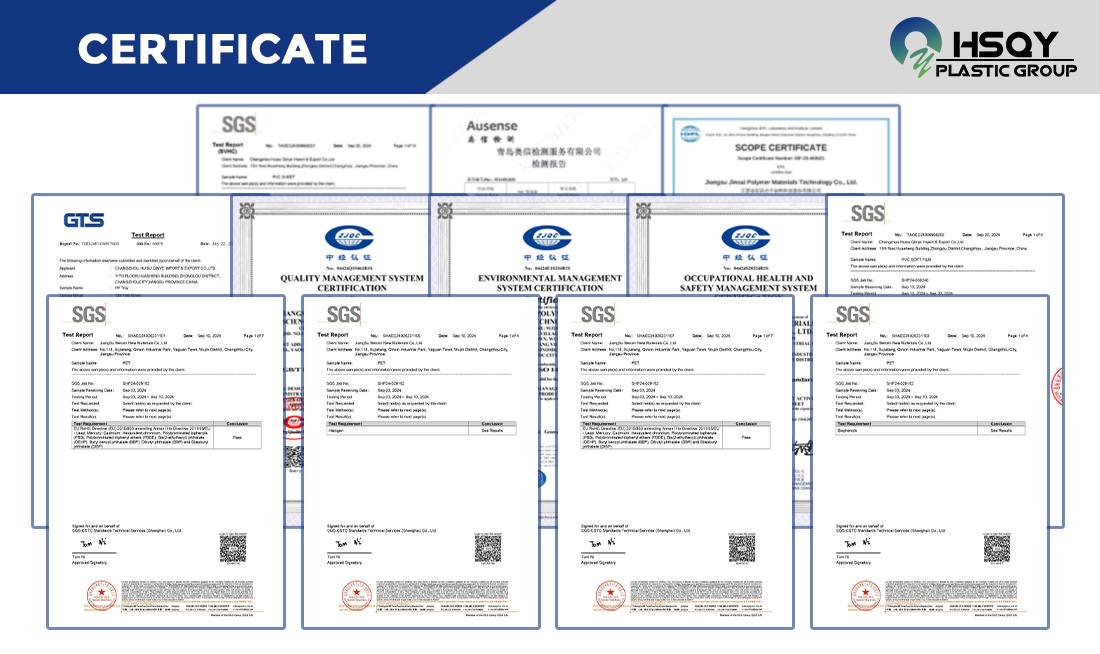
Quality and Compliance Documentation
HSQY can provide available quality-management, inspection, and material documentation for the approved coated grade. Buyers should request the technical data sheet, certificate of analysis, food-contact declaration, migration or compliance reports, coating specification, seal-strength or peel-force method, and roll inspection criteria.
ISO 9001 is a quality-management-system certification and should not be presented as product-specific food-contact approval. FDA, SGS, RoHS, or other compliance statements should identify the exact film grade, coating chemistry, report number, food type, temperature, duration, and intended conditions of use.
Global Exhibitions
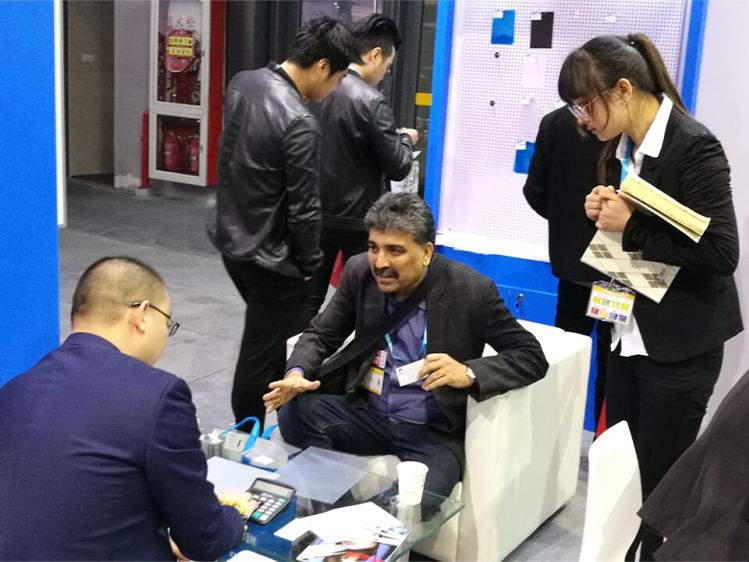
2017 Shanghai Exhibition
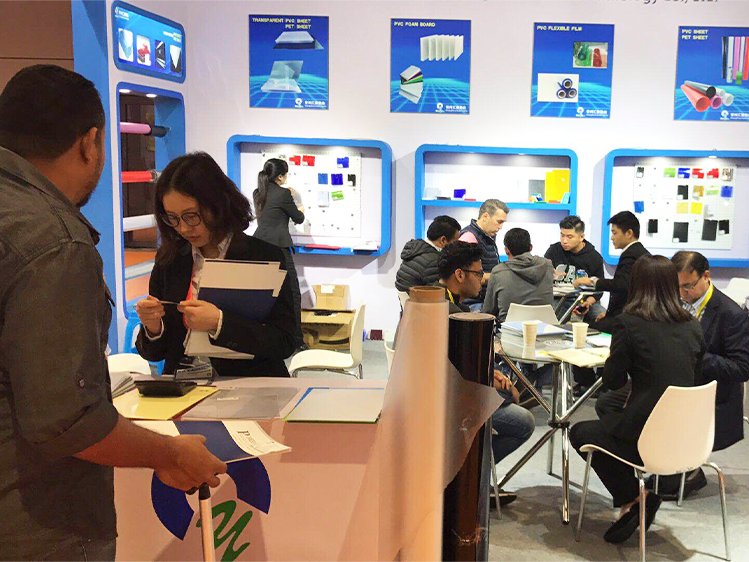
2018 Shanghai Exhibition
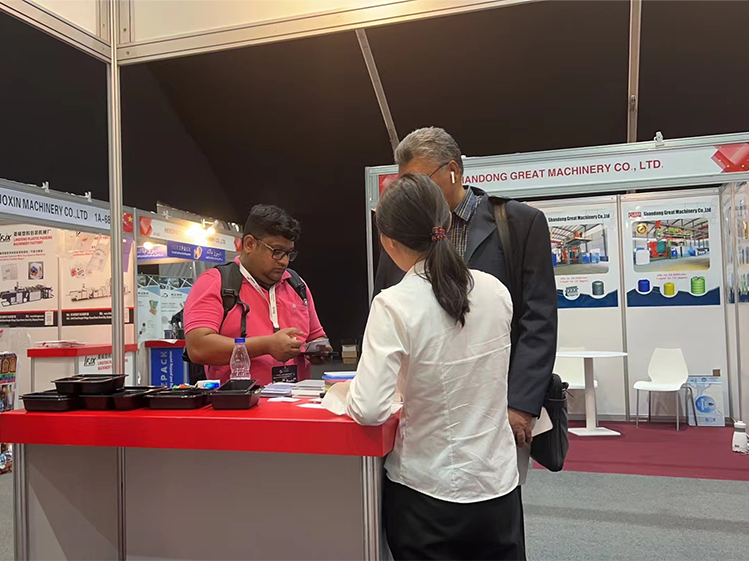
2023 Saudi Exhibition
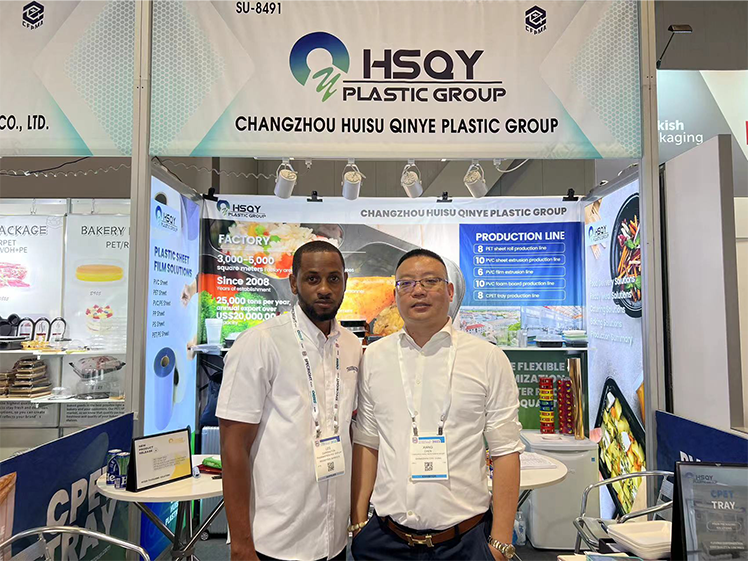
2023 American Exhibition
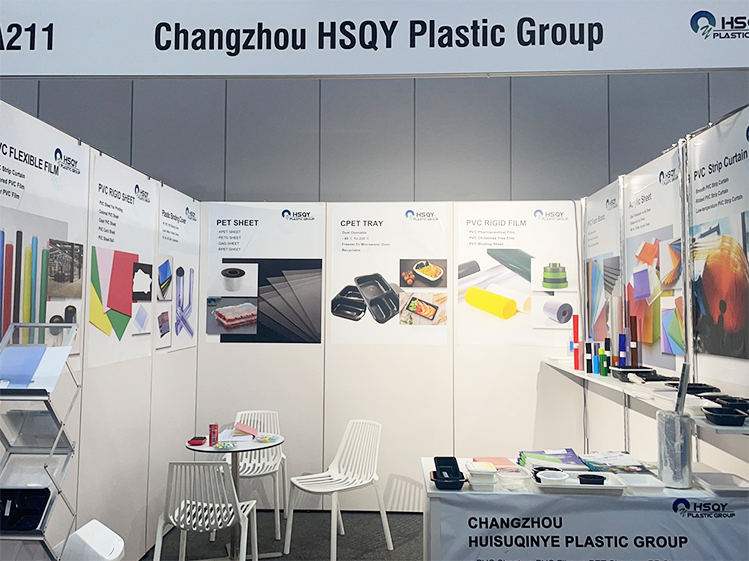
2024 Australian Exhibition
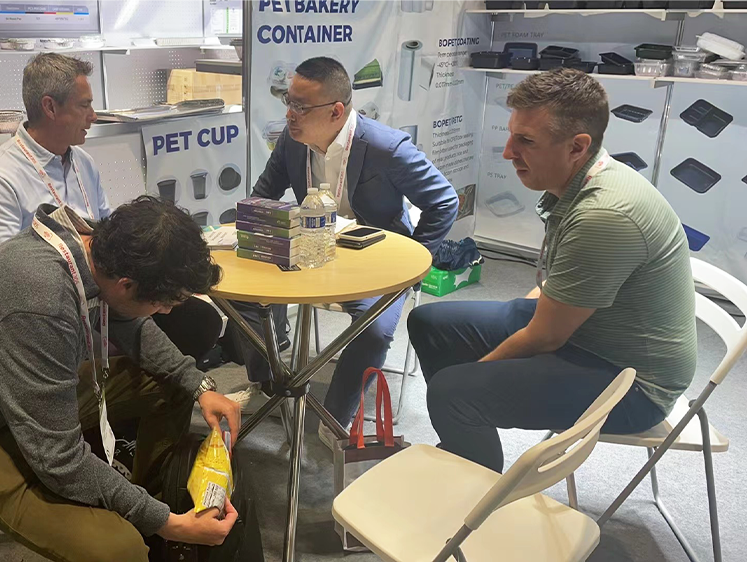
2024 American Exhibition
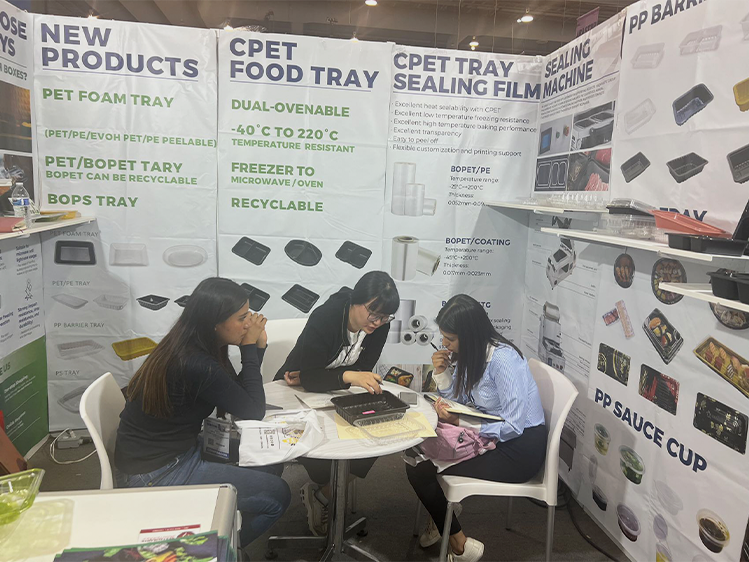
2024 Mexico Exhibition
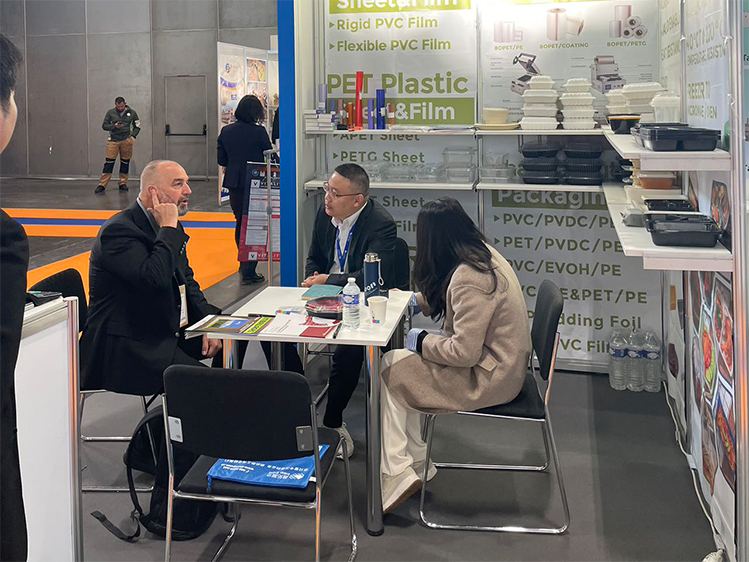
2024 Paris Exhibition
Frequently Asked Questions About BOPET Coated Lidding Film
What is BOPET coated lidding film?
It is a biaxially oriented PET film with a functional heat-seal coating designed to seal or peel from a qualified tray surface.
How is coated BOPET different from BOPET/PE laminated film?
Coated BOPET obtains its sealing function from a surface coating, while BOPET/PE uses a separate PE-based sealing layer laminated to the BOPET substrate.
Can one coated film seal APET, CPET, PP, PE, and PS trays?
Not necessarily. Multi-substrate sealing requires a specifically engineered universal coating. Many projects use separate substrate-specific grades.
Can BOPET coated film provide both lock seal and easy peel?
Yes, but these are different coating grades. Lock seal prioritizes permanent closure, while easy peel is formulated for controlled consumer opening.
What determines the peel force?
Tray resin, coating chemistry, coating weight, sealing temperature, pressure, dwell time, storage conditions, film gauge, and peel-test method all affect peel force.
Is anti-fog available?
Yes. Anti-fog can be incorporated into a suitable coated grade for chilled foods, but the anti-fog side and test conditions must be defined.
Is the standard coated BOPET film high barrier?
Not automatically. High-barrier performance requires a defined barrier layer or coating and measured OTR and WVTR values.
Can the standard film be used in a microwave or oven?
No. The current standard page specification lists the film as non-microwaveable and non-ovenable. A separately qualified thermal grade is required.
Can coated BOPET seal CPET trays?
A CPET-compatible coating can seal qualified CPET trays. If the package is heated with the lid attached, the complete thermal cycle must also be validated.
Why does the coating transfer to the tray?
Possible causes include poor coating anchorage, excessive sealing temperature, incomplete cure, incompatible tray chemistry, ageing, or incorrect storage.
Why does the film shred during peeling?
Common causes include excessive peel force, unsuitable film stiffness, poor coating anchorage, an incompatible tray, or inadequate peel-tab design.
Can BOPET coated film be custom printed?
Yes. Printing can include branding, product information, instructions, barcodes, QR codes, date-code areas, and transparent windows.
What sizes are available?
The current page lists 0.052–0.09mm thickness, standard widths of 180mm, 320mm, 400mm, and 640mm, a custom width range of 150–900mm, and 500m standard roll length.
What is the minimum order quantity?
The current stated MOQ is 1000kg. Trial quantity depends on coating grade, available stock, width, printing, and conversion requirements.
Can I request samples before bulk production?
Yes, subject to material availability and specification. Provide the tray sample, machine details, food application, seal type, film dimensions, and operating conditions.
About HSQY Plastic Group
HSQY Plastic Group supplies coated BOPET lidding films, PET/PE and PET/EVOH/PE films, BOPET/CPP films, CPET and PET trays, PP food trays, plastic sheets, and related food-packaging products for international B2B customers.
The team can support coating-grade selection, tray compatibility, seal and peel development, anti-fog and barrier requirements, roll conversion, printing, perforation, samples, production-line trials, quality documentation, export packing, and international delivery.
Contact HSQY for BOPET Coated Lidding Film

 English
 简体中文
简体中文 繁體中文
繁體中文 العربية
 Français
 Русский
 Español
 Português
 Deutsch
 italiano
 日本語
日本語 한국어
한국어 Nederlands
 Tiếng Việt
 ไทย
ไทย Polski
 Türkçe
 አማርኛ
አማርኛ ພາສາລາວ
 ភាសាខ្មែរ
 Bahasa Melayu
 ဗမာစာ
ဗမာစာ தமிழ்
தமிழ் Filipino
 Bahasa Indonesia
 magyar
 Română
 Čeština
 Монгол
 қазақ
қазақ Српски
 हिन्दी
 فارسی
فارسی Kiswahili
 Slovenčina
 Slovenščina
 Norsk
Norsk Svenska
 українська
 Ελληνικά
 Suomi
Suomi Հայերեն
 עברית
עברית Latine
 Dansk
Dansk اردو
اردو Shqip
Shqip বাংলা
বাংলা Hrvatski
 Afrikaans
 Gaeilge
 Eesti keel
 Māori
Māori සිංහල
සිංහල नेपाली
 Oʻzbekcha
 latviešu
 অসমীয়া
 Aymara
 Azərbaycan dili
 Bamanankan
 Euskara
 Беларуская мова
 भोजपुरी
 Bosanski
 Български
 Català
 Cebuano
 Corsu
Corsu ދިވެހި
 डोग्रिड ने दी
 Esperanto
 Eʋegbe
 Frysk
Frysk Galego
 ქართული
 guarani
 ગુજરાતી
 Kreyòl ayisyen
 Hausa
Hausa ʻŌlelo Hawaiʻi
 Hmoob
Hmoob íslenska
 Igbo
Igbo Ilocano
 Basa Jawa
 ಕನ್ನಡ
ಕನ್ನಡ Kinyarwanda
 गोंगेन हें नांव
 Krio we dɛn kɔl Krio
 Kurdî
Kurdî Kurdî
Kurdî Кыргызча
 Lingala
 Lietuvių
 Oluganda
 Lëtzebuergesch
 Македонски
 मैथिली
 Malagasy
 മലയാളം
 Malti
Malti मराठी
मराठी ꯃꯦꯇꯥꯏ (ꯃꯅꯤꯄꯨꯔꯤ) ꯴.
 Mizo tawng
 Chichewa
 ଓଡ଼ିଆ
ଓଡ଼ିଆ Afaan Oromoo
 پښتو
پښتو ਪੰਜਾਬੀ
 Runasimi
 Gagana Samoa
 संस्कृत
 Gaelo Albannach
 Sepeti
 Sesotho
 chiShona
 سنڌي
سنڌي Soomaali
 Basa Sunda
 Wikang Tagalog
 Тоҷикӣ
 Татарча
 తెలుగు
 ትግንያውያን
 Xitsonga
 Türkmençe
 संस्कृत
 ئۇيغۇرچە
 Cymraeg
 isiXhosa
 ייִדיש
 Yorùbá
 isiZulu