Anti-Fog PET/PE Lock-Seal Lidding Film for Chilled Food Trays
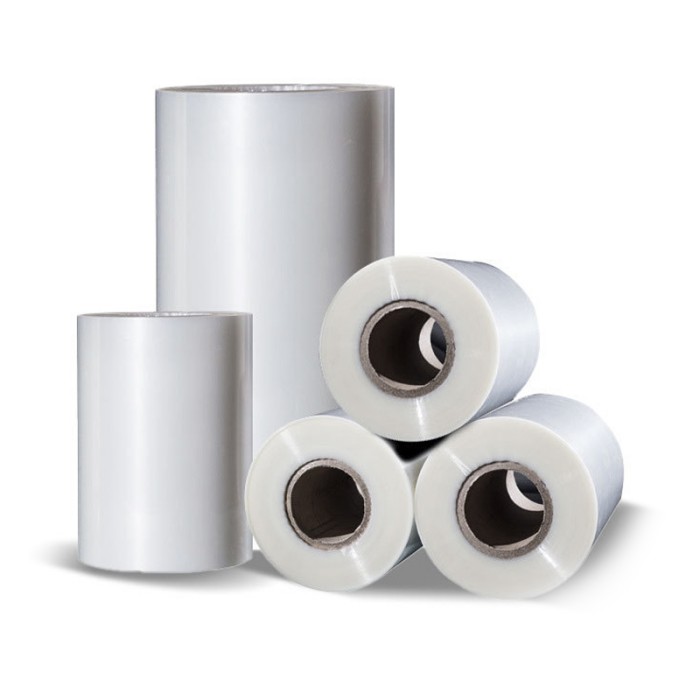
HSQY anti-fog PET/PE lidding film is a clear BOPET/PE lock-seal tray film for chilled foods where condensation can reduce product visibility. The PET outer layer supports clarity, dimensional stability and printability, while the PE-based food-facing layer is designed to heat seal to a compatible PE sealing surface.
The standard grade on this page combines anti-fog performance with a non-easy-peel lock seal. It is primarily intended for compatible PET/PE, PET/EVOH/PE and PE-based tray flanges. Plain APET, CPET, PP and other tray materials require a separately matched sealant or validated film structure.
Available specifications include approximately 0.052–0.09mm thickness, standard widths of 180mm, 320mm, 400mm and 640mm, a broader custom width range of 150–900mm, and standard 500m rolls with custom conversion available.
What Is Anti-Fog PET/PE Lidding Film?
Anti-fog PET/PE lidding film is a laminated tray-sealing film designed for chilled foods and other high-moisture products that require clear product visibility. The PET or BOPET outer layer provides clarity, tensile strength, dimensional stability, puncture resistance, and printability. The PE-based sealing layer bonds to a compatible PE sealing surface.
The anti-fog function reduces the formation of separate water droplets on the inner film surface. Instead, condensed moisture is encouraged to spread into a more uniform transparent layer, helping the packaged product remain visible in refrigerated display and during temperature fluctuations.
The standard grade on this page is a non-easy-peel lock-seal film. It is listed as anti-fog, but not freezer safe, microwaveable, or ovenable. Easy-peel, high-barrier, freezer, microwave, and heat-treatment performance require separately developed film structures and package validation.
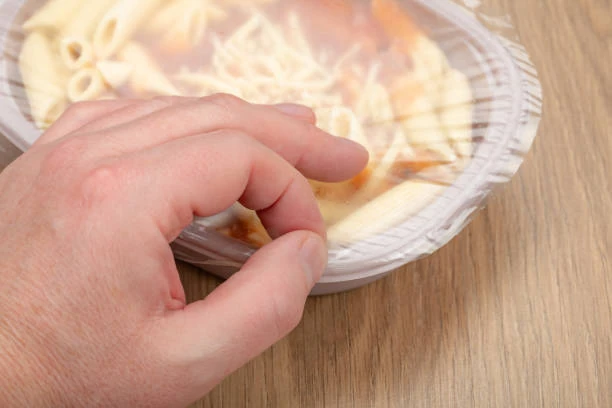
Why Anti-Fog Performance Matters
Clear product visibility: Consumers can inspect fresh produce, meat, seafood, salads, dairy, bakery, and ready meals without condensation obscuring the food.
Improved shelf presentation: High clarity and gloss can support stronger merchandising in refrigerated cabinets.
More consistent inspection: Operators and retailers can visually assess the product and package without opening the tray.
Reduced droplet formation: A suitable anti-fog layer reduces discrete droplets that scatter light and create a cloudy appearance.
Compatibility with printed films: Branding, ingredients, instructions, barcodes, and transparent viewing windows can be incorporated.
Optional barrier enhancement: EVOH or another barrier layer can be added where MAP or oxygen-sensitive products require defined OTR performance.
Commercial roll conversion: Thickness, width, length, core, roll weight, winding direction, and maximum outer diameter can be customized.
Cold-Fog vs. Hot-Fog Performance
Cold fog develops when moisture condenses during refrigerated storage or cold-chain temperature changes. Hot fog can occur when warm or freshly packed food releases moisture against a cooler lidding film. The anti-fog formulation should therefore be selected around the actual filling temperature, cooling process and storage conditions.
A short laboratory demonstration is not enough to define commercial performance. Validate the actual food, tray, fill temperature, storage temperature, humidity, package orientation and shelf-life duration before approving the film.
How Anti-Fog Technology Works
| Stage |
What Happens |
Packaging Result |
| Moisture Generation |
Warm or moisture-rich food releases water vapour inside the sealed tray. |
Humidity rises in the package headspace. |
| Condensation |
When the film surface is colder than the moist air, water begins to condense. |
Without anti-fog, small droplets scatter light and obscure the product. |
| Surface Wetting |
The anti-fog surface promotes spreading of condensed water rather than bead formation. |
A thinner, more continuous water layer retains greater transparency. |
| Drainage and Stability |
Film angle, coating durability, package geometry, temperature, and product moisture affect water movement. |
Anti-fog performance must be tested in the actual package and storage conditions. |
Anti-Fog Coating vs. Internal Anti-Fog Additive
| Anti-Fog Approach |
How It Is Applied |
Important Consideration |
| Surface Anti-Fog Coating |
A functional coating is applied to the film surface intended to face the package interior. |
Coating side, abrasion resistance, blocking, migration, storage, and sealing compatibility must be controlled. |
| Internal Anti-Fog Additive |
An anti-fog additive is incorporated into a polymer layer and migrates or acts at the surface. |
Performance can depend on additive concentration, ageing, temperature, polymer type, and food-contact conditions. |
| Combined Functional Structure |
Coating and multilayer design are selected together for optics, sealing, barrier, and machinability. |
The complete construction should be documented rather than described only as PET/PE. |
Anti-Fog PET/PE Film Specifications
The following table retains the current commercial specifications while adding the functional parameters needed to evaluate an anti-fog film. Final guaranteed properties should be stated in the approved technical data sheet and purchase order.
| Property |
Standard or Available Option |
Selection Note |
| Product Type |
Anti-fog tray lidding film |
Rollstock for tray-sealing equipment |
| Material Structure |
BOPET/PE laminate with anti-fog functionality |
Confirm coating or additive design and complete layer structure |
| Primary Tray Application |
Compatible PET/PE trays and PE sealing surfaces |
Send the tray grade, drawing, or physical sample |
| Thickness |
0.052–0.09mm, custom |
Confirm nominal gauge and tolerance |
| Standard Widths |
180mm, 320mm, 400mm, and 640mm |
Broader custom range: 150–900mm |
| Roll Length |
500m, customizable |
Depends on gauge, width, core, roll weight, and machine limit |
| Appearance |
Clear or custom printed |
Confirm haze, gloss, print coverage, transparent windows, and eye marks |
| Seal Type |
Lock seal / weld seal |
Current standard grade is not easy peel |
| Anti-Fog |
Yes |
Specify test conditions, duration, coated side, storage temperature, and acceptance method |
| Standard Barrier |
General product protection |
Do not claim high oxygen barrier without OTR data |
| High Barrier |
Optional EVOH or other multilayer structure |
Specify OTR, WVTR, gas mixture, and target shelf life |
| Microwave / Oven Use |
No for current standard grade |
A separate qualified thermal grade is required |
| Freezer Use |
No for current standard grade |
A low-temperature grade requires separate testing |
| Reference Density |
Approximately 1.36g/cm³ for the listed laminate |
Finished density varies with layer ratios and additives |
| Printing |
Flexographic or gravure printing by project |
Confirm artwork, colors, repeat, eye mark, and annual volume |
| MOQ |
1000kg |
Trial quantity depends on stock, width, coating, printing, and specification |
| Payment Terms |
30% deposit and 70% balance before shipment |
Confirm in the commercial quotation |
| Delivery Terms |
FOB, CIF, EXW; other terms may be discussed |
Subject to destination and shipment size |
| Lead Time |
10–15 days after deposit and specification approval |
Printed or specialty grades may require more time |
How to Specify Anti-Fog Performance
The word “anti-fog” is not a complete technical specification. Performance should be defined using the actual food, tray, temperature, humidity, storage time, and test method.
| Test Variable |
Why It Matters |
What to Record |
| Product Temperature |
Warm filling or temperature changes increase moisture generation. |
Food temperature at filling and after cooling. |
| Storage Temperature |
Condensation behaviour changes between chilled, ambient, and fluctuating conditions. |
Target temperature and permitted range. |
| Relative Humidity |
Higher humidity increases the amount of available condensate. |
Package and cabinet humidity where practical. |
| Test Duration |
Some films perform initially but lose effectiveness during storage. |
Inspection points such as 1 hour, 24 hours, 7 days, and end of shelf life. |
| Film Orientation |
The anti-fog surface must face the correct side of the package. |
Coated side, seal side, winding direction, and roll label. |
| Visual Rating |
A repeatable acceptance scale is needed to compare samples. |
Clear area percentage, droplet size, image clarity, or agreed reference photographs. |
| Food Contact and Migration |
The anti-fog chemistry may be on the food-contact side. |
Applicable declaration, migration conditions, food type, and intended use. |
Anti-Fog Durability and Storage
Ageing: Anti-fog performance may change during roll storage and after conversion.
Abrasion: Winding, handling, and machine contact can damage a surface coating.
Blocking: Coated surfaces should unwind cleanly without sticking or transferring.
Contamination: Dust, oil, fingerprints, or incorrect cleaning may reduce wetting performance.
Temperature exposure: High warehouse temperatures may affect additives, coating, and roll quality.
Packaging: Rolls should remain protected from moisture, dust, direct sunlight, and physical damage.
First-in, first-out: Use controlled inventory rotation according to the approved shelf-life recommendation.
Tray Material Compatibility
| Tray Material |
Compatibility Guidance |
Recommended Approach |
| PET/PE Tray |
Primary application when the tray flange presents a compatible PE sealing surface. |
Confirm the PE grade, flange geometry, contamination tolerance, and lock-seal strength. |
| PET/EVOH/PE Tray |
Often compatible when the outside sealing layer remains PE. |
Validate seal integrity, MAP gas retention, and complete barrier performance. |
| PE or PE-Coated Tray |
May be compatible when the tray and lidding PE grades have a suitable sealing window. |
Test seal initiation temperature, weld strength, distortion, and leakage. |
| Plain APET / RPET Tray |
A plain PET flange may not seal reliably to a standard PE sealant. |
Use a PET-compatible or universal sealing layer after testing. |
| CPET Tray |
Standard anti-fog PET/PE film should not automatically be treated as ovenable or CPET-compatible. |
Use a dedicated CPET-compatible and heat-qualified grade. |
| PP / PP-EVOH-PP Tray |
A PP sealing surface normally requires a PP-compatible sealant. |
Use BOPET/CPP, EVOH/PP, or another qualified PP sealing structure. |
Lock Seal, Easy Peel, and High Barrier
| Functional Grade |
Primary Benefit |
When to Select It |
| Anti-Fog Lock Seal |
Strong permanent closure plus clear refrigerated display. |
Liquid foods, tamper-evident packs, transport-sensitive chilled products, and food-service packaging. |
| Anti-Fog Easy Peel |
Clear display plus controlled consumer opening. |
Retail salads, produce, dairy, desserts, ready meals, meat, and seafood. |
| Anti-Fog High Barrier |
Clear display plus defined oxygen barrier for MAP. |
Fresh protein, cheese, prepared foods, and oxygen-sensitive chilled products. |
| Anti-Fog Heat-Resistant |
Clarity maintained during specified pasteurisation, reheating, microwave, or oven use. |
Requires a separately qualified film, tray, ink, adhesive, food, and thermal cycle. |
The standard product on this page combines anti-fog with a non-easy-peel lock seal. Do not apply easy-peel, high-barrier, freezer, microwave, or oven claims unless those functions are included in the approved film construction.
Anti-Fog Film for MAP Packaging
Anti-fog can be combined with high-barrier MAP structures, but the two functions solve different problems. Anti-fog controls visibility; barrier layers control oxygen and gas transmission.
Specify the target OTR and WVTR with temperature, humidity, test method, and units.
Provide the initial CO₂, N₂, and O₂ gas mixture and residual-oxygen target.
Confirm the barrier structure of both tray and lidding film.
Test gas retention, seal integrity, leak rate, and anti-fog throughout shelf life.
Consider product respiration for fresh produce and prepared salads.
Validate cold-chain temperatures from packing through retail display.
Seal Integrity and Contamination Tolerance
Anti-fog performance cannot compensate for a poor seal. Seal integrity depends on film and tray compatibility, flange cleanliness, tooling flatness, temperature, pressure, dwell time, web tension, tray distortion, and production speed.
| Potential Issue |
Possible Cause |
Recommended Check |
| Fogging Remains |
Anti-fog side faces outward, coating damaged, excessive condensate, or unsuitable grade. |
Verify roll orientation, visual test conditions, coating integrity, and product moisture. |
| Film Looks Hazy Before Use |
Surface contamination, coating appearance, roll storage, or incorrect material. |
Inspect retained samples, haze values, storage records, and roll labels. |
| Seal Leaks |
Flange contamination, low heat, uneven pressure, wrinkles, damaged rim, or incompatible PE grade. |
Run seal-window, contaminated-seal, leak, and burst tests. |
| Film Wrinkles |
Incorrect tension, excessive heat, poor tracking, damaged roll edges, or uneven tooling. |
Check machine setup, roll build, coefficient of friction, and tooling. |
| Coating Transfers or Blocks |
Insufficient cure, excessive storage heat, winding pressure, or incompatible surface contact. |
Review coating specification, roll storage, winding, and shelf life. |
Custom Printing and Film Orientation
Custom printing can include logos, ingredients, preparation instructions, barcodes, QR codes, date-code areas, traceability, and transparent viewing windows.
Anti-fog side: Identify the functional surface that must face the package interior.
Seal side: Confirm the PE sealing surface and its orientation.
Winding direction: Provide an approved winding diagram rather than relying only on verbal descriptions.
Print repeat: Match the tray-sealer cutting and tooling layout.
Eye mark: Confirm size, color, position, and distance from the roll edge.
Ink location: Use surface or reverse printing according to the approved laminate.
Transparent window: Keep critical viewing areas free of graphics and excessive coating variation.
Tray-Sealer and Roll Compatibility
Provide the tray-sealer brand and model, film width, core inside diameter, maximum outer diameter, roll weight, winding direction, anti-fog side, seal-side orientation, eye-mark sensor, tooling layout, operating speed, temperature, pressure, and dwell time.
Line trials should evaluate web tracking, cutting, seal continuity, weld strength, leakage, contamination tolerance, print registration, anti-fog rating, coating durability, roll blocking, package clarity, and performance throughout the intended chilled shelf life.
Quality-Control Requirements
Anti-fog rating: Use agreed temperature, humidity, food load, storage time, and visual reference.
Coating weight or additive control: Confirm manufacturing consistency for the approved anti-fog system.
Haze and clarity: Measure optical quality before and after condensation testing.
Seal strength: Test the actual tray using an agreed method and conditioning period.
Lamination bond strength: Verify no delamination during conversion, sealing, and storage.
Coefficient of friction: Control unwinding and machine transport.
Thickness profile: Affects optics, roll build, tracking, and seal response.
Roll quality: Check edge alignment, wrinkles, telescoping, joints, core condition, and winding direction.
Typical Applications
Fresh fruits and vegetables
Prepared salads and food-to-go products
Chilled ready meals
Fresh meat, poultry, and seafood
Dairy products, desserts, yogurt, and cheese
Bakery products and prepared snacks
Deli foods and processed foods
PET/EVOH/PE MAP trays using a separately specified high-barrier anti-fog lid
Private-label food packaging requiring custom printing and clear display
Explore HSQY's PET/PE tray range and PET/PE tray sealing film category for related packaging solutions.
Information Required for an Accurate Quotation
Tray material, layer structure, supplier, product code, drawing, or physical sample
Tray dimensions, flange width, compartments, fill weight, and peel tab if applicable
Food type, product temperature, moisture level, and filling conditions
Target chilled-storage temperature, humidity, and shelf life
Required anti-fog test method, duration, visual rating, or reference sample
Lock seal, hard peel, or easy-peel requirement
Need for standard barrier, high barrier, MAP, printing, freezer, or heat-treatment performance
Tray-sealing machine brand, model, tooling layout, and commercial line speed
Film thickness, width, length, core ID, maximum outer diameter, roll weight, and winding direction
Anti-fog side, seal side, print orientation, eye-mark position, and print repeat
Required food-contact, migration, quality, barrier, and destination-market documentation
Trial quantity, annual volume, delivery destination, and requested launch date
Request Anti-Fog Film Samples and Pricing
Customization Services
Custom 0.052–0.09mm thickness and tolerance
Custom 150–900mm roll widths
Custom roll length, core, roll weight, maximum outer diameter, and winding direction
Surface-coated or application-specific anti-fog structures
Lock-seal, hard-peel, and separately developed easy-peel grades
Standard-barrier, EVOH high-barrier, MAP, low-temperature, and heat-resistant development
Flexographic or gravure printing for branding and traceability
Custom eye marks, print repeats, transparent windows, coding areas, perforation, and venting
Tray compatibility, anti-fog, seal-window, contamination, leak, and production-line trials
Custom cartons, roll labels, pallet marks, and international delivery
Quality and Compliance Documentation
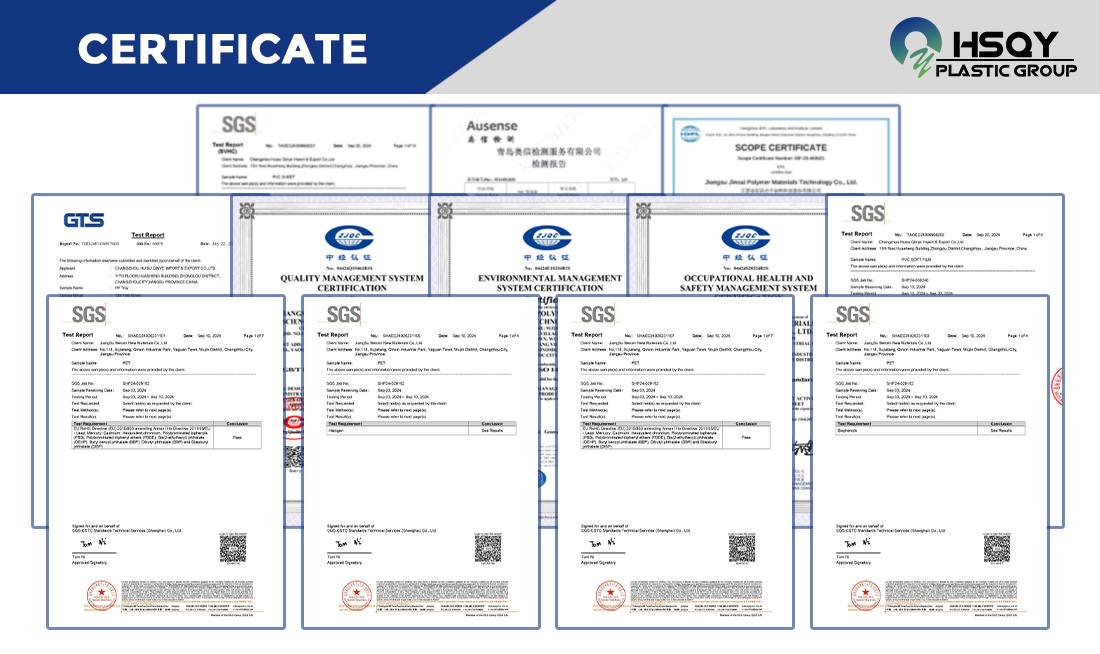
HSQY can provide available quality-management, inspection, and material documentation for the approved grade. Buyers should request the technical data sheet, certificate of analysis, food-contact declaration, migration or compliance reports, anti-fog test method, seal-strength method, barrier data when applicable, and roll inspection criteria.
ISO 9001 is a quality-management-system certification and should not be presented as product-specific proof of food-contact safety. SGS or food-contact claims should identify the exact report, laminate structure, coating or additive system, food type, temperature, duration, and intended conditions of use.
![Anti-fog PET PE lidding film quality documentation]()
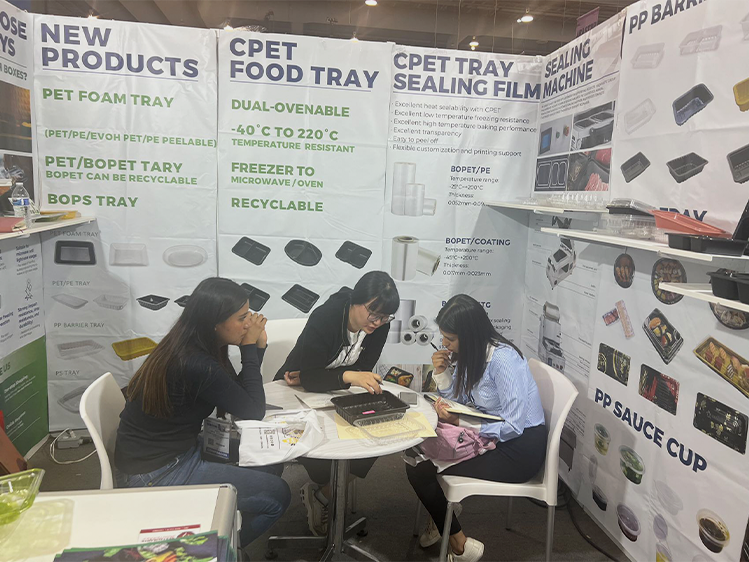
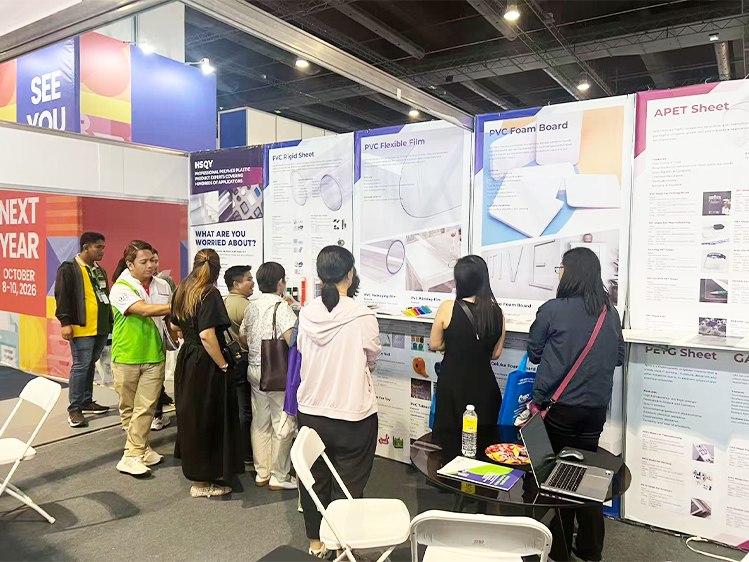
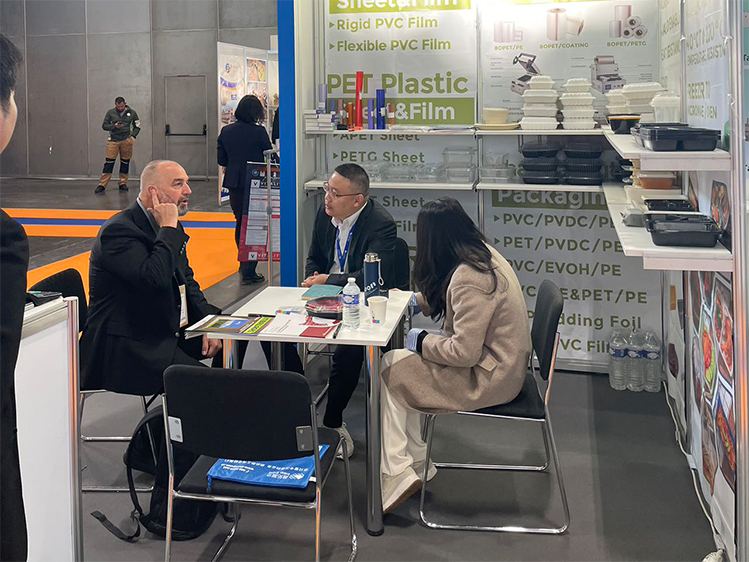
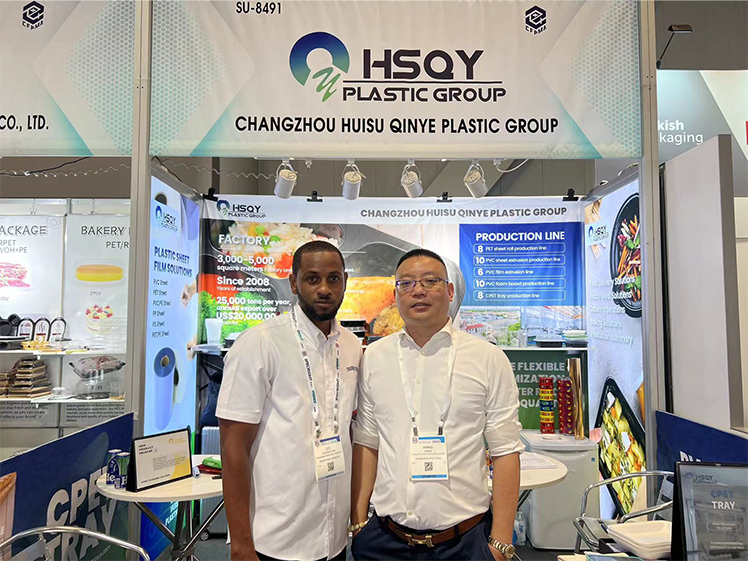
HSQY International Exhibitions

2024 Mexico Exhibition

2025 Philippines Exhibition

2024 Paris Exhibition

2023 Saudi Exhibition

2024 American Exhibition

2017 Shanghai Exhibition

2018 Shanghai Exhibition

2023 American Exhibition
Production and Packing
Packaging and Delivery
Sample Packaging: Small rolls are protected in PE bags and cartons against moisture, dust, creasing, abrasion, and edge damage.
Roll Packaging: Commercial rolls are wrapped in PE film and packed in cartons or another suitable export format.
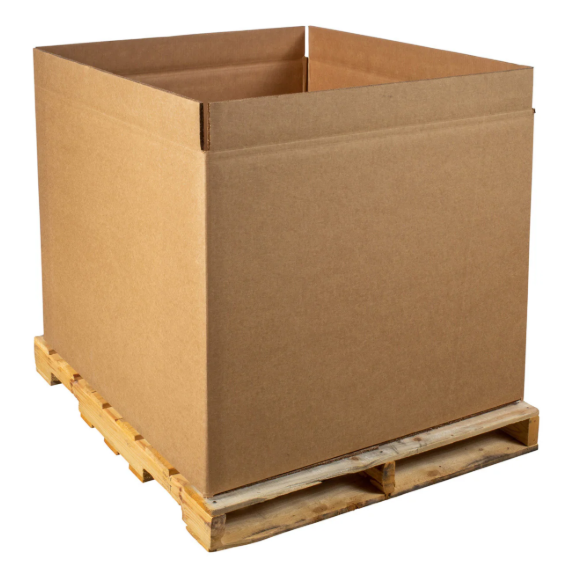
Pallet Packaging: Approximately 500–2000kg per plywood pallet may be used according to roll dimensions and transport conditions.
Roll Identification: Labels can show grade, structure, thickness, width, length, lot number, anti-fog side, seal side, winding direction, and production date.
Storage: Keep rolls in clean, dry, temperature-controlled conditions away from direct sunlight, excessive heat, moisture, and chemicals.
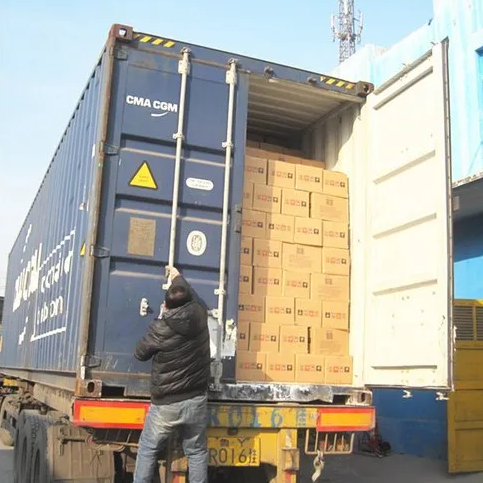
Delivery Terms: FOB, CIF, and EXW are listed options; other terms may be discussed.
Lead Time: Generally 10–15 days after deposit and final specification approval, subject to coating, printing, structure, quantity, and production schedule.
Frequently Asked Questions
What is anti-fog PET/PE lidding film?
It is a BOPET/PE tray-sealing laminate with an anti-fog surface or additive designed to reduce discrete condensation droplets and maintain clearer product visibility.
How does anti-fog lidding film work?
The anti-fog surface improves wetting so condensed moisture spreads into a thinner, more transparent layer instead of forming light-scattering droplets.
Does anti-fog film stop condensation completely?
No. Moisture can still condense. Anti-fog technology changes how the water behaves on the surface so visibility is improved.
Which side of the film should face the food?
The approved anti-fog and sealing side must face the package interior. Confirm the roll label, winding diagram, seal side, and anti-fog side before loading the machine.
How long does the anti-fog effect last?
Durability depends on the coating or additive, storage time, abrasion, food moisture, temperature, humidity, and package design. Test performance through the intended shelf life.
Which trays can this PET/PE film seal?
The standard PE sealant is mainly intended for PET/PE, PET/EVOH/PE, PE, and PE-coated trays with a compatible PE sealing surface.
Can it seal plain APET, CPET, or PP trays?
Not automatically. Plain PET, CPET, and PP surfaces may require different sealant chemistry. Send the actual tray for compatibility testing.
Is the standard anti-fog grade easy peel?
No. The current standard grade is listed as non-easy-peel. Easy-peel anti-fog film requires a separately formulated sealant layer.
Can anti-fog be combined with high barrier?
Yes. EVOH or another barrier layer can be added for MAP, but anti-fog and barrier performance should be specified and tested separately.
Is the standard grade freezer, microwave, or oven safe?
No. The current standard grade is listed as non-freezer, non-microwave, and non-ovenable. Special grades require separate validation.
Can anti-fog film be custom printed?
Yes. Printing can include logos, product information, barcodes, QR codes, date-code areas, and transparent viewing windows.
What sizes are available?
The page lists standard widths of 180mm, 320mm, 400mm, and 640mm, a custom range of 150–900mm, thicknesses of 0.052–0.09mm, and a standard roll length of 500m.
How should anti-fog performance be tested?
Use the actual tray and food under defined filling temperature, storage temperature, humidity, duration, film orientation, and visual acceptance criteria.
What is the minimum order quantity?
The current stated MOQ is 1000kg. Sample and trial quantities depend on stock, coating, width, printing, barrier, and seal requirements.
Can I request samples before bulk production?
Yes, subject to material availability and specification. Provide the tray, food application, anti-fog test conditions, machine details, and roll configuration.
About HSQY Plastic Group
HSQY Plastic Group supplies anti-fog PET/PE lidding films, PET/PE trays, PET/EVOH/PE high-barrier trays and films, easy-peel films, lock-seal films, plastic sheets, and related packaging products for international B2B customers.
The team can support anti-fog specification, tray compatibility, film-structure selection, roll conversion, printing, barrier selection, samples, production-line trials, quality documentation, export packing, and international delivery.
Contact HSQY for Anti-Fog PET/PE Film