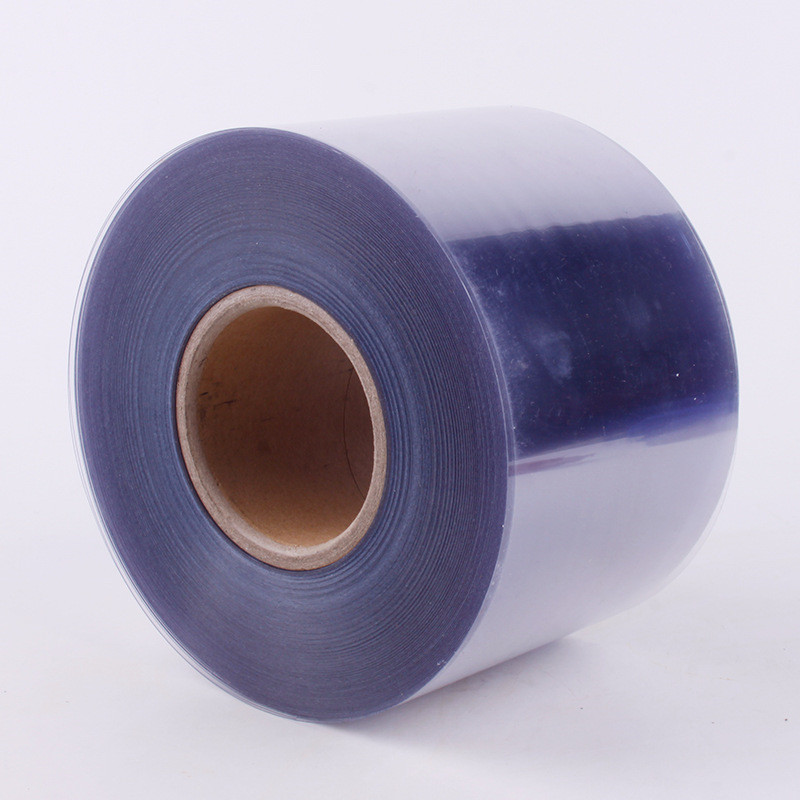
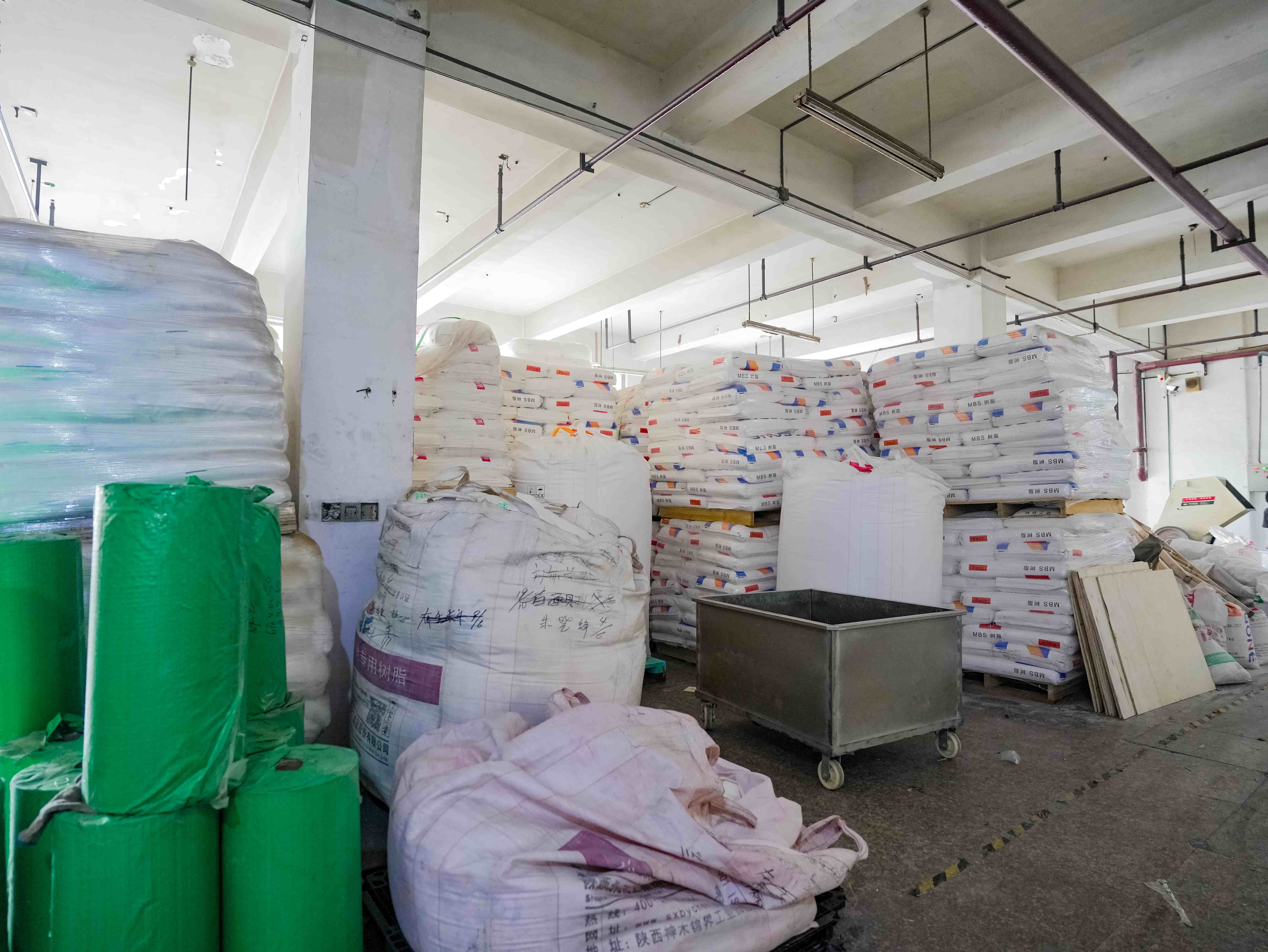
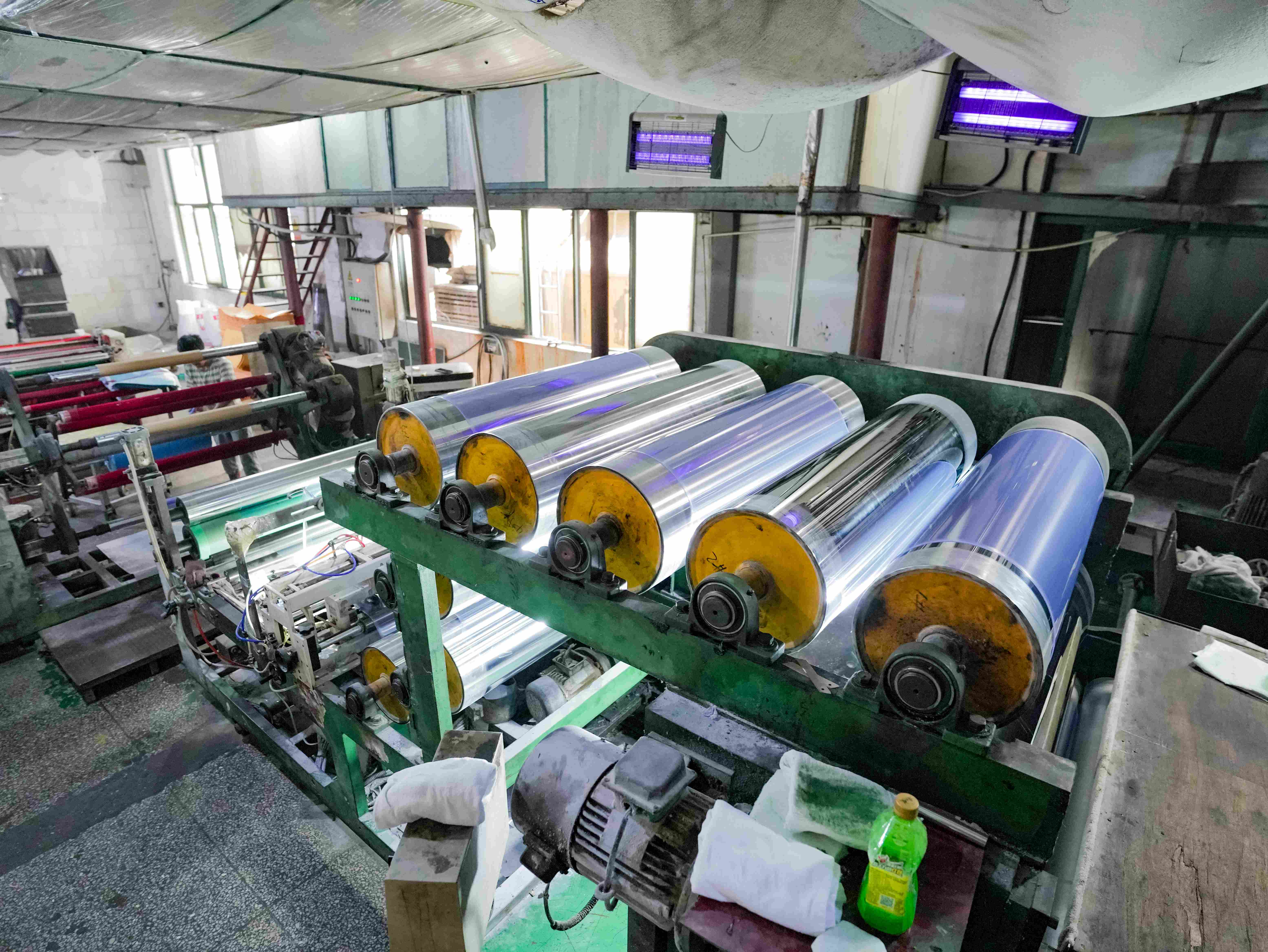
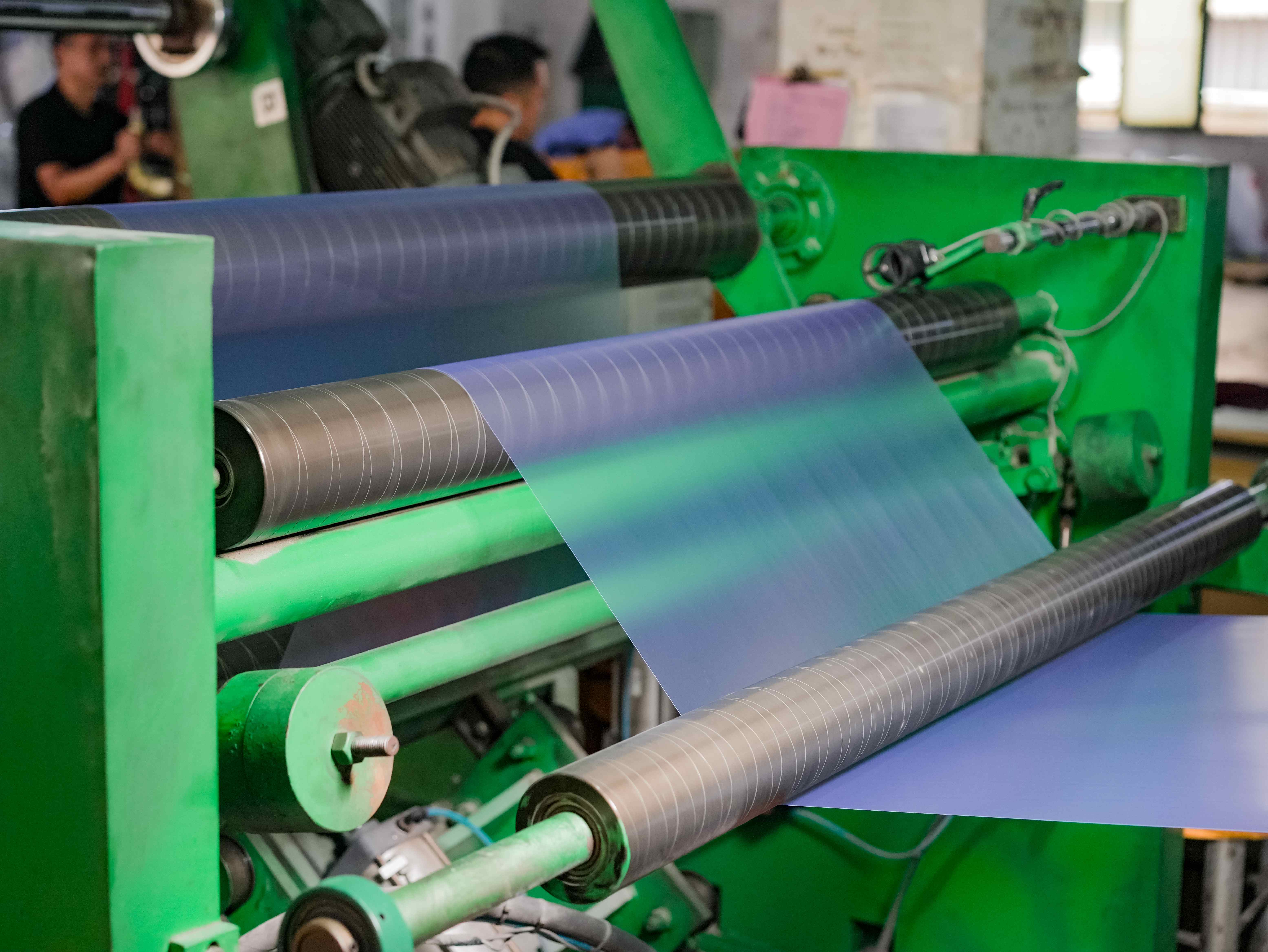
Transparent Rigid PVC Sheet Roll for Packaging
HSQY manufactures transparent rigid PVC sheet rolls for blister packaging, folding boxes, printing, binding covers, paper-box windows, thermoforming, retail displays and industrial plastic conversion.
The material is supplied as master rolls, slit rolls, flat sheets and custom-cut pieces. Available options include natural clear, blue-tint transparent, red, yellow, blue, other transparent colors and customized opaque colors.
Extruded PVC is available in an approximate thickness range of 0.15mm to 6.5mm, while calendered PVC is commonly supplied from approximately 0.08mm to 1.2mm. Additional thin-gauge specifications may be evaluated according to width, formulation and production feasibility.
Roll widths can be customized from approximately 100mm to 1500mm. Sheet sizes such as 700 × 1000mm, 915 × 1830mm and 1220 × 2440mm are available, together with customized dimensions.
This product is a rigid or semi-rigid PVC packaging material. It should not be confused with soft plasticized PVC film used for curtains, table covers, tent windows or flexible enclosures.
Printing-grade, folding-box-grade, blister-grade, thermoforming-grade, antistatic, UV-stabilized, impact-modified and tested flame-retardant PVC are separate technical options. The correct grade should be selected according to the final process and required performance.
Request PVC Roll Pricing Request Material Samples
Transparent PVC Sheet Roll Overview Video
Watch the video below to learn more about HSQY transparent rigid PVC rolls, available thicknesses, extrusion and calendering processes, customized sizes and packaging applications.
What Is a Transparent Rigid PVC Sheet Roll?
A transparent rigid PVC sheet roll is a continuous roll of clear polyvinyl chloride formulated to retain useful stiffness and dimensional stability.
Unlike flexible PVC, rigid PVC contains little or no conventional plasticizer. It is therefore better suited to folding boxes, printed sheets, blister packs, binding covers, clear packaging windows and thermoformed components.
The material can be manufactured by extrusion or calendering and supplied in rolls or sheets. It can then be slit, cut, printed, die cut, scored, folded, punched, bonded, welded or thermoformed.
The terms clear PVC film, rigid vinyl roll, PVC sheet roll, transparent PVC packaging film and rigid PVC film are frequently used for related products. Buyers should specify hardness, thickness, width, surface and application rather than relying only on the general product name.
Rigid PVC Roll vs. Flexible PVC Film
| Comparison |
Rigid or Semi-Rigid PVC |
Flexible PVC |
| Flexibility |
Retains shape and provides dimensional support |
Soft, pliable and able to drape or roll easily |
| Plasticizer Level |
Little or no conventional plasticizer |
Contains plasticizer to increase flexibility |
| Typical Thickness |
Thin rigid film through thicker sheet products |
Flexible films and thick flexible sheet rolls |
| Common Applications |
Folding boxes, printing, blister packs, binding covers and thermoforming |
Curtains, table covers, bags, flexible windows and protective enclosures |
| Selection Requirement |
Confirm hardness, plasticizer level, processing method, temperature and final application before ordering |
Transparent PVC Sheet Roll Images
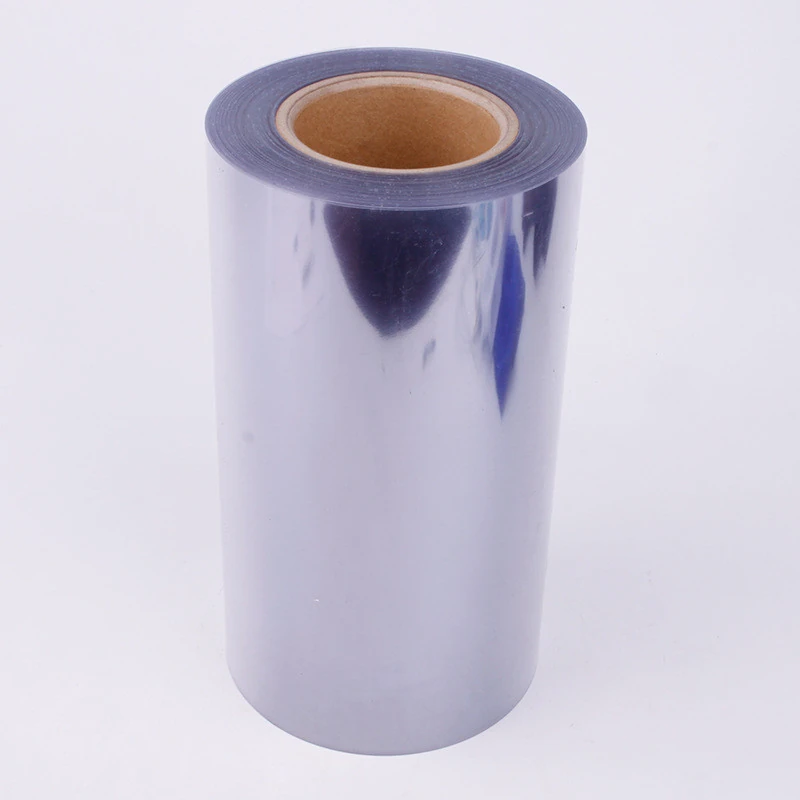
Transparent Rigid PVC Sheet Roll

Clear PVC Sheet Roll for Printing

PVC Sheet Roll for Blister Packaging
Transparent PVC Sheet Roll Data Sheets
Download the available technical documents below. Before relying on a report, confirm that the tested product, formulation, thickness, color and intended application correspond to the material being ordered.
![Transparent PVC sheet data sheet PDF icon]() Download Transparent PVC Sheet Data Sheet
Download Transparent PVC Sheet Data Sheet
![Transparent PVC sheet test report PDF icon]() Download Transparent PVC Sheet Test Report
Download Transparent PVC Sheet Test Report
Transparent PVC Sheet Roll Specifications
| Property |
Extruded PVC |
Calendered PVC |
| Product Name |
Transparent Rigid PVC Sheet Roll |
| Model |
Clear PVC Sheet |
| Product Code |
HSQY-Clear-01 |
| Material |
Rigid or semi-rigid polyvinyl chloride compound |
| Typical Thickness Range |
Approximately 0.15-6.5mm |
Approximately 0.08-1.2mm |
| Wider Custom Range |
Approximately 0.05-6.5mm, subject to production method, width, grade and tolerance |
| Roll Width |
Approximately 100-1300mm |
Approximately 100-1500mm |
| Standard Sheet Sizes |
700 × 1000mm, 915 × 1830mm, 1220 × 2440mm and customized dimensions |
| Supply Form |
Master rolls, slit rolls, flat sheets and custom-cut pieces |
| Core Size |
76mm paper core standard; customized core subject to roll specification |
| Roll Diameter |
Customized according to thickness, width, machine capacity and handling requirements |
| Roll Weight |
Customized according to material dimensions and lifting limitations |
| Typical Density |
Approximately 1.36g/cm³; final value depends on the formulation |
| Colors |
Natural clear, blue-tint, red, yellow, blue, transparent colors and customized opaque colors |
| Surface Finishes |
Glossy, matte, light frosted, heavy frosted, embossed or customized texture |
| Surface Treatment |
Untreated, corona treated, primer coated, silicone coated, anti-block or customized |
| Material Grades |
General-purpose, printing, folding-box, binding, thermoforming, blister, antistatic and application-specific grades |
| Printing Methods |
Offset, screen, UV and selected digital printing after compatibility testing |
| Converting Methods |
Slitting, sheeting, die-cutting, punching, scoring, folding, bonding, welding and lamination |
| Forming Methods |
Vacuum forming, pressure forming and thermoforming |
| Main Applications |
Folding boxes, blister packs, printed sheets, binding covers, packaging windows, displays and fabricated components |
| Functional Options |
Antistatic, impact-modified, UV-stabilized, cold-resistant and tested flame-retardant formulations where required |
| Protective Film |
Available for selected glossy, printed or scratch-sensitive surfaces |
| Standard MOQ |
Approximately 1,000kg |
| Samples |
A4 sheets, custom-cut pieces or limited roll samples may be available |
| Payment Terms |
T/T, L/C and other terms subject to commercial confirmation |
| Delivery Terms |
EXW, FOB, CNF, CIF, DDU and other agreed terms |
| Typical Lead Time |
Approximately 10-14 days, subject to specification, quantity and production schedule |
| Loading Ports |
Shanghai, Ningbo or another agreed port |
Final thickness tolerance, roll width, roll weight, core, transparency, haze, hardness, color, surface finish and functional performance should be confirmed in an approved written specification.
Extruded vs. Calendered PVC Roll
| Comparison |
Extruded PVC |
Calendered PVC |
| Production Method |
Molten PVC compound is pushed through a flat die |
PVC compound is passed through a series of heated rollers |
| Typical Thickness |
Suitable for medium and thicker sheet specifications |
Commonly selected for thin and medium-gauge roll products |
| Maximum Width |
Approximately 1300mm for the listed product range |
Approximately 1500mm for the listed product range |
| Typical Applications |
Thermoforming, fabrication, protective parts and thicker sheets |
Printing, folding boxes, binding covers, windows and thin packaging |
| Final Selection |
Select according to thickness, surface, width, flatness, forming performance and final application |
Transparent PVC Roll Thickness Guide
| Thickness Range |
General Characteristics |
Typical Applications |
| 0.08-0.15mm |
Lightweight and relatively flexible rigid-film grade |
Thin overlays, lamination, small windows and lightweight printed products |
| 0.15-0.30mm |
Balanced flexibility, rigidity and converting performance |
Folding boxes, binding covers, blister packs and printing |
| 0.30-0.50mm |
Increased stiffness and shape retention |
Larger boxes, thermoformed trays, displays and durable covers |
| 0.50-1.20mm |
Rigid sheet with stronger dimensional support |
Rigid inserts, signs, protective components and stronger thermoformed parts |
| Above 1.20mm |
Thick rigid sheet generally produced by extrusion |
Industrial fabrication, guards, panels and structural components |
Thickness selection should also consider the unsupported area, product weight, forming depth, bending radius, printing method, machine speed and required rigidity.
Key Features of Transparent PVC Sheet Rolls
Clear Product Visibility
Clear PVC allows packaged products, printed graphics and display contents to remain visible. Final transparency depends on formulation, recycled content, thickness and surface finish.
Practical Rigidity
Rigid and semi-rigid PVC retains shape better than flexible vinyl and provides dimensional support for folding cartons, binding covers, packaging windows and thermoformed parts.
Moisture Resistance
The non-porous surface has low water absorption and is suitable for many packaging and display applications exposed to normal humidity.
Chemical Resistance
PVC provides resistance to many acids, alkalis, oils and common chemicals. Suitability depends on chemical concentration, temperature, exposure duration and mechanical stress.
Printing and Decoration
Suitable grades can be offset printed, screen printed, UV printed, foil stamped, embossed or decorated with compatible coatings and labels.
Folding and Die-Cutting
Folding-box-grade PVC can be die cut, scored, creased and folded. Tool design, sheet direction and fold radius affect stress whitening and cracking.
Thermoforming Capability
Thermoforming-grade PVC can be heated and formed into blisters, trays, clamshell inserts and protective packaging when the material and forming conditions are correctly matched.
Custom Roll Conversion
Width, roll diameter, core, roll weight, winding direction, surface treatment, protective film and export packaging can be customized for the buyer's equipment.
PVC Roll for Printing
Transparent rigid PVC is used for printed folding boxes, binding covers, labels, promotional displays, cards, menus and other plastic-printing products.
| Printing Method |
Typical Application |
Important Checks |
| Offset Printing |
Printed packaging, covers and commercial plastic sheets |
Ink chemistry, static control, drying, curing and sheet feeding |
| Screen Printing |
Logos, solid colors, text and durable graphics |
Surface preparation, ink adhesion and scratch resistance |
| UV Printing |
Displays, short runs and detailed customized graphics |
Printer model, UV energy, heat distortion and ink flexibility |
| Foil Stamping |
Premium folding boxes and decorative branding |
Foil type, temperature, pressure and dwell time |
| Digital Printing |
Prototypes, samples and short-run products |
Ink system, primer, surface treatment and curing compatibility |
The printer model, ink, surface energy, treated side, curing method and post-print folding or thermoforming requirements should be supplied before material selection.
PVC Sheet Roll for Folding Boxes
Clear rigid PVC can be converted into transparent folding cartons, sleeves, gift boxes and retail packaging for cosmetics, toys, electronics, stationery, hardware and promotional products.
Die-cutting of carton profiles, locking tabs, slots and hanging holes.
Scoring and creasing for controlled folds and straight corners.
Offset, screen or UV printing for branding and instructions.
Foil stamping, embossing and decorative surface treatment.
Adhesive bonding, ultrasonic welding or other compatible joining methods.
Manual or automatic box assembly after production-line testing.
Crease design, material direction, fold radius, whitening, glue compatibility and automated feeding should be evaluated before bulk production.
PVC Roll for Blister Packaging and Thermoforming
Suitable thermoforming grades can be formed into transparent blister packs, clamshells, trays, protective inserts and product-display packaging.
Select the Correct Forming Grade
Printing-grade or binding-grade PVC may not provide the same forming behavior as a dedicated blister or thermoforming formulation.
Control Heating Uniformity
Uneven heating can cause thin corners, webbing, poor cavity definition, flange distortion and inconsistent dimensions.
Match Thickness to Forming Depth
Deep cavities, sharp corners and heavy products generally require greater starting thickness or a more impact-resistant formulation.
Evaluate Mold Release
Silicone-coated or easy-release options may improve forming-machine performance. The coating should not interfere with printing, adhesive bonding or sealing.
Complete Machine Trials
Final approval should use the customer's actual thermoforming machine, mold, heating profile, cycle speed and trimming process.
PVC Sheet Roll for Binding Covers
Transparent and colored rigid PVC sheets are used for document covers, presentation folders, notebooks, manuals, calendars and stationery products.
Binding-cover materials can be supplied with glossy, matte, frosted or embossed surfaces. Thickness, stiffness and punching performance should be matched to the binding machine and final product.
Explore additional clear PVC sheet products and PVC printing sheet options.
Clear, Blue-Tint, Matte and Colored PVC Options
Natural Clear PVC
Natural clear PVC is used when product visibility, printing and transparent presentation are the primary requirements.
Blue-Tint Transparent PVC
A controlled blue tint can visually reduce the naturally warm appearance of PVC. The final tint should be approved using a physical production sample.
Matte and Frosted PVC
Matte, light-frosted and heavy-frosted surfaces reduce glare and create a diffused appearance for packaging, stationery and display applications.
Transparent Colored PVC
Transparent red, yellow, blue, green and other colors can be customized according to an approved sample or color reference.
Embossed PVC
Embossed or textured PVC can improve handling, reduce glare or create a decorative appearance for covers and specialty packaging.
Anti-Block Surface
Anti-block additives, light dusting or surface texture can improve roll unwinding and sheet separation. Excessive treatment may affect clarity, printing or bonding.
Food and Medical Packaging Requirements
Standard transparent PVC sheet roll should not automatically be described as suitable for direct food contact, pharmaceutical packaging or medical-device packaging.
Suitability depends on the PVC resin, stabilizer, lubricant, processing aid, impact modifier, pigment, recycled content and manufacturing controls used for the exact product.
Buyers requiring food-contact material should identify the destination market, food type, direct or indirect contact, temperature, duration and processing conditions.
Pharmaceutical and medical packaging require separately qualified materials, controlled production, cleanliness, traceability and application-specific documentation.
RoHS addresses restricted substances for relevant electrical and electronic equipment. ISO 9001 and ISO 14001 are management-system standards. These documents do not by themselves establish food-contact or medical compliance.
UV Resistance and Outdoor Use
Standard clear rigid PVC is primarily recommended for indoor packaging, printing, binding and display applications.
Prolonged sunlight exposure can cause yellowing, loss of transparency, brittleness or changes in mechanical performance.
Outdoor projects should specify a UV-stabilized formulation, expected climate, exposure time and required weathering test. Standard indoor PVC should not automatically be described as long-term UV resistant.
Flame-Retardant PVC Options
PVC formulations can exhibit different burning behavior, but a general transparent PVC roll should not automatically be marketed as fireproof or self-extinguishing.
Flame performance depends on formulation, thickness, orientation, conditioning and test method.
Buyers requiring UL 94, flame-spread, building, transportation or electrical classifications should provide the exact standard and required rating before material selection.
Virgin and Recycled-Content PVC
| Selection Factor |
Virgin PVC Compound |
Recycled-Content PVC |
| Transparency |
Preferred for high clarity and tightly controlled appearance |
Clarity and haze may vary according to recycled source and percentage |
| Color Consistency |
Easier to control between production batches |
May require wider color and impurity tolerances |
| Processing Consistency |
Preferred for demanding printing, folding and thermoforming |
Requires application-specific forming and surface tests |
| Regulated Applications |
Better suited to projects requiring controlled raw materials |
May be restricted by food, medical or target-market requirements |
Recycling and Environmental Claims
PVC can technically be recycled, but actual collection and recycling depend on local infrastructure, product size, color, formulation and contamination.
Printing ink, adhesive, labels, protective film and other materials can affect the recyclability of the finished product.
RoHS compliance and ISO 14001 certification do not automatically prove that a specific PVC package is recyclable.
Claims such as recyclable, eco-friendly, sustainable or biodegradable should only be used when supported by the exact product design, destination market and applicable evidence.
Recommended Quality-Control Tests
Raw-material and formulation verification.
Thickness and thickness tolerance.
Roll width, roll diameter, weight, core and winding direction.
Sheet dimensions, squareness and cutting tolerance.
Transparency, haze, gloss, blue tint and color consistency.
Surface scratches, water marks, gels, fisheyes and black spots.
Roll flatness, edge alignment, telescoping and unwinding performance.
Anti-block and sheet-separation performance.
Printing adhesion, drying, curing and scratch resistance.
Folding, crease whitening and cracking resistance.
Adhesive, welding or lamination bond strength.
Thermoforming shrinkage, cavity definition and wall distribution.
Impact, puncture and fabricated-part performance.
Functional and compliance tests required by the application.
Custom Transparent PVC Roll Options
Extruded and calendered PVC production.
Thicknesses from approximately 0.05mm to 6.5mm.
Roll widths from approximately 100mm to 1500mm.
Master rolls, slit rolls, sheets and custom-cut pieces.
Natural clear, blue-tint and transparent customized colors.
Glossy, matte, frosted and embossed surfaces.
Printing, folding-box, binding and thermoforming grades.
Virgin or selected recycled-content formulations.
Antistatic, impact-modified, UV-stabilized and tested flame-retardant grades.
Corona, primer, silicone and anti-block treatments.
Protective film, interlayer paper and custom labels.
A4 sheets and limited roll samples for production trials.
Information Required for a Quotation
Required thickness and thickness tolerance.
Roll width or finished sheet dimensions.
Roll diameter, roll weight, core and winding direction.
Required hardness or flexibility.
Natural clear, blue-tint or customized color.
Glossy, matte, frosted, embossed or other surface.
Printing, folding-box, blister, binding or industrial application.
Printer, ink, adhesive, mold or converting-equipment information.
Virgin or recycled-content requirement.
Food-contact, RoHS, REACH, UV, antistatic or flame-rating requirements.
Trial quantity, first order and estimated annual demand.
Packaging, private label, destination port and delivery date.
Send Your PVC Roll Requirements
Manufacturing Process Images

PVC Sheet Extrusion Process

PVC Sheet Calendering Process

PVC Sheet Roll Production Line

PVC Sheet Manufacturing and Inspection
Transparent PVC Sheet Roll Applications

Transparent PVC Sheet for Folding Boxes

Transparent PVC Sheet for Packaging

Transparent PVC Sheet for Binding Covers
Packaging and Delivery
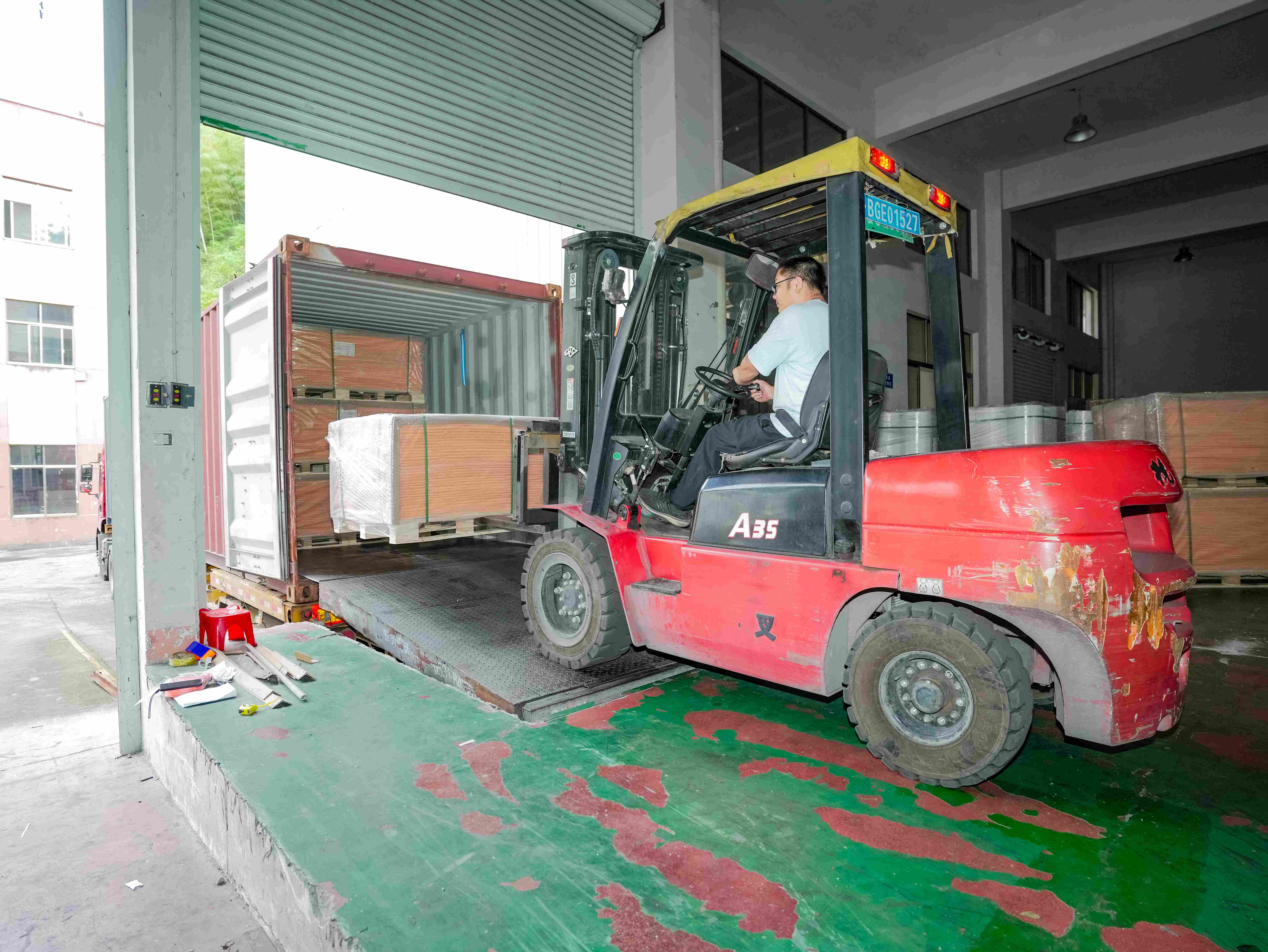
Standard roll packaging: PVC rolls can be wrapped with PE film and kraft paper and secured on export pallets.
Paper core: A 76mm paper-tube core is available for standard roll products. Other core sizes can be discussed.
Sample packaging: A4 sheets, custom pieces and small rolls can be packed in protective bags, boxes or cartons.
Sheet packaging: A reference package weight is approximately 30kg or can be customized according to dimensions and handling requirements.
Pallet packaging: Approximately 500-2,000kg can be loaded on a plywood pallet, depending on the roll or sheet dimensions.
Container loading: Reference loading is approximately 20 tons, subject to dimensions, pallet configuration and legal weight limits.
Private-label packaging: Customized labels, logos, carton markings and packing lists can be discussed.
Lead time: Standard production normally takes approximately 10-14 days after specification, quantity, packaging and payment confirmation.
Certifications and Quality Documents
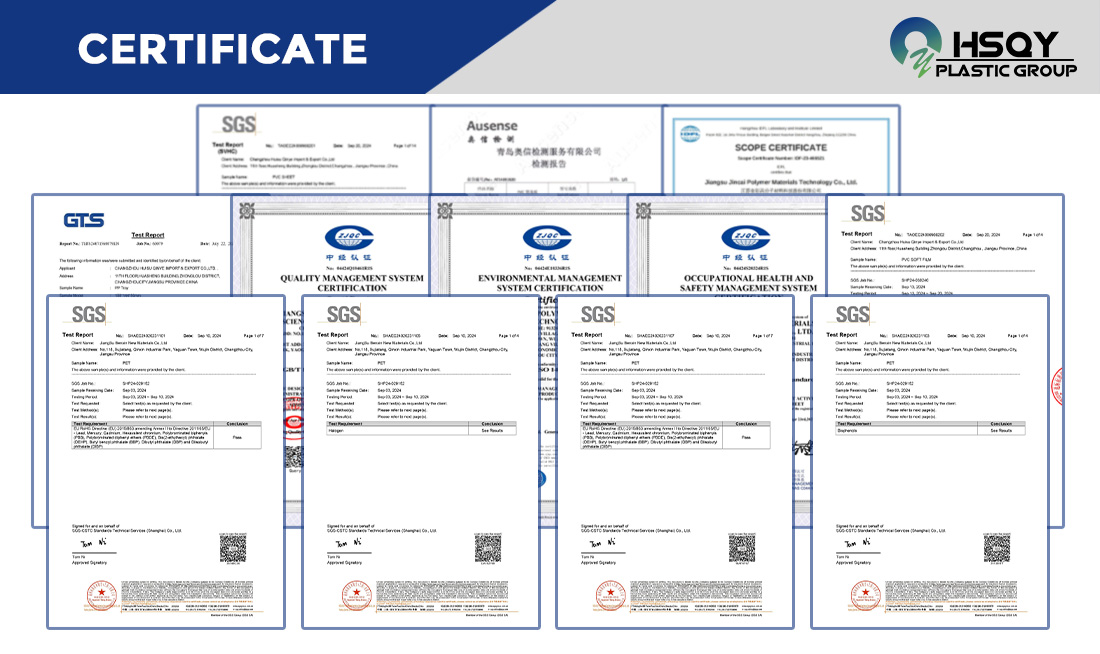
Available documentation may include product test reports, RoHS-related documents, ISO 9001 quality-management certification and ISO 14001 environmental-management certification.
Buyers should verify the document number, tested product, formulation, thickness, color, production date and intended application.
ISO management-system certificates do not by themselves establish food-contact, medical, UV-weathering, flame-retardant or recyclability performance for every PVC product.

Why Choose HSQY as Your PVC Roll Supplier?
HSQY Plastic Group supplies transparent rigid PVC rolls, printable PVC sheets, folding-box materials, binding sheets, thermoforming films, PET sheets, PP sheets and customized packaging materials.
Extruded and calendered PVC production options.
Thicknesses from approximately 0.05mm to 6.5mm.
Custom roll widths up to approximately 1500mm.
Master rolls, slit rolls, sheets and cut pieces.
Printing, folding-box, binding and thermoforming grades.
Clear, tinted, colored, matte and frosted surfaces.
Custom roll diameter, weight, core and winding direction.
Samples for printing, folding, bonding and forming trials.
Technical-document and export-delivery support.
Before bulk production, HSQY recommends testing the selected PVC roll with the buyer's actual printing press, die-cutting tool, folding machine, adhesive, binding equipment or thermoforming line.
Contact HSQY for Samples and Pricing
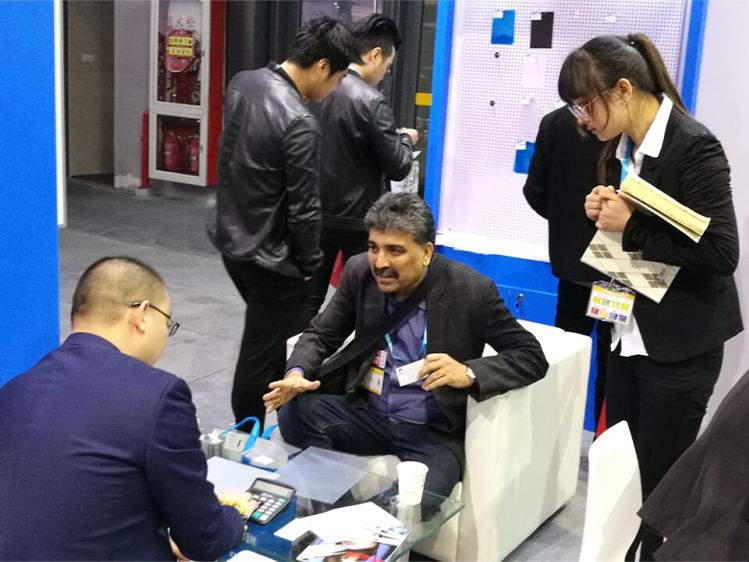
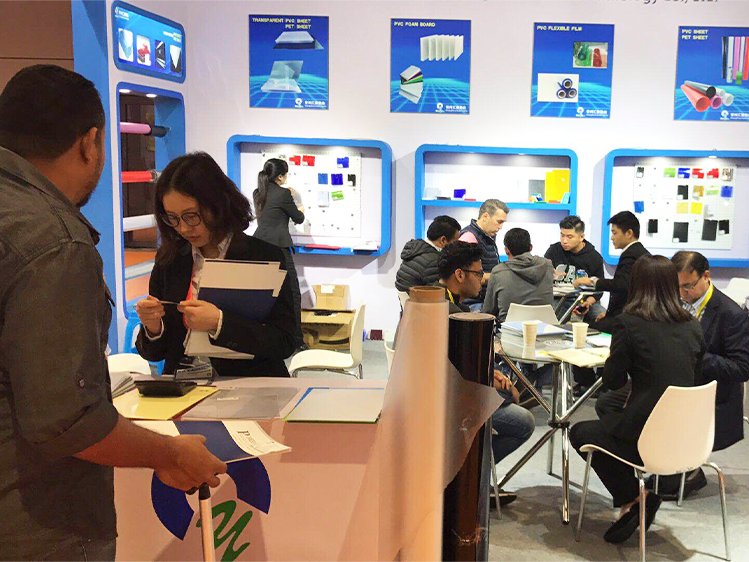
HSQY Global Exhibitions

2017 Shanghai Exhibition

2018 Shanghai Exhibition

2023 Saudi Exhibition

2023 American Exhibition

2024 Australian Exhibition

2024 American Exhibition

2024 Mexico Exhibition

2024 Paris Exhibition
Frequently Asked Questions About Transparent PVC Sheet Rolls
What is a transparent rigid PVC sheet roll?
It is a continuous roll of clear rigid or semi-rigid polyvinyl chloride used for packaging, printing, folding boxes, binding covers, blister packs and thermoforming.
Is this product rigid or flexible PVC?
This page primarily describes rigid and semi-rigid PVC. Soft flexible PVC for curtains, table covers and enclosures requires a different plasticized formulation.
What thicknesses are available?
Extruded PVC is commonly available from approximately 0.15mm to 6.5mm, while calendered PVC is commonly available from approximately 0.08mm to 1.2mm.
What roll widths are available?
Extruded PVC rolls are available up to approximately 1300mm wide, while calendered rolls are available up to approximately 1500mm, subject to thickness and production confirmation.
Can transparent PVC be supplied as sheets?
Yes. Common sizes include 700 × 1000mm, 915 × 1830mm and 1220 × 2440mm. Customized cut dimensions are also available.
What is the difference between extruded and calendered PVC?
Extruded PVC is produced through a flat die and is commonly used for medium and thicker sheets. Calendered PVC passes through heated rollers and is commonly used for thin roll products, printing and folding boxes.
Can PVC sheet rolls be used for folding boxes?
Yes. Suitable folding-box-grade PVC can be printed, die cut, scored, folded and bonded into transparent retail cartons.
Can transparent PVC rolls be printed?
Selected grades can be offset printed, screen printed or UV printed. The ink, surface treatment, curing conditions and adhesion should be tested before production.
Can PVC rolls be used for blister packaging?
Yes. Thermoforming-grade PVC can be formed into clear blister packs and clamshell inserts using validated heating and molding conditions.
Can PVC sheet rolls be vacuum formed?
Yes. Forming performance depends on the grade, thickness, cavity depth, mold design, heating profile and cooling conditions.
Can PVC rolls be used for binding covers?
Yes. Transparent, matte, frosted and colored PVC sheets are commonly used for document, notebook and presentation binding covers.
Can the color and surface be customized?
Yes. Natural clear, blue-tint, transparent colors, opaque colors, glossy, matte, frosted and embossed options can be customized.
Does PVC require corona treatment before printing?
Some ink and adhesive systems may require corona treatment or primer. The treated side and required surface energy should be stated in the order specification.
Is anti-block PVC available?
Yes. Anti-block additives, dusted surfaces and light textures can improve unwinding and sheet separation.
Is transparent PVC suitable for food packaging?
Only an application-specific food-contact grade supported by appropriate documentation should be used. RoHS and ISO certificates alone do not prove food-contact suitability.
Is PVC suitable for pharmaceutical or medical packaging?
Pharmaceutical and medical packaging require specialized grades, controlled manufacturing and application-specific quality and regulatory documentation.
Is standard transparent PVC UV resistant?
Standard clear PVC should not be assumed to provide long-term outdoor weather resistance. UV-stabilized grades can be evaluated for outdoor projects.
Is transparent PVC fireproof?
No plastic sheet should be described generally as fireproof. Tested flame-retardant grades may meet a defined classification at a specified thickness.
Can transparent PVC be laser cut?
Laser processing of PVC can generate corrosive and hazardous chlorine-containing fumes. Mechanical cutting, die-cutting or routing is generally preferred unless specialist equipment and ventilation are specifically designed for PVC.
Can recycled PVC be used?
Selected recycled-content formulations may be available. Recycled content can affect transparency, color, impurities, printing and forming consistency.
Is transparent PVC recyclable?
Actual recyclability depends on local PVC collection, product design, printing, adhesives, labels, color and contamination.
What is the standard MOQ?
The standard MOQ is approximately 1,000kg. Custom colors, uncommon widths, special coatings and functional formulations may require a different minimum quantity.
Are samples available?
A4 sheets, custom pieces or limited roll samples may be available for checking clarity, thickness, printing, folding, bonding and thermoforming. Courier freight is normally paid by the buyer.
What is the production lead time?
Standard production normally takes approximately 10-14 days after the specification, quantity, packaging and payment are confirmed.
What information is needed for a quotation?
Provide the thickness, roll width, roll diameter, core, color, surface, hardness, application, quantity, required documents, packaging and destination.
Get a Custom PVC Roll Quote
About HSQY Plastic Group
HSQY Plastic Group supplies transparent rigid PVC rolls, printable PVC sheets, folding-box materials, binding sheets, thermoforming films, PET sheets, PP sheets and customized packaging products.
HSQY supports packaging converters, printers, stationery manufacturers, thermoforming companies, importers and distributors with customized dimensions, colors, surfaces, samples, technical documents and export delivery.
Request a Quote and Sample