Heat-Resistant CPET Sheet for Ovenable Food Trays
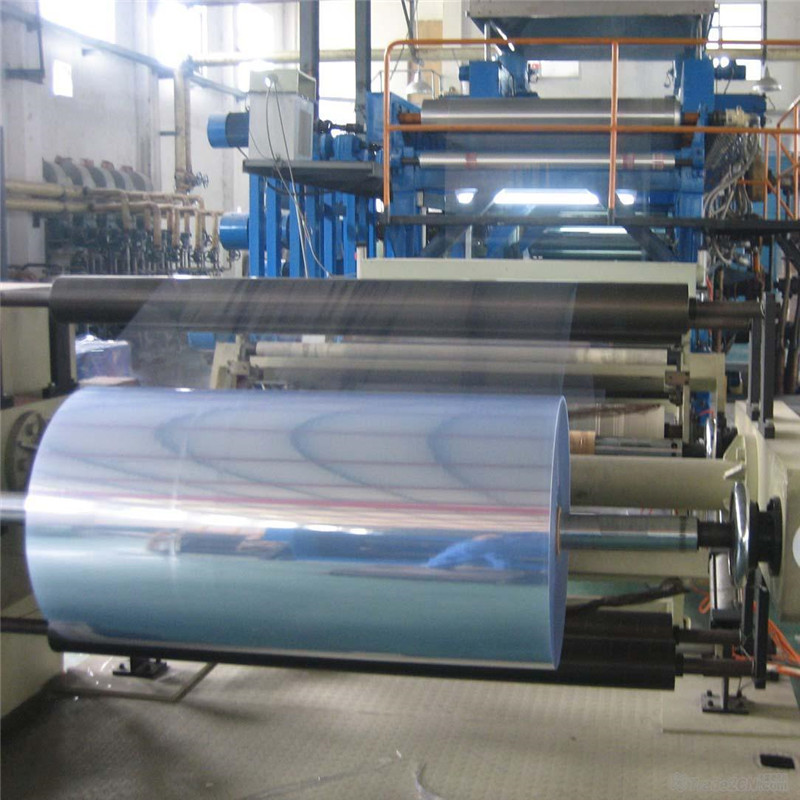
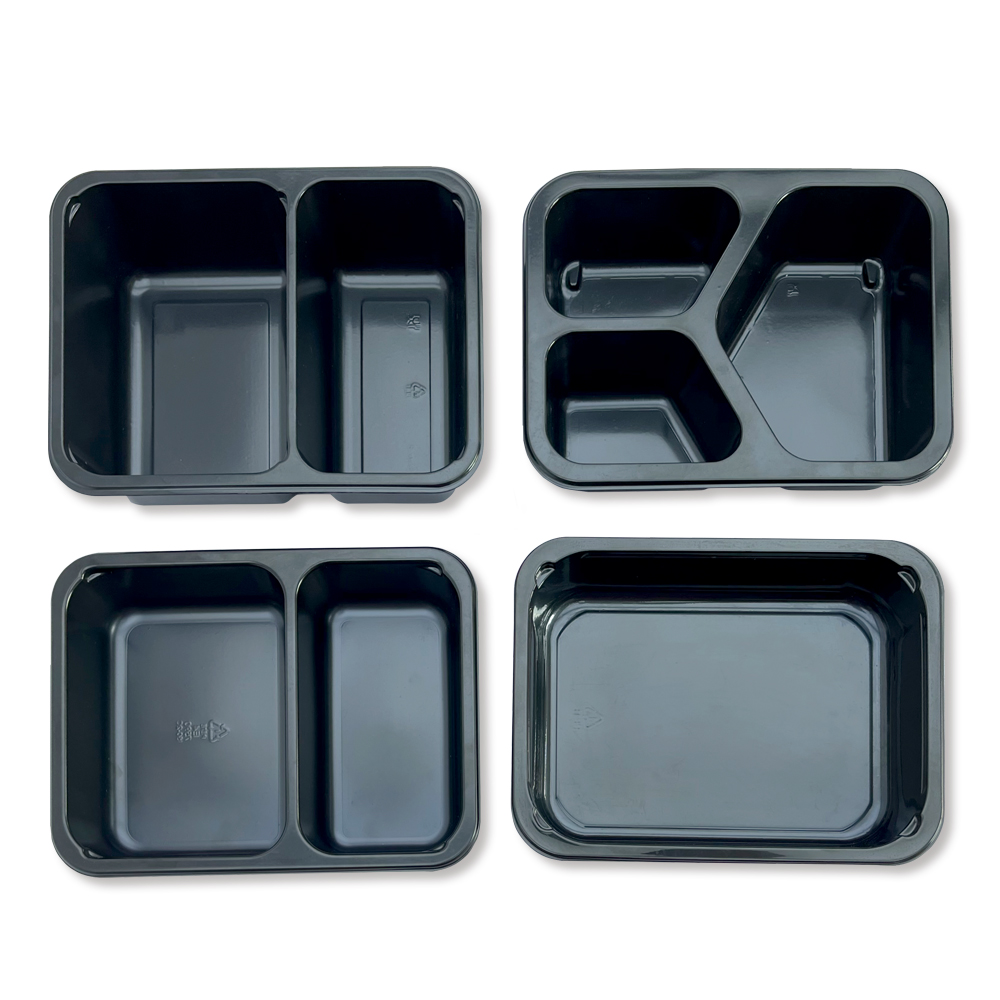
HSQY manufactures heat-resistant CPET sheets and rolls for thermoformed oven trays, microwave meal trays, airline food containers, frozen ready-meal packaging, bakery trays and other high-temperature food-packaging applications.
CPET stands for crystalline polyethylene terephthalate. Compared with standard amorphous PET, CPET has a controlled crystalline structure that improves heat resistance, rigidity and dimensional stability during cooking and reheating.
The featured HSQY grade is designed for applications requiring temperatures up to approximately 350°F / 177°C under validated heating conditions. Customized CPET systems may be developed for broader freezer-to-oven temperature requirements, subject to formulation, crystallinity, thickness, tray design, heating time and finished-package testing.
Available thicknesses range from approximately 0.12mm to 3mm. Roll widths from approximately 80mm to 1300mm and standard or customized sheet dimensions are available.
Black and white are the most common CPET colors because crystallized PET is normally opaque or translucent. Additional colors, dual-color structures, recycled-content options and customized surface finishes can be evaluated according to the final tray design.
Final oven and microwave suitability must be confirmed using the finished thermoformed tray, actual food load, lidding film, sealing conditions, heating equipment and intended cooking cycle.
Request CPET Sheet Pricing Request Thermoforming Samples
Heat-Resistant CPET Sheet Video
Watch the video below to learn more about HSQY CPET sheets, high-temperature food trays, thermoforming applications and customized food-packaging materials.
What Is a Heat-Resistant CPET Sheet?
A heat-resistant CPET sheet is a crystalline polyester sheet developed primarily for thermoforming into trays and containers that must tolerate freezing, refrigerated storage, microwave reheating or conventional-oven cooking.
Standard transparent APET is largely amorphous. It provides high clarity and is widely used for cold-food trays, blisters and clamshell packaging, but it normally softens or distorts at temperatures that a properly formulated and crystallized CPET tray can withstand.
CPET contains nucleating agents and other processing additives that help control crystallization during extrusion and thermoforming. The resulting crystalline structure improves dimensional stability at elevated temperatures.
The final heat resistance of the tray depends on more than the name CPET. It is influenced by resin grade, crystallinity, color, wall thickness, cavity geometry, mold temperature, residence time and heating conditions.
The terms heat-resistant PET sheet, high-temperature PET sheet, ovenable PET sheet and C-PET sheet are commonly used for related products. Buyers should confirm that the supplied material is a validated CPET thermoforming grade rather than ordinary APET or PETG.
CPET Sheet Product Images

Black Heat-Resistant CPET Sheet

White Heat-Resistant CPET Sheet
Heat-Resistant CPET Sheet Specifications
| Property |
Available Specification |
| Product Name |
Heat-Resistant CPET Thermoforming Sheet |
| Alternative Names |
Crystalline PET Sheet, Ovenable PET Sheet, High-Temperature PET Sheet and C-PET Sheet |
| Recommended Model Name |
Heat-Resistant CPET Sheet for Thermoforming |
| Material |
Crystalline Polyethylene Terephthalate / CPET |
| Material Structure |
PET-based resin system with crystallization-promoting additives and application-specific modifiers |
| Thickness |
Approximately 0.12-3mm |
| Roll Width |
Approximately 80-1300mm |
| Standard Sheet Sizes |
700 × 1000mm, 915 × 1830mm, 1000 × 2000mm and 1220 × 2440mm |
| Custom Dimensions |
Customized roll width, sheet size, roll diameter, roll weight and cutting dimensions |
| Supply Form |
Master rolls, slit rolls, flat sheets and customized cut sheets |
| Typical Density |
Approximately 1.35g/cm³; final density depends on formulation and crystallinity |
| Standard Colors |
Black and white |
| Custom Colors |
Gold, silver, cream, gray and other customized opaque or translucent colors |
| Transparency |
CPET is normally translucent to opaque; special heat-resistant transparent PET structures require separate confirmation |
| Surface Options |
Glossy, matte, fine texture, embossed, silicone-coated or customized finish |
| Featured Heat Resistance |
Up to approximately 350°F / 177°C under validated time, load and tray-design conditions |
| Custom Temperature Range |
Freezer-to-oven CPET structures can be developed for wider temperature ranges subject to finished-package validation |
| Heating Methods |
Conventional oven and microwave use after validation of the finished tray and cooking cycle |
| Storage Conditions |
Ambient, chilled and selected frozen-food applications after low-temperature testing |
| Production Method |
Sheet extrusion followed by controlled crystallization during material production or thermoforming |
| Processing Methods |
Thermoforming, vacuum forming, pressure forming, plug-assisted forming, cutting and trimming |
| Main Applications |
Ovenable trays, microwave trays, airline meal trays, frozen ready meals, bakery trays and catering packaging |
| Sealing Options |
Weld seal or easy-peel seal with a compatible CPET or PET tray lidding film |
| Food-Contact Option |
Available using an application-specific formulation and documentation for the intended market |
| Recycled-Content Option |
Selected post-industrial or post-consumer recycled PET structures subject to food-contact and performance requirements |
| Minimum Order Quantity |
Approximately 1,000kg |
| Samples |
A4 sheets, custom-cut samples or limited roll samples may be available |
| Typical Lead Time |
Approximately 10-14 working days, subject to color, specification, quantity and production schedule |
| Delivery Terms |
EXW, FOB, CNF, CIF, DDU and other agreed terms |
Final thickness tolerance, width, crystallinity, color, surface, heat resistance, low-temperature impact strength and food-contact requirements should be confirmed in an approved written specification.
CPET Temperature Performance
| Temperature Condition |
Typical Application |
Validation Required |
| Frozen Storage |
Frozen ready meals, airline meals and cold-chain distribution |
Low-temperature impact, drop, vibration, stacking and seal tests |
| Refrigerated Storage |
Chilled meals, prepared foods and catering trays |
Seal integrity, condensation, shelf life and transportation tests |
| Microwave Reheating |
Ready meals and individual meal portions |
Food load, microwave power, heating time, venting and hot-spot evaluation |
| Conventional Oven up to Approximately 350°F / 177°C |
Featured HSQY heat-resistant CPET grade |
Oven type, cooking duration, product load, tray support and deformation testing |
| Higher-Temperature CPET Systems |
Custom freezer-to-oven and dual-ovenable packaging |
Grade-specific technical data and complete finished-package testing |
Maximum service temperature is not a single universal CPET value. It changes with heating duration, food moisture, oil content, tray geometry, wall thickness, crystallinity and whether the tray is supported by an oven rack or baking sheet.
CPET vs. APET, PETG and PP
| Material |
Appearance |
Heat Performance |
Typical Applications |
| CPET |
Normally opaque or translucent; commonly black or white |
Developed for high-temperature microwave and conventional-oven applications |
Ovenable meals, frozen ready meals, airline meals and bakery trays |
| APET |
Highly transparent and glossy |
Primarily for ambient, chilled or low-temperature applications |
Produce trays, bakery clamshells, cold-food containers and blisters |
| PETG |
Clear with good gloss and impact resistance |
Easy to thermoform but not automatically suitable for conventional ovens |
Clear packaging, displays, formed covers and medical packaging components |
| PP |
Natural translucent or colored |
Commonly suitable for microwave heating, but conventional-oven use requires a specialized grade |
Microwave trays, takeaway containers, chilled meals and hot-fill packaging |
How CPET Sheet Becomes an Ovenable Tray
Raw-Material Drying
PET is hygroscopic and must be properly dried before extrusion. Excess moisture can reduce molecular weight and cause brittleness, surface defects or inconsistent forming performance.
Resin Compounding
PET resin is combined with nucleating agents, color masterbatch, impact modifiers and other application-specific additives.
Sheet Extrusion
The dried material is melted, filtered and extruded through a flat die to produce a continuous CPET sheet or roll.
Thermoforming
The sheet is reheated and formed into a heated mold using vacuum, pressure or plug assistance.
Controlled Crystallization
Mold temperature and residence time allow the PET structure to crystallize. Correct crystallization is essential for dimensional stability during oven heating.
Cooling and Demolding
The tray is cooled sufficiently to retain its shape and is then released from the mold. Silicone or other release treatments may be used where appropriate.
Trimming and Inspection
Formed trays are trimmed and inspected for flange flatness, wall distribution, crystallinity, color, contamination and dimensional accuracy.
Key Features of Heat-Resistant CPET Sheet
High-Temperature Dimensional Stability
Correctly crystallized CPET retains its shape better than amorphous PET during oven and microwave heating.
Freezer-to-Oven Capability
Application-specific CPET grades can support frozen storage followed by direct microwave or conventional-oven reheating when the complete package has been validated.
Rigidity and Load Support
CPET provides useful stiffness for filled meals, bakery products and catering portions during filling, sealing, stacking and transportation.
Resistance to Oils and Fats
PET-based materials provide useful resistance to many oils, fats and food acids. Final compatibility depends on temperature, contact duration and food composition.
Heat-Sealable Tray Options
CPET trays can be sealed with compatible permanent-weld, easy-peel, anti-fog or high-barrier lidding films.
Custom Appearance
Black, white, gold, silver, dual-color, matte, glossy and textured appearances can be evaluated for different meal brands and markets.
Applications of Heat-Resistant CPET Sheet
Ovenable Ready-Meal Trays
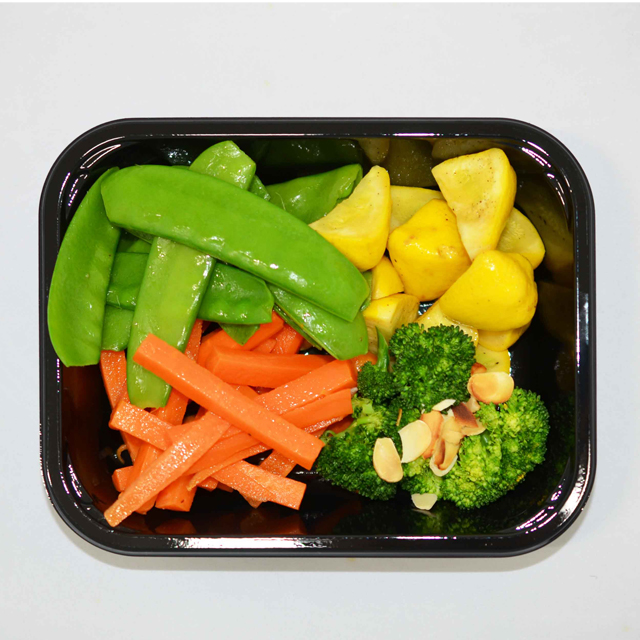
CPET is used for lasagna, pasta, rice dishes, casseroles, meat portions, vegetables and other prepared meals that are cooked or reheated in a conventional oven.
Microwave Meal Trays
The same tray may be developed for microwave reheating, subject to microwave power, food load, venting and heating-time validation.
Airline Meal Trays
CPET sheets are thermoformed into airline meal trays that must withstand filling, chilling or freezing, transport, reheating and service.
Frozen Ready Meals
Freezer-grade CPET trays can support cold-chain distribution and direct reheating. Low-temperature impact performance must be tested for the selected formulation and tray design.
Bakery and Dessert Trays
CPET trays can be used for cakes, pies, pastries, bread products and bake-in-pack applications after oil, sugar, temperature and cooking-cycle testing.
Institutional and Catering Meals
Applications include hospitals, schools, care facilities, military catering, event catering and central-kitchen meal systems.
Meal-Kit and Cook-in-Pack Packaging
Meal-kit producers can use CPET trays for products intended to move from refrigerated or frozen distribution directly into consumer cooking equipment.
CPET Tray Application Images

White CPET Ovenable Food Tray

CPET Ready-Meal Packaging Tray
CPET Thermoforming Requirements
Sheet Drying
Drying requirements depend on the sheet-production and thermoforming process. Moisture must be controlled to prevent brittleness and hydrolytic degradation.
Heating Profile
Heater-zone settings should be adjusted according to sheet thickness, crystallization behavior, machine speed, cavity depth and ambient conditions.
Heated Mold
A heated mold and controlled residence time are generally required to develop the crystallinity needed for an ovenable CPET tray.
Plug Assistance
Plug-assisted forming may improve wall distribution in deep cavities and reduce excessive thinning at corners and sidewalls.
Mold Release
Mold design, draft angle, cooling and surface treatment affect demolding. A silicone-coated sheet may be evaluated where release performance requires improvement.
Crystallinity Verification
Crystallinity and dimensional stability should be confirmed using appropriate thermal analysis, oven testing or another approved quality-control method.
Sealing CPET Trays
A CPET tray must be paired with a lidding film that seals reliably to the tray's flange and remains suitable for the packaged food, storage temperature and reheating method.
| Lidding Option |
Function |
Main Tests |
| Weld-Seal Film |
Creates a strong permanent seal for transport and leak resistance |
Seal strength, leak, burst and contamination resistance |
| Easy-Peel Film |
Provides controlled opening force for consumers |
Peel force, seal consistency, cold-storage performance and stringing |
| Anti-Fog Film |
Helps maintain product visibility in chilled or moisture-generating packs |
Anti-fog duration, clarity, sealing and storage testing |
| High-Barrier Film |
Reduces oxygen or moisture transmission for shelf-life-sensitive meals |
OTR, WVTR, gas retention, leak and shelf-life validation |
| Ovenable Lidding Film |
Designed to remain on the tray during a validated oven-cooking cycle |
Temperature resistance, venting, shrinkage, adhesion and migration testing |
The tray and lidding film must be tested together using the actual sealing temperature, pressure, dwell time, food contamination level and heating process.
Food-Contact and Oven-Safety Requirements
A sheet should only be described as food-contact suitable when the exact resin, additives, colorants, recycled content and manufacturing process are supported by documentation applicable to the intended market.
Buyers should specify the destination country, food type, oil and fat content, cooking temperature, cooking duration, direct-contact conditions and whether the tray will be frozen before heating.
Conventional-oven suitability and microwave suitability are separate performance claims. Both should be verified for the finished package.
ISO management-system certificates do not by themselves prove that every CPET formulation is approved for food contact or oven use.
RoHS documentation is not a substitute for food-contact migration testing or a declaration of compliance.
Medical, Automotive and Industrial Applications
Standard food-packaging CPET sheet should not automatically be promoted for medical, automotive or chemical-processing applications.
Medical packaging may require validated cleanliness, sterilization compatibility, traceability, biocompatibility-related assessment and specific regulatory documentation.
Automotive and industrial applications may require flammability, heat-aging, chemical-resistance, dimensional and mechanical tests that differ from food-packaging requirements.
These applications should use a separately specified and tested engineering grade.
Recycled CPET and Sustainability
CPET is PET based, but actual recyclability depends on local tray-collection systems, sorting technology, color, labels, lidding film, food contamination and the complete package design.
Black trays may be more difficult for some optical sorting systems to identify. Alternative pigments, lighter colors or detectable black formulations can be evaluated according to market requirements.
Post-consumer or post-industrial recycled PET can be incorporated into selected CPET structures where the functional design and applicable food-contact rules permit it.
Claims such as recyclable, circular, eco-friendly or sustainable should be supported by the exact tray structure, destination market and available recycling infrastructure.
Recommended CPET Quality-Control Tests
Raw-material, additive and color-masterbatch verification.
Moisture content before extrusion or thermoforming.
Sheet thickness and thickness tolerance.
Roll width, roll diameter, roll weight, core and winding direction.
Color, surface, black spots, gels and contamination.
Density and crystallinity.
Thermoforming temperature window.
Wall-thickness and corner-thickness distribution.
Tray dimensions, flange flatness and cavity definition.
Mold-release and denesting performance.
Low-temperature impact and drop resistance.
Microwave heating and hot-spot performance.
Conventional-oven deformation and load testing.
Oil, fat, acid and food-simulant resistance.
Seal strength, leak, burst and peel performance.
Migration and food-contact testing where required.
Finished-product cooking and shelf-life trials.
Custom CPET Sheet Options
Thicknesses from approximately 0.12mm to 3mm.
Roll widths from approximately 80mm to 1300mm.
Master rolls, slit rolls and flat sheets.
Black, white, gold, silver and customized colors.
Single-color and dual-color sheet structures.
Glossy, matte, embossed and textured surfaces.
Silicone-coated mold-release options.
Virgin PET and selected recycled-PET structures.
Freezer-to-oven and microwave tray grades.
Weld-seal and easy-peel tray structures.
A4 sheets or limited roll samples for machine trials.
Private-label packaging and customized export pallets.
Information Required for a CPET Sheet Quotation
Required sheet thickness and tolerance.
Roll width, diameter, weight and core size.
Black, white, gold, silver or another color.
Glossy, matte, textured or silicone-coated surface.
Thermoforming-machine brand and model.
Mold dimensions, cavity depth and corner radius.
Single-compartment or multi-compartment tray design.
Minimum wall and corner thickness.
Packaged food and food weight.
Frozen, chilled or ambient storage conditions.
Microwave power and expected heating time.
Conventional-oven temperature and cooking duration.
Weld-seal, easy-peel or ovenable lidding-film requirement.
Virgin or recycled-content requirement.
Target market and required food-contact documentation.
Trial quantity, first order and annual demand.
Destination port and required delivery date.
Send Your CPET Sheet Requirements
Packing and Delivery
Sample packing: A4-size rigid CPET sheets or customized samples can be sealed in a protective bag and packed in a carton.
Roll packing: CPET rolls can be wrapped with protective film and kraft paper and secured on plywood pallets.
Sheet packing: A reference package weight is approximately 30kg per bag or carton, subject to dimensions and handling requirements.
Pallet packing: Approximately 500-2,000kg can be packed on a plywood pallet depending on roll or sheet dimensions.
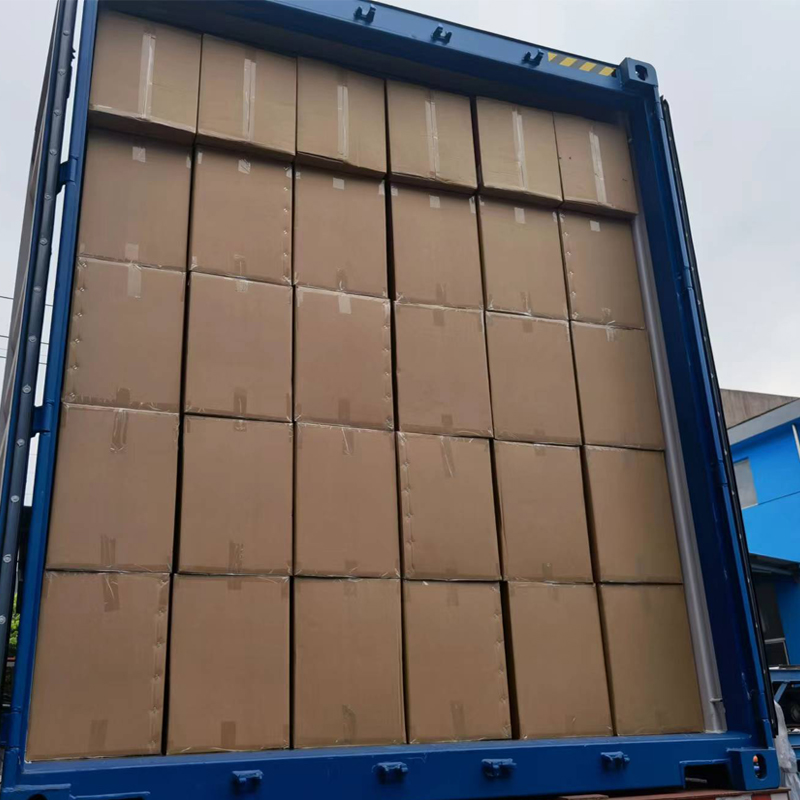
Container loading: Reference loading is approximately 20 tons, subject to pallet arrangement and legal weight restrictions.
Lead time: Standard production normally takes approximately 10-14 working days after color, dimensions, quantity, packaging and payment are confirmed.

Certificates and Quality Documents
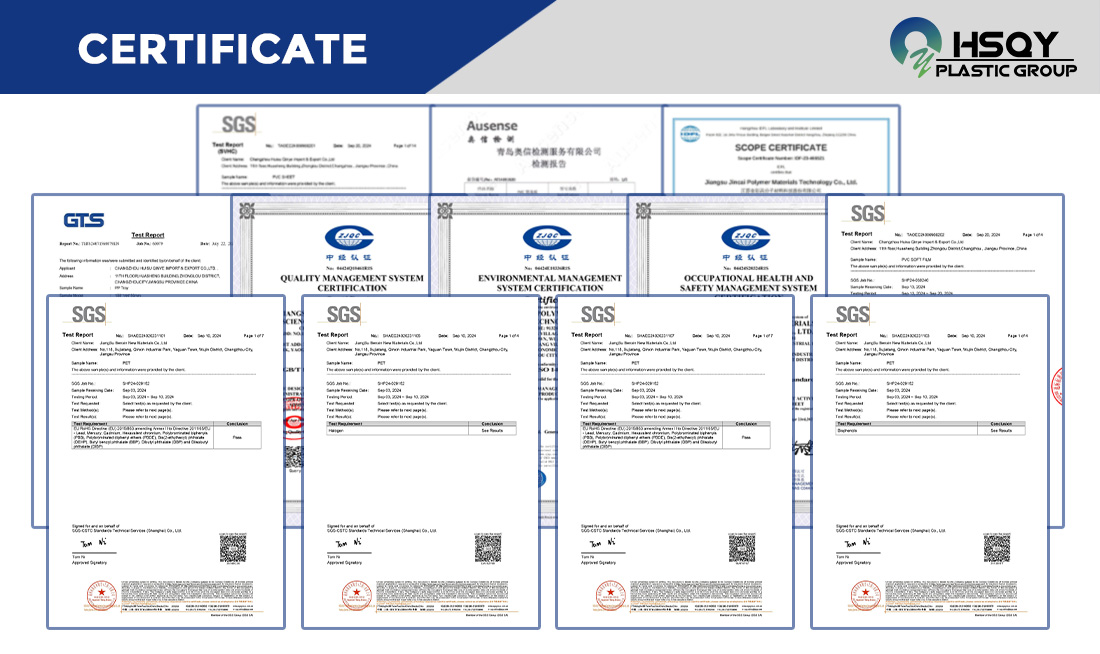
HSQY can provide available product test reports, restricted-substance documents, food-contact documents and management-system certificates for review.
Buyers should confirm that each document corresponds to the exact CPET resin, additives, color, recycled-content level, thickness and intended application.
A general certificate should not be interpreted as proof that every sheet is approved for every oven temperature, microwave cycle, food type or destination market.

Why Choose HSQY as Your CPET Sheet Supplier?
HSQY Plastic Group supplies CPET sheets, CPET ovenable trays, sealing films, PET thermoforming sheets, PET/PE laminated films and other food-packaging materials to international manufacturers and distributors.
Heat-resistant CPET sheet for oven and microwave trays.
Thicknesses from approximately 0.12mm to 3mm.
Custom roll width, roll weight and sheet dimensions.
Black, white, gold, silver and dual-color options.
Virgin and selected recycled-content structures.
Glossy, matte, embossed and silicone-coated surfaces.
Samples for thermoforming and oven-performance trials.
Compatible sealing-film and tray-development support.
Food-contact documentation subject to specification.
Export packaging and international-shipping support.
Before bulk production, HSQY recommends validating the selected sheet using the customer's actual thermoforming machine, heated mold, tray design, food load, sealing film and cooking cycle.
Explore more CPET sheet products, CPET ovenable trays and CPET tray sealing films.
Contact HSQY for Samples and Pricing
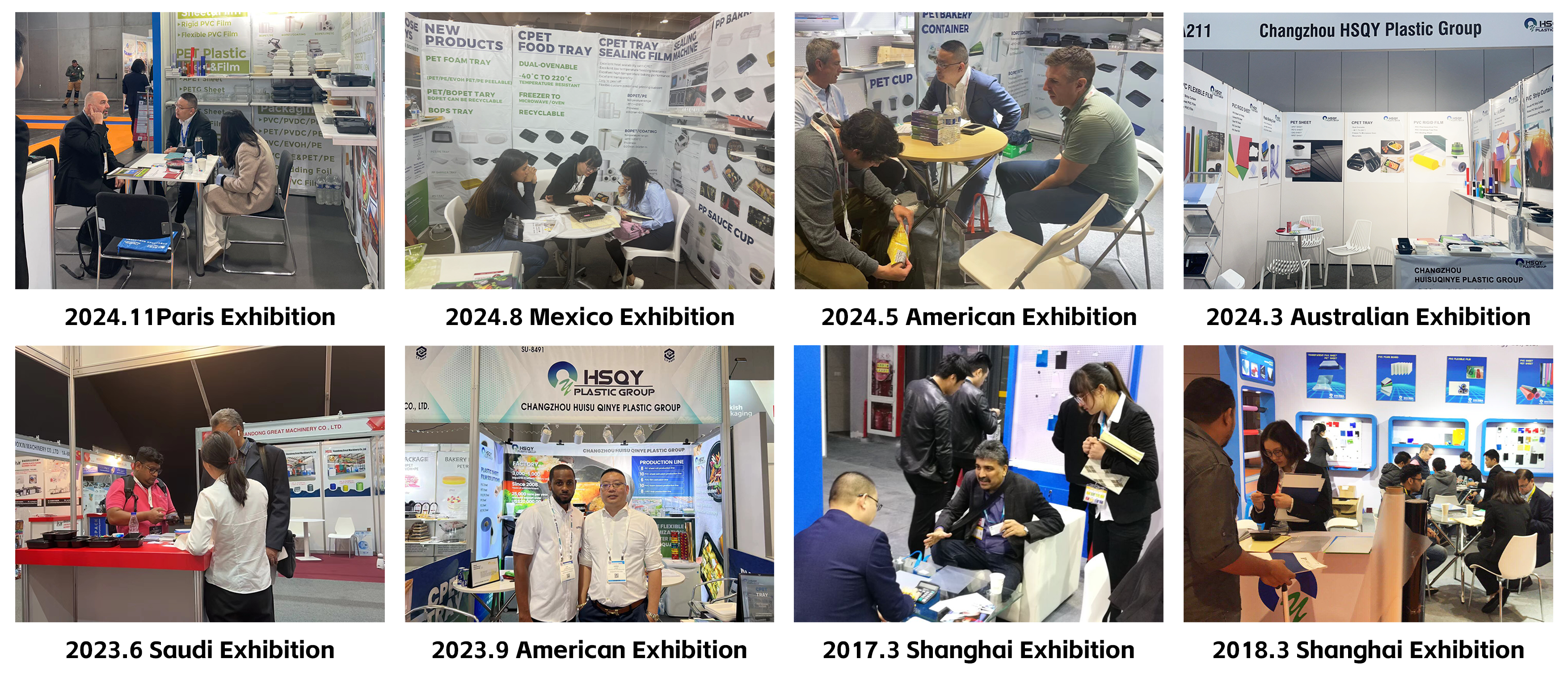
HSQY Global Exhibitions
HSQY presents CPET sheets, ovenable food trays, lidding films and thermoforming packaging solutions at international plastics and food-packaging exhibitions.

Frequently Asked Questions About Heat-Resistant CPET Sheet
What is a heat-resistant CPET sheet?
It is a crystalline PET-based sheet designed for thermoforming into food trays that require improved dimensional stability during microwave or conventional-oven heating.
What does CPET stand for?
CPET stands for crystalline polyethylene terephthalate.
What is the difference between CPET and APET?
CPET has a higher crystalline structure and is developed for high-temperature trays. APET is mainly amorphous, highly transparent and commonly used for cold or ambient packaging.
Is CPET normally transparent?
Standard highly crystallized CPET is normally translucent or opaque because the crystalline regions scatter light. Black and white are the most common colors.
What thicknesses are available?
The listed thickness range is approximately 0.12mm to 3mm. Final availability depends on width, color, roll size and thermoforming requirements.
What roll widths are available?
Roll widths from approximately 80mm to 1300mm are available, subject to thickness and production confirmation.
What temperature can the featured CPET grade withstand?
The featured grade is designed for temperatures up to approximately 350°F / 177°C under validated conditions. The exact limit depends on time, thickness, crystallinity, tray geometry and food load.
Can CPET withstand 220°C?
Some specialized CPET tray systems are designed for temperatures approaching 220°C, but this should not be assumed for every sheet. Grade-specific and finished-tray testing is required.
Can CPET trays go from freezer to oven?
Application-specific CPET trays can support freezer-to-oven use after low-temperature impact, sealing and oven-performance validation.
Is CPET suitable for microwave heating?
Yes, suitable CPET trays can be used for microwave reheating. Microwave power, heating time, food composition and venting must be tested.
Is CPET suitable for a conventional oven?
Ovenable CPET grades can be used in conventional ovens within their validated temperature and time limits.
Can CPET be used under a grill or broiler?
Direct radiant heat from a grill or broiler can exceed the validated tray temperature and create localized overheating. Do not claim grill or broiler suitability without specific testing.
Can CPET be used for airline meal trays?
Yes. CPET is widely used for airline meals that require filling, chilling or freezing, transportation and reheating.
Can CPET be used for bake-in-pack products?
Selected CPET trays can be used for bake-in-pack applications after testing the temperature, cooking time, oil content, sugar content and product load.
Is a heated mold required for CPET thermoforming?
A heated mold and controlled residence time are generally required to develop the crystallinity needed for high-temperature performance.
Why does CPET become opaque?
Crystalline regions scatter visible light, causing highly crystallized PET to appear translucent or opaque.
Can CPET sheet be supplied in gold or silver?
Gold, silver and other customized colors can be evaluated according to appearance, food-contact and heat-performance requirements.
Can dual-color CPET sheet be produced?
Dual-color structures can be evaluated to provide one color on the food-contact side and another color on the external surface.
What lidding film seals to CPET trays?
CPET trays require a lidding film with a compatible tray-seal layer. Permanent weld, easy-peel, anti-fog, high-barrier and ovenable options are available.
Is CPET food-contact safe?
Food-contact suitability must be confirmed for the exact resin, additives, colorants, recycled content and intended temperature conditions.
Is CPET recyclable?
CPET is PET based, but actual recyclability depends on local tray collection, sorting, color, lidding film, labels and food contamination.
Can recycled PET be used in CPET sheet?
Selected CPET structures can include recycled PET where food-contact rules, functional barriers and heat-performance requirements permit it.
Is CPET biodegradable or compostable?
Standard CPET is not biodegradable or compostable. These claims should not be used without material-specific certification.
What is the standard MOQ?
The standard MOQ is approximately 1,000kg. Special colors, dual-color structures and uncommon thicknesses may require a different minimum quantity.
Are CPET sheet samples available?
A4 sheets, custom pieces or limited roll samples may be available for checking color, thickness, thermoforming, crystallization and heat performance. Courier freight is normally paid by the buyer.
What is the production lead time?
Standard production normally takes approximately 10-14 working days after the specification, color, quantity, packaging and payment are confirmed.
What information is required for a quotation?
Provide the thickness, roll width, color, thermoforming machine, tray dimensions, food load, storage temperature, oven temperature, cooking time, lidding film and required quantity.
Get a Custom CPET Sheet Quote
About HSQY Plastic Group
Changzhou Huisu Qinye Plastic Group Co., Ltd. supplies heat-resistant CPET sheets, CPET oven trays, sealing films, PET sheets and customized food-packaging products to international B2B customers.
HSQY supports thermoforming companies, ready-meal manufacturers, airline-catering suppliers, food-packaging converters, importers and distributors with material selection, sample testing, customized production, technical documentation and export delivery.
Request a Quote and Sample