High-Temperature CPET Plastic Sheet for Ovenable Food Trays
HSQY High-Temperature CPET Plastic Sheet is a thermoforming material developed for manufacturers of ovenable ready-meal trays, airline meal trays, frozen-food containers, bakery trays and other heat-resistant food packaging.
CPET stands for crystalline polyethylene terephthalate. Compared with ordinary amorphous PET, a properly formulated CPET grade can develop controlled crystallinity during thermoforming and heat setting, helping the finished tray maintain dimensional stability during freezing, microwave reheating and conventional-oven applications.
HSQY supplies CPET in rolls and cut sheets with black, white and selected custom color options. Published thicknesses are approximately 0.1–3 mm, with roll widths up to approximately 1300 mm and multiple standard cut-sheet dimensions.
The final temperature capability of a thermoformed CPET tray depends on the selected resin grade, crystallinity, sheet thickness, tray geometry, mold temperature, forming cycle, food load and heating time. Buyers should provide the intended freezer, microwave and oven conditions so the appropriate material can be evaluated and validated before bulk production.
Product Highlights: CPET Thermoforming Sheet | Ovenable Food Tray Material | Black & White Options | Approx. 0.1–3 mm Thickness | Roll & Cut Sheet Supply | Ready Meals | Airline Catering | Frozen Foods | Custom Widths & Sizes | Sample Testing
Request CPET Sheet Samples and Pricing
CPET Plastic Sheet Video
CPET Plastic Sheet and Thermoforming Applications

CPET material for heat-resistant thermoformed food packaging.

Thermoformed CPET packaging for ready meals and ovenable food trays.
CPET Plastic Sheet Specifications
The specifications below summarize the currently published product range. Final thickness tolerance, crystallinity, color, surface, roll dimensions, heat performance and food-contact requirements should be confirmed in the approved production specification.
| Property |
Details |
| Product Name |
High-Temperature CPET Plastic Sheet |
| Material |
Crystalline Polyethylene Terephthalate (CPET) |
| Primary Applications |
Ovenable ready-meal trays, frozen-food trays, airline meal trays, bakery trays and other thermoformed food packaging |
| Standard Colors |
Black, White and selected opaque colors |
| Surface Options |
Glossy, Matte, Frosted and application-specific finishes subject to confirmation |
| Published Cut-Sheet Sizes |
700 × 1000 mm, 915 × 1830 mm, 1000 × 2000 mm, 1220 × 2440 mm and customized sizes |
| Published Roll Width |
Approximately 80–1300 mm; confirm exact width tolerance for the selected grade |
| Published Thickness Range |
Approximately 0.1–3 mm; some current product headers list 0.12–3 mm, so confirm the required grade and tolerance |
| Published Density Reference |
Approximately 1.35 g/cm³; confirm the actual value for the selected formulation |
| Supply Format |
Roll stock and cut sheets |
| Processing |
Thermoforming, vacuum forming, pressure forming, plug-assisted forming, cutting and trimming according to grade and application |
| Heat Performance |
Application-specific; final allowable oven temperature and heating time must be validated using the selected grade and finished tray design |
| Low-Temperature Use |
Selected CPET grades can be evaluated for frozen-food and freezer-to-oven applications; confirm required storage temperature and impact performance |
| Heating Methods |
Microwave and conventional-oven applications after finished-package validation |
| Food-Contact Documentation |
Available according to selected formulation and destination market; request current product-specific documentation |
| SGS Testing |
Published product information references SGS; request the current report applicable to the selected production specification |
| Current Published MOQ |
Approximately 1,000 kg; custom colors or formulations may require different minimum quantities |
| Samples |
A4 sheets, custom-cut samples or limited roll samples may be available subject to current sample terms |
| Delivery Terms |
EXW, FOB, CNF, DDU and other agreed terms subject to quotation |
| Typical Lead Time |
Approximately 10–14 working days as a published reference; confirm current timing by specification and order quantity |
Send Your CPET Sheet Specification
What Is CPET Plastic Sheet?
CPET is a modified PET thermoforming material formulated to develop a controlled crystalline structure. This increased crystallinity helps improve dimensional stability at temperatures where ordinary amorphous PET packaging would normally soften or deform.
CPET sheet is typically supplied to thermoforming converters rather than used as the finished food package itself. The sheet is reheated, formed against a heated mold, crystallized or heat-set under controlled conditions, cooled, trimmed and converted into the final tray.
The finished tray performance therefore depends on both the supplied material and the customer's forming process. Resin formulation, moisture control, sheet gauge, heating profile, mold temperature, dwell time, cavity depth and cooling conditions can all affect crystallinity and heat resistance.
CPET vs. APET Plastic Sheet
| Selection Factor |
CPET |
APET |
| Structure |
Designed to develop controlled crystallinity |
Primarily amorphous |
| Appearance |
Typically opaque or translucent |
Typically clear |
| Main Food-Packaging Use |
Ovenable and freezer-to-oven trays |
Cold, chilled and ambient clear packaging |
| High-Temperature Stability |
Higher when correctly crystallized and validated |
Not normally selected for conventional-oven tray applications |
| Typical Products |
Ready-meal trays, airline trays, bakery trays |
Cold-food trays, clamshells and transparent packaging |
How CPET Sheet Becomes an Ovenable Tray
Material Preparation and Drying
The CPET resin and formulation components must be prepared and dried according to the selected material specification. Moisture control is important for stable PET processing.
Sheet Extrusion
The material is extruded through a flat die and calibrated into sheet or roll stock. Gauge consistency, surface condition and winding quality can affect downstream thermoforming performance.
Sheet Reheating
The thermoforming machine reheats the sheet to a controlled forming condition. Heater settings should be matched to the material grade, thickness, line speed and tray depth.
Thermoforming
Vacuum, pressure or plug-assist forming distributes the heated sheet over the mold. Deep draws and complex corners require careful control of material distribution.
Crystallization and Heat Setting
Controlled mold temperature and dwell time allow the material to develop the crystallinity needed for elevated-temperature dimensional stability.
Cooling, Trimming and Validation
The formed tray is cooled, released and trimmed before dimensional, sealing, freezer and heating tests are completed using the intended food and cooking conditions.
Key Features of High-Temperature CPET Sheet
Heat-Resistant Tray Potential
A properly selected and processed CPET grade can provide substantially higher heat resistance than ordinary amorphous PET, making it suitable for development of ovenable and dual-ovenable food trays.
Freezer-to-Oven Applications
Selected CPET structures can be developed for frozen ready meals that move from low-temperature storage to microwave or conventional-oven reheating. The finished tray should be validated across the complete intended temperature cycle.
Resistance to Oils and Food Components
CPET can be suitable for meals containing oils, fats, sauces and acidic ingredients. Final food-contact suitability should be reviewed using the exact formulation, food type, temperature and contact duration.
Thermoforming Capability
CPET sheet can be processed using suitable vacuum, pressure and plug-assisted thermoforming equipment. Forming settings must be optimized for the selected thickness, cavity depth and target crystallinity.
Custom Thickness and Width
HSQY can evaluate custom sheet thicknesses, roll widths, cut-sheet dimensions, colors and surface requirements according to the thermoforming line and finished-tray design.
Black and White CPET Options
Black and white are common CPET colors for ready-meal and airline-catering applications. Other color requirements can be discussed according to production quantity and formulation.
Applications of High-Temperature CPET Plastic Sheet
Ovenable Ready-Meal Trays
CPET is commonly selected for thermoformed ready-meal trays requiring elevated-temperature dimensional stability and microwave or conventional-oven reheating after validation.
Frozen Food Trays
The material can be evaluated for frozen meals requiring low-temperature storage followed by reheating in the same package.
Airline Meal Trays
CPET sheet can be thermoformed into airline and institutional meal trays that require reliable dimensional stability during storage and reheating.
Bakery and Prepared-Food Trays
Selected CPET grades can be evaluated for bakery, prepared-food and catering tray applications requiring resistance to elevated temperatures.
Customized Thermoformed Packaging
Converters developing custom trays can provide the finished-part drawing, tray weight, draw depth, forming equipment and heating requirements so HSQY can evaluate an appropriate sheet specification.

CPET thermoforming material for heat-resistant food tray production.

CPET material for ready meals, airline catering and ovenable food packaging.
How to Select CPET Sheet for Thermoforming
Finished tray drawing: Provide the top dimensions, base dimensions, depth, corner radius, flange geometry and number of compartments.
Sheet thickness: Specify the target gauge and tolerance. Tray depth, wall distribution and required stiffness influence the appropriate starting thickness.
Roll specification: Provide roll width, roll weight, maximum roll diameter and core diameter required by the thermoforming line.
Thermoforming equipment: Provide the machine type, heater configuration, mold type, cavity depth, mold temperature capability and expected cycle speed.
Temperature requirements: Specify minimum freezer temperature, microwave conditions, conventional-oven temperature and maximum heating duration.
Food load: Provide the intended food type, portion weight, oil or fat content, filling temperature and expected contact duration.
Sealing system: Identify whether the tray will use weld-seal, easy-peel or another lidding system and provide the sealing equipment and target seal temperature.
Destination market: State the country or region where the finished package will be sold so appropriate documentation can be reviewed.
How to Validate CPET Sheet Before Bulk Production
Run Thermoforming Trials
Test the selected sheet on the actual thermoforming line and production mold. Evaluate heating uniformity, draw distribution, crystallization, trimming and release performance.
Check Finished Tray Dimensions
Measure flange flatness, cavity depth, wall thickness distribution, shrinkage and overall dimensions after forming and cooling.
Test Freezer Performance
For frozen-food applications, evaluate brittleness, cracking, impact resistance and dimensional stability at the intended minimum storage temperature.
Test Microwave and Oven Performance
Use the actual food load and intended heating cycle. Check dimensional stability, flange deformation, corner distortion, food temperature and tray handling immediately after heating.
Validate the Lidding System
Evaluate sealing-window compatibility, seal strength, peel behavior, leakage, condensation and performance after freezing and reheating.
Discuss Your Thermoforming Application
Wholesale CPET Sheet Supply
HSQY supplies CPET sheet to thermoforming companies, ready-meal manufacturers, airline-catering packaging suppliers, food-packaging converters, importers and distributors.
Minimum Order Quantity
The current product page publishes a minimum order quantity of approximately 1,000 kg. Custom colors, special formulations, unusual widths or other project-specific requirements may require a different minimum production quantity.
Sample Evaluation
A4-size sheets, custom-cut samples or limited roll samples can be discussed according to availability. Buyers should use samples for actual thermoforming and finished-tray testing rather than evaluating only sheet appearance.
Custom Sheet Dimensions
Custom roll widths and cut-sheet dimensions can be evaluated according to the thermoforming machine, mold layout, trim requirements and purchasing volume.
Custom Colors and Surface
Black and white are common CPET options. Custom colors and selected surface finishes can be discussed according to the required formulation and production quantity.
International Bulk Supply
International buyers should provide sheet thickness, roll width, quantity, color, thermoforming application, destination market, packing requirements and requested shipping terms to receive an accurate commercial quotation.
Packing and Delivery
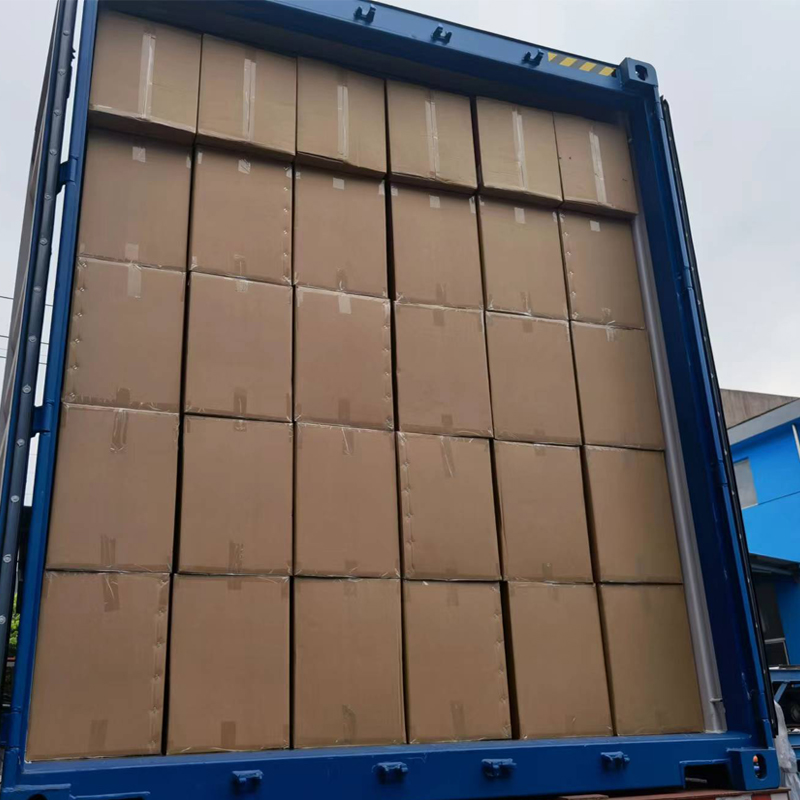
Sample Packing: A4 or custom-cut samples can be protected in suitable bags and cartons according to the current sample arrangement.
Sheet Packing: Published information references approximately 30 kg per bag for some cut-sheet specifications. Confirm the current packing weight for the selected dimensions and thickness.
Pallet Packing: Pallet weight depends on sheet dimensions, roll format, total order quantity, pallet specification and destination requirements. Request the current pallet loading plan with the quotation.
Roll Packing: Buyers should provide required roll weight, maximum outer diameter, core diameter and any pallet or suspension requirements.
Container Loading: 20-foot and 40-foot loading quantities should be calculated using the approved roll or sheet packing specification, actual pallet dimensions and applicable shipment-weight limits.
Delivery Terms: Published options include EXW, FOB, CNF and DDU. Other terms can be discussed in the commercial quotation.
Production Schedule: Published references indicate approximately 10–14 working days for some standard specifications. Current lead time depends on grade, color, dimensions, quantity and production scheduling.
![HSQY CPET plastic sheet packing and delivery]()
CPET sheet packing for sample, pallet and international bulk shipment.
Food-Contact and Technical Documentation
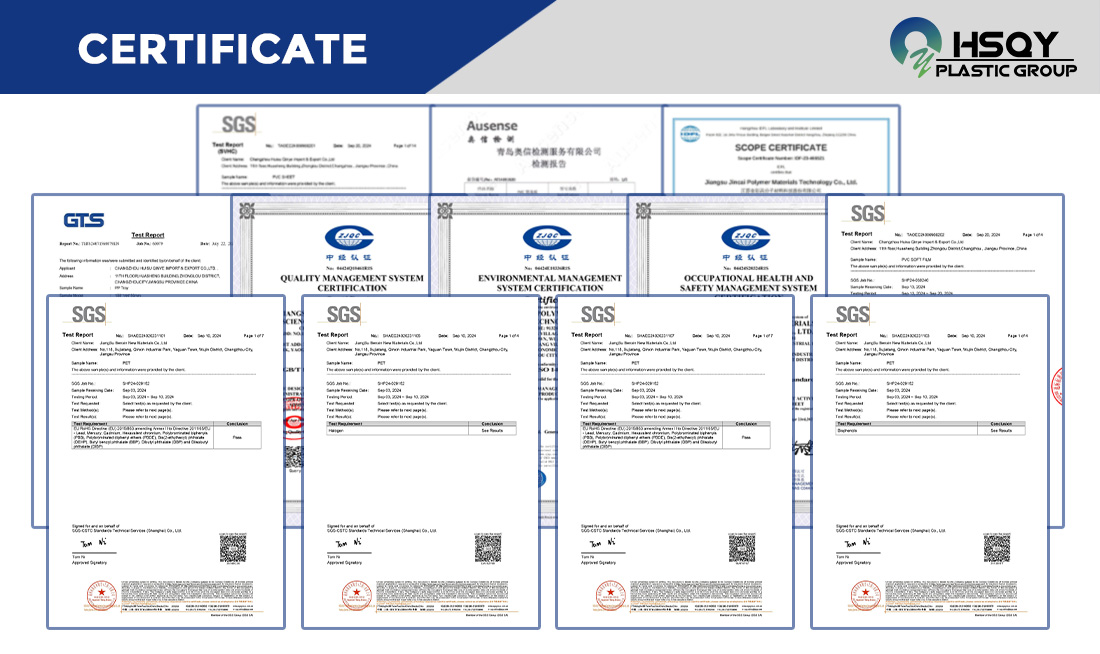
Professional buyers can request available technical data, material specifications, testing reports and food-contact documentation for the selected CPET grade.
Food-contact suitability should be evaluated for the exact material formulation, food type, contact temperature, contact duration and destination market. A general test report should not be interpreted as approval for every food, oven temperature or cooking cycle.
For qualification projects, buyers should request documentation corresponding to the actual grade, color, recycled-content level if applicable, and production specification being purchased.
Frequently Asked Questions About CPET Plastic Sheet
What is high-temperature CPET plastic sheet?
CPET plastic sheet is a crystallizable PET thermoforming material used to manufacture heat-resistant trays and containers for ready meals, frozen foods, airline catering and other ovenable food-packaging applications.
What does CPET stand for?
CPET stands for crystalline polyethylene terephthalate. Controlled crystallinity gives the finished thermoformed part greater elevated-temperature dimensional stability than ordinary amorphous PET.
Is CPET the same as ordinary PET sheet?
No. Ordinary clear APET is mainly amorphous and is commonly used for cold or ambient packaging. CPET is formulated to develop greater crystallinity for applications requiring higher temperature resistance.
Can CPET sheet be used for ovenable trays?
Yes. CPET is widely used as the thermoforming material for ovenable food trays. The selected sheet grade, thermoforming process and finished tray must be validated for the intended oven temperature, heating time and food load.
Can CPET sheet withstand 350°C?
A universal 350°C rating should not be assumed for CPET sheet. Allowable temperature depends on material grade, crystallinity, finished-part design, heating time and load. Buyers should provide the required oven cycle and obtain a written grade-specific recommendation followed by finished-tray testing.
Can CPET go from freezer to oven?
Selected CPET grades and properly formed trays can be developed for freezer-to-oven applications. The complete package should be tested at the intended minimum storage temperature and maximum heating conditions.
Is CPET suitable for microwave use?
CPET is commonly used for microwaveable ready-meal trays. The finished package should still be validated with the intended food load, microwave power, heating duration and lidding system.
What thicknesses are available?
Published HSQY information covers approximately 0.1–3 mm, while some current product headers specify 0.12–3 mm. Confirm the exact grade, thickness and tolerance required for your thermoforming project.
What roll widths are available?
Published roll widths are approximately 80–1300 mm. Custom widths can be evaluated according to the thermoforming machine and production quantity.
What cut-sheet sizes are available?
Published sizes include 700 × 1000 mm, 915 × 1830 mm, 1000 × 2000 mm and 1220 × 2440 mm. Custom cut-sheet dimensions can also be discussed.
What colors are available?
Black and white are common CPET colors. Other opaque or customized colors can be evaluated according to formulation and order quantity.
What surface finishes are available?
Published options include glossy, matte and frosted finishes. Additional application-specific surface requirements should be confirmed during specification review.
Is CPET suitable for deep-draw thermoforming?
CPET can be thermoformed into complex trays, but deep draws require careful material distribution, heater control, plug design, mold temperature and crystallization management. Trial forming is recommended.
Does crystallinity affect oven performance?
Yes. Crystallinity is one of the key factors affecting dimensional stability at elevated temperatures. Resin formulation, mold temperature, dwell time and cooling conditions can influence the finished tray structure.
Can CPET trays be sealed with lidding film?
Yes. CPET trays can use compatible weld-seal or easy-peel lidding systems. Buyers should confirm tray flange design, film structure, sealing temperature, dwell time and desired peel strength.
Is CPET suitable for food contact?
Food-contact suitability depends on the exact formulation and destination market. Buyers should request current product-specific food-contact documentation rather than relying only on a general certificate or company-level qualification.
Does SGS certification mean every CPET sheet is approved for food contact?
No general test or inspection reference should be interpreted as approval for every formulation, food type, temperature or market. Request the current SGS report or other applicable documentation for the exact material being purchased.
What is the minimum order quantity?
The current product page publishes an MOQ of approximately 1,000 kg. Custom colors, formulations and special dimensions may require different minimum quantities.
Can I request a CPET sheet sample?
Yes. A4-size sheets, custom-cut samples or limited roll samples may be available according to the selected specification and current sample terms. Buyers should test samples on the intended thermoforming equipment.
What information should I provide for a quotation?
Provide the required thickness, tolerance, roll width or sheet dimensions, roll weight, core size, color, surface, thermoforming application, tray drawing, temperature requirements, sealing system, order quantity, destination market and documentation requirements.
About HSQY Plastic Group
HSQY Plastic Group supplies plastic sheet materials and food-packaging products to international commercial customers. Its product range includes CPET sheet, PET sheet, PP sheet, PVC sheet, CPET trays, PET trays, PP food containers and compatible lidding films.
HSQY supports thermoforming companies, ready-meal manufacturers, airline-catering suppliers, packaging converters, importers and distributors with material selection, sample testing, customized production, technical documentation and international bulk supply.

HSQY quality and product documentation. Request current documents applicable to the selected CPET grade.

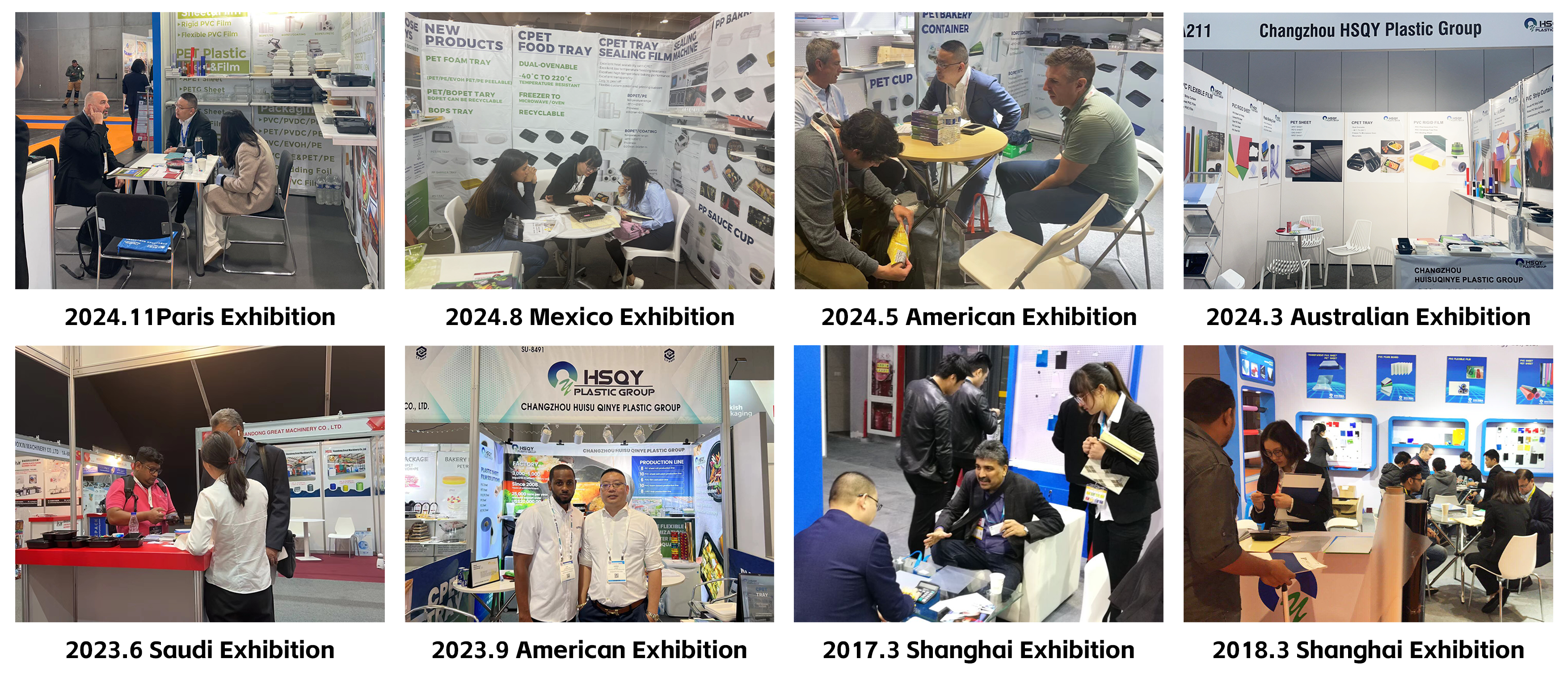
HSQY participates in international industry events and works with food-packaging buyers, converters and distributors in global markets.
Request a Quote for High-Temperature CPET Plastic Sheet
Looking for CPET sheet for ovenable ready-meal trays, frozen-food packaging or airline catering? Send HSQY your sheet thickness, roll width, tray drawing, thermoforming machine information, temperature requirements, sealing system, quantity and destination market.
Contact HSQY for CPET Samples and Bulk Pricing