Clear Extruded Acrylic Sheet
HSQY clear extruded acrylic sheet is a transparent PMMA sheet manufactured through a continuous extrusion process for signage, retail displays, glazing, photo frames, lighting components, thermoforming and custom plastic fabrication.
Available thicknesses range from 0.8mm to 10mm, with standard sheet sizes of 1220 × 1830mm, 1220 × 2440mm and 2050 × 3050mm. Clear glossy sheet is the primary specification, while selected customized colors and dimensions can be discussed according to production requirements.
The continuous extrusion process is particularly suitable for buyers requiring repeatable standard gauges, efficient volume production, thermoforming, bending, cutting and other secondary fabrication.
Request Extruded Acrylic Pricing Request a Sample
Extruded Acrylic Sheet Options
![Clear Extruded Acrylic Sheet]()
Clear Acrylic Sheet
![Colorful Extruded Acrylic Sheet]()
Colorful Acrylic Sheet
![Acrylic Mirror Surface]()
Mirror Surface
Clear Extruded Acrylic Sheet Specifications
| Property |
Specification |
| Product Name |
Clear Extruded Acrylic Sheet |
| Model |
Extruded Acrylic Sheet |
| Product Code |
Acrylic-02 |
| Material |
PMMA Acrylic |
| Thickness |
0.8-10mm |
| Standard Sizes |
1220 × 1830mm, 1220 × 2440mm, 2050 × 3050mm |
| Custom Size |
Available according to production feasibility and order requirements |
| Density |
Approximately 1.2 g/cm³ |
| Surface |
Glossy |
| Primary Color |
Clear |
| Other Colors |
Selected customized colors subject to production confirmation |
| Production Process |
Continuous extrusion |
| Processing |
Cutting, CNC routing, drilling, laser processing, printing, bonding, heat bending and thermoforming subject to specification |
| Typical Applications |
Signage, displays, photo frames, glazing, lighting, advertising panels, furniture components and thermoformed parts |
Send Your Acrylic Sheet Specification
What Is Extruded Acrylic Sheet?
Extruded acrylic sheet is a rigid thermoplastic panel made from polymethyl methacrylate, commonly abbreviated as PMMA. During production, PMMA material is heated and continuously extruded through a sheet-forming system before cooling, calibration and cutting.
Continuous production makes extruded acrylic particularly suitable for standard sheet gauges, repeat orders and large-volume applications where consistent thickness and efficient conversion are important.
Clear extruded PMMA is widely used as a transparent plastic material for displays, signs, picture framing, glazing, lighting and thermoformed parts. It should not be assumed to have the same impact performance as polycarbonate where high-impact engineering performance is required.
Key Advantages of Extruded Acrylic Sheet
1. Consistent Thickness: The continuous extrusion process is suitable for projects requiring repeatable standard gauges and controlled sheet thickness.
2. Clear Optical Appearance: Clear PMMA provides high transparency for signs, displays, glazing, frames and other applications where visibility is important.
3. Suitable for Volume Production: Continuous extrusion is efficient for repeat orders, standardized dimensions and higher-volume sheet programs.
4. Thermoforming Performance: Extruded acrylic can be evaluated for heat bending, vacuum forming and other thermal forming processes using appropriate temperatures and tooling.
5. Easy Fabrication: Suitable sheets can be cut, routed, drilled, printed, bonded and machined into finished components.
6. Lightweight Plastic Sheet: PMMA provides a lower-weight transparent material option than conventional glass for suitable applications.
Clear Acrylic Optical Performance
Clear extruded acrylic is selected for applications requiring a transparent, glass-like appearance. Actual light transmission and optical performance depend on the exact PMMA formulation, sheet thickness, surface condition and test method.
Buyers with a minimum light-transmission requirement should state the required value and test method when requesting technical data rather than assuming that one published value applies to every thickness or customized color.
Extruded Acrylic Sheet Applications
Signage and Advertising: Clear extruded acrylic can be fabricated into sign panels, logo elements, light boxes, advertising boards and other commercial display components.
Retail Displays: The transparent glossy surface is suitable for product stands, shelves, display cases, POS fixtures and transparent merchandising components.
Photo Frames: Clear PMMA can be cut and fabricated into lightweight photo frames, protective display panels and transparent picture-display components.
Interior Glazing: Suitable acrylic specifications can be used for transparent partitions, decorative panels, furniture inserts and interior glazing.
Lighting: Clear acrylic can be fabricated into covers, panels and other components for lighting and illuminated display applications.
Thermoformed Products: Extruded acrylic is commonly evaluated where sheets will be heated, bent or vacuum formed into finished shapes.
Acrylic Fabrication and Application Examples
![Extruded Acrylic Sheet Cutting]()
Cutting
![Extruded Acrylic Display Stand]()
Display Stand
![Extruded Acrylic Photo Frame]()
Photo Frame
![Extruded Acrylic Advertising Board]()
Advertising Board
Extruded Acrylic vs Cast Acrylic
| Selection Factor |
Extruded Acrylic |
Cast Acrylic |
| Production |
Continuous extrusion process |
Casting and polymerization process |
| Thickness Control |
Well suited to repeatable standard gauges and tighter continuous-process thickness control |
Thickness variation should be considered when tight gauge tolerance is critical |
| Volume Production |
Well suited to standardized higher-volume sheet programs |
Commonly selected for specialty, thick-gauge and custom-color programs |
| Thermoforming |
Common choice for heat bending and vacuum forming |
Also thermoformable with grade-specific processing conditions |
| Machining |
Suitable for cutting, routing, drilling and other standard fabrication |
Frequently selected for demanding machining, engraving and polished-edge work |
| Color Programs |
Best suited to standard or repeatable production colors |
Often more flexible for specialty and custom-color programs |
| Typical Buyer Priority |
Thickness consistency, forming and efficient volume production |
Custom color, thicker gauges and specialty fabrication |
Processing and Fabrication
Extruded acrylic can be converted into finished components using multiple fabrication processes. Processing conditions should be matched to sheet thickness, dimensions, finished geometry and required surface quality.
| Process |
Purchasing Consideration |
| Cutting |
Provide finished dimensions, tolerance and edge requirements |
| CNC Routing |
Confirm drawing, hole positions, contours and finished tolerance |
| Laser Processing |
Confirm thickness, edge appearance and finished dimensions before production |
| Drilling |
Provide hole diameter, spacing and distance from edges |
| Heat Bending |
Confirm thickness, bend angle, bend radius and finished geometry |
| Vacuum Forming |
Provide forming depth, mold dimensions and finished-part requirements |
| Printing |
Confirm printing process, ink system and required adhesion |
| Bonding |
Use a bonding system compatible with the selected PMMA grade and finished application |
Thermoforming Extruded Acrylic
Extruded acrylic is commonly selected for heat bending and thermoforming because standard gauges can be produced consistently and heated into a variety of commercial shapes.
Forming temperature, heating time, mold design, draw depth and cooling method should be determined for the exact acrylic grade and thickness. Buyers planning large or deep-formed parts should provide drawings before material selection.
Outdoor Use and Weather Exposure
Acrylic is widely used in signs, glazing and other applications exposed to daylight, but outdoor performance depends on the exact PMMA formulation, color, sheet specification, exposure conditions and required service life.
Buyers requiring defined UV, weathering or color-retention performance should state the project environment and request the technical information applicable to the exact supplied grade.
What Buyers Should Confirm Before Ordering
| Requirement |
Information to Provide |
| Thickness |
Required gauge within the 0.8-10mm range |
| Sheet Size |
1220 × 1830mm, 1220 × 2440mm, 2050 × 3050mm or custom dimensions |
| Color |
Clear or required customized color |
| Optical Requirement |
Required transparency or light-transmission value where critical |
| Application |
Signage, display, glazing, frame, lighting, furniture or thermoformed component |
| Fabrication |
Cutting, CNC, drilling, laser processing, printing, bending, forming or bonding |
| Tolerance |
State critical thickness and dimensional tolerance requirements |
| Outdoor Use |
Sunlight exposure, temperature range and expected service life if applicable |
| Documentation |
Required test report or compliance documentation for the exact material specification |
| Quantity |
Sample, trial order and expected bulk quantity |
| Destination |
Country, destination port and shipping requirements |
Get an Extruded Acrylic Sheet Quote
Packing and Delivery
Small acrylic samples can be packed in PP bags or envelopes. Full sheets can be protected on both sides with PE film or kraft paper according to the order specification.
Historical packing information lists approximately 1500-2000kg per wooden pallet and approximately 20 tons for normal container loading. Final pallet weight and loading quantity depend on sheet size, thickness, quantity and export packing requirements.
Certification and Documentation
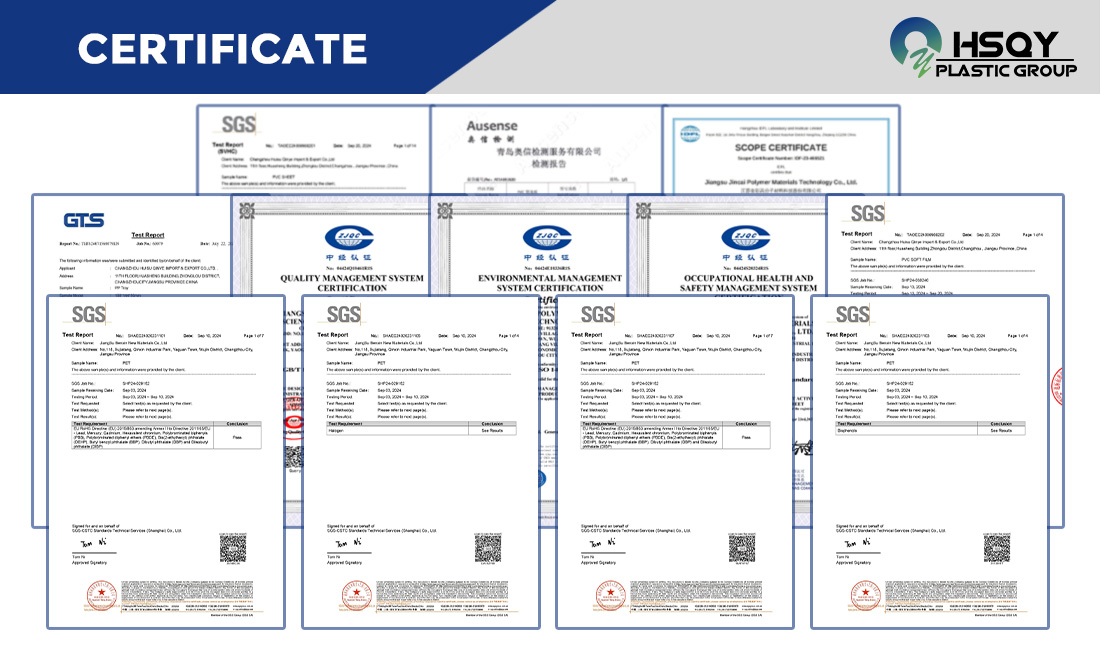
The existing HSQY acrylic product content references REACH, ISO, RoHS, SGS and UL94-related documentation within the broader acrylic product portfolio. Buyers requiring a specific report should confirm whether the current document applies to the exact extruded PMMA grade, thickness and supplied specification.
ISO quality-management certification, general material reports and flame-test documentation should not automatically be interpreted as certification of every clear extruded acrylic sheet specification.
About HSQY Acrylic Sheet Supply
HSQY Plastic Group supplies extruded acrylic sheet, cast acrylic sheet and fabricated acrylic products for distributors, sign manufacturers, display fabricators, furniture companies, glazing suppliers and industrial buyers.
Custom acrylic projects can be discussed according to thickness, dimensions, color, processing method, tolerance, packing and bulk purchasing requirements.
Frequently Asked Questions
What is an extruded acrylic sheet?
Extruded acrylic sheet is a PMMA plastic panel manufactured through a continuous extrusion process. It is commonly selected for clear displays, signage, glazing, photo frames, thermoforming and other fabricated products.
What thicknesses are available?
The detailed HSQY product specification covers approximately 0.8mm to 10mm. Availability should be confirmed for the required sheet size, quantity and color.
What standard sheet sizes are available?
Standard listed sizes are 1220 × 1830mm, 1220 × 2440mm and 2050 × 3050mm. Customized dimensions can also be discussed.
What is the difference between extruded and cast acrylic?
Both materials are PMMA. Extruded acrylic is continuously manufactured and is commonly selected for consistent standard gauges, thermoforming and efficient volume production. Cast acrylic is often selected for thick gauges, specialty colors and demanding machining or polished-edge applications.
Is extruded acrylic suitable for thermoforming?
Yes. Extruded acrylic is commonly used for heat bending and vacuum forming. Forming temperature, heating time and mold design should be optimized for the exact grade and thickness.
Can extruded acrylic be laser cut?
Suitable extruded acrylic can be laser processed, CNC routed, saw cut and drilled. Final edge appearance depends on thickness, equipment and processing parameters.
Is clear acrylic the same as polycarbonate?
No. Acrylic is PMMA, while polycarbonate is PC. Both can be transparent plastics, but they have different impact, fabrication, temperature and application characteristics.
Is acrylic lighter than glass?
Yes. With a density of approximately 1.2 g/cm³, PMMA is substantially lighter than conventional glass, which can simplify handling and fabrication for suitable applications.
Can customized colors be supplied?
Clear is the primary specification for this product. Selected customized colors can be discussed depending on color requirement, production quantity and manufacturing feasibility.
Can extruded acrylic be used outdoors?
Suitable acrylic grades are used in exterior signage and glazing applications. Buyers requiring defined outdoor performance should confirm the exact grade, UV requirement, installation environment and expected service life.
Is every extruded acrylic sheet suitable for an aquarium or vehicle windshield?
No. Applications involving water pressure, transportation glazing or safety requirements require application-specific material selection, engineering and compliance review. Standard clear sheet should not automatically be assumed suitable.
How are extruded acrylic sheets packed?
Small samples can be packed in PP bags or envelopes. Full sheets can be protected with PE film or kraft paper and loaded on wooden pallets according to order requirements.
Can I request a sample?
Sample requirements can be discussed before bulk production. Provide the required thickness, sheet size, application and any critical optical or processing requirements.
What information should I provide for a quotation?
Please provide thickness, sheet size, color, quantity, application, processing method, dimensional tolerance, optical requirements, packing requirements and destination.
Contact HSQY for Samples and Pricing