Easy-Peel PET/PE Lidding Film Video
What Is Easy-Peel PET/PE Lidding Film?
Easy-peel PET/PE lidding film is a laminated tray-sealing film designed to provide secure package closure together with controlled, consumer-friendly opening. The PET or BOPET outer layer provides clarity, tensile strength, stiffness, dimensional stability, puncture resistance, and printability. The modified PE-based sealing layer controls adhesion and peel behavior on a compatible PE sealing surface.
A properly matched easy-peel structure allows the lid to start and continue peeling without excessive force, scissors, severe tray deformation, film shredding, or uncontrolled sealant residue. Package security must still remain sufficient for filling, handling, chilled storage, stacking, and transport.
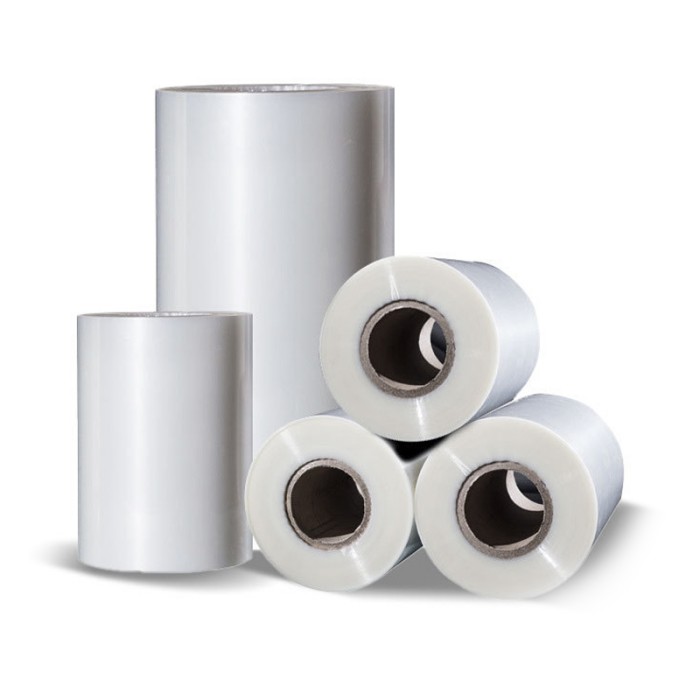
HSQY supplies nominal thicknesses from 0.052mm to 0.09mm, roll widths from 150mm to 900mm, and standard 500m rolls with custom conversion available. Anti-fog, custom printing, and high-barrier versions can be developed, but each function requires an approved film structure and application-specific testing.
PET/PE Lidding Film Application
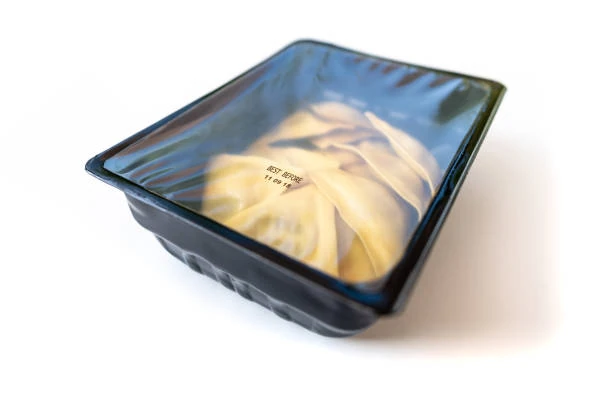 Easy-peel food tray sealing application
Why Choose Easy-Peel PET/PE Film?
Controlled opening: Peel force can be developed for easier consumer access while retaining distribution security.
One-piece opening target: Correct film and tray matching can reduce shards, tearing, and repeated pulling.
Clear retail presentation: BOPET provides transparency and gloss for visible food presentation.
Reliable tray sealing: The PE-based sealant can provide a broad production window on a compatible PE sealing surface.
Optional anti-fog: Supports clearer display for chilled and high-moisture foods.
Optional high barrier: EVOH or another functional layer can be added when a defined oxygen barrier is required.
Custom printing: Supports branding, instructions, barcodes, QR codes, traceability, and transparent windows.
Custom roll conversion: Thickness, width, length, core, outer diameter, roll weight, and winding direction can be matched to the equipment.
How the BOPET/PE Easy-Peel Structure Works
| Layer |
Primary Function |
Buyer Consideration |
| PET / BOPET Outer Layer |
Provides clarity, stiffness, tensile strength, dimensional stability, puncture resistance, and printability. |
Confirm gauge, haze, gloss, shrinkage, surface treatment, and printing requirements. |
| Printing Layer |
Carries logos, product information, instructions, barcodes, and traceability. |
Confirm surface or reverse printing, ink system, colors, repeat length, and eye-mark location. |
| Laminating Adhesive |
Bonds the BOPET outer layer to the sealant and optional functional layers. |
Confirm cure time, bond strength, migration, odor, and chilled-storage conditions. |
| Optional Barrier Layer |
Reduces oxygen, aroma, moisture, or MAP gas transmission when standard PET/PE is insufficient. |
Specify OTR, WVTR, gas mixture, product type, storage temperature, and target shelf life. |
| Modified PE Easy-Peel Layer |
Seals to a compatible PE surface and controls peel initiation, propagation, and failure mode. |
Must be matched to the actual tray grade, flange geometry, contamination level, and target peel force. |
Easy-Peel PET/PE Lidding Film Specifications
The table below retains the existing commercial specifications while clarifying which properties are standard and which require a separately qualified grade. Final guaranteed properties should be included in the approved technical data sheet, sample approval, and purchase order.
| Property |
Standard or Available Option |
Selection Note |
| Product Type |
Easy-peel tray lidding film |
Rollstock for compatible tray-sealing equipment |
| Material Structure |
BOPET / modified PE laminate |
Exact BOPET, adhesive, PE, and optional barrier layers depend on the application |
| Primary Tray Application |
Compatible PET/PE, PET/EVOH/PE, PE, and PE-coated sealing surfaces |
Send the tray grade, drawing, or physical sample |
| Thickness |
0.052–0.09mm |
Equivalent to approximately 52–90μm; confirm tolerance |
| Standard Widths |
180mm, 320mm, 400mm, and 640mm |
Current custom range: 150–900mm |
| Roll Length |
500m, customizable |
Depends on gauge, width, core, roll weight, and maximum outer diameter |
| Color |
Clear or custom printed |
Confirm haze, gloss, print coverage, transparent windows, and eye marks |
| Seal Type |
Easy peel |
Light, medium, or harder peel can be developed within practical limits |
| Anti-Fog |
Optional |
Specify anti-fog side, storage temperature, humidity, duration, and visual acceptance method |
| Standard Barrier |
General product protection |
Standard BOPET/PE should not automatically be called high oxygen barrier |
| High Barrier |
Optional EVOH or another multilayer structure |
Specify OTR, WVTR, MAP gas mixture, and target shelf life |
| Microwave / Oven Use |
Application-specific grade only |
Confirm whether the lid remains on, is pierced, peeled back, or removed |
| Freezer Use |
Application-specific grade only |
Test low-temperature impact, seal retention, and peel behavior |
| Printing |
Flexographic or gravure printing by project |
Confirm artwork, color count, print repeat, eye mark, and annual volume |
| MOQ |
1000kg |
Sample and trial quantities depend on stock, width, structure, and printing |
| Lead Time |
Confirm with the commercial quotation |
Depends on structure, printing, quantity, and production schedule |
Which Trays Can Easy-Peel PET/PE Film Seal?
| Tray Material |
Compatibility Guidance |
Recommended Approach |
| PET/PE Tray |
Primary application when the tray flange presents a compatible PE sealing surface. |
Confirm PE grade, flange geometry, peel tab, contamination tolerance, and target peel force. |
| PET/EVOH/PE Tray |
Often compatible when the outer sealing surface remains PE. |
Validate peel behavior, MAP retention, seal integrity, and whole-pack barrier. |
| PE or PE-Coated Tray |
May be compatible when the tray and film PE grades provide a suitable peel-seal interaction. |
Test seal initiation temperature, peel force, residue, and tray distortion. |
| Plain APET / rPET |
A plain PET flange may not seal correctly to a standard PE easy-peel layer. |
Use a PET-compatible or specifically engineered universal sealant. |
| CPET |
Standard PET/PE film should not automatically be treated as CPET-compatible or ovenable. |
Use a dedicated CPET-compatible easy-peel and thermal grade when required. |
| PP / PP-EVOH-PP |
A PP sealing surface generally requires a PP-compatible easy-peel sealant. |
Use BOPET/CPP, EVOH/PP, or another qualified PP peel structure. |
| PVC, PS, Aluminium, or Coated Paperboard |
Requires substrate-specific sealant chemistry. |
Send the actual tray and develop or select a dedicated grade. |
The current page should not state that one standard BOPET/PE film automatically seals PP, APET, CPET, and PVC. Multi-substrate capability requires a specifically engineered universal sealant and tray-by-tray validation.
Easy Peel Is Not the Same as Easy Tear
Easy peel describes separation of the lidding film from the tray flange. Easy tear describes tearing through the film itself, usually from a notch in a pouch or flow-wrap package. For tray packaging, easy peel is the correct term when the consumer removes the entire lid from the tray.
Understanding Peel Force and Failure Mode
| Peel Characteristic |
What It Means |
Why It Matters |
| Peel Initiation |
The force required to begin opening at the peel tab. |
Too high feels difficult; too low may reduce package security. |
| Peel Propagation |
The force required to continue opening around the flange. |
A stable force produces smoother, more predictable opening. |
| Interfacial Peel |
The film separates at the tray-and-sealant interface. |
Often preferred when a clean tray rim and minimal residue are required. |
| Cohesive Peel |
The sealant separates within its own layer. |
Can provide controlled evidence of opening but may leave designed residue. |
| Film Tear or Shred |
The film breaks instead of peeling as one piece. |
May indicate excessive seal strength, poor compatibility, unsuitable stiffness, or weak lamination. |
Seal Window and Production-Line Validation
Commercial easy-peel film needs a sufficiently wide sealing window, not only one successful laboratory seal. Peel performance should remain stable as temperature, pressure, dwell time, tray temperature, line speed, flange contamination, and tooling conditions change.
Seal initiation temperature: Lowest temperature that provides acceptable package integrity.
Upper sealing limit: Maximum temperature before peel force becomes excessive or the tray distorts.
Pressure and dwell time: Must suit the actual machine, tool, and production speed.
Contamination tolerance: Test moisture, oil, sauce, powder, meat purge, and food particles.
Peel after storage: Measure opening force after the intended chilled or ambient shelf life.
Peel direction: Test from the actual peel tab at the intended consumer opening angle.
Multi-cavity consistency: Inspect every corner, side, compartment, and tool cavity.
Standard PET/PE vs. High-Barrier PET/EVOH/PE
| Film Structure |
Typical Function |
When to Select It |
| Standard BOPET/PE Easy Peel |
Clarity, mechanical strength, PE-compatible peel seal, and general product protection. |
Products where a defined high oxygen barrier is not required. |
| PET/EVOH/PE High-Barrier Easy Peel |
Adds a defined oxygen and aroma barrier for MAP or oxidation-sensitive products. |
Fresh protein, cheese, prepared foods, and applications with a target OTR. |
| Anti-Fog PET/PE Easy Peel |
Adds condensation control for clearer chilled display. |
Produce, salads, meat, dairy, desserts, bakery, and ready meals. |
| Thermal Easy-Peel Grade |
Maintains a qualified seal and peel response during a specified pasteurization, microwave, or oven cycle. |
Only when the complete film, tray, food, ink, adhesive, and heating process are validated. |
Standard BOPET/PE should not be described as high barrier solely because it contains PET. High-barrier claims require a defined functional layer and measured OTR and WVTR under stated test conditions.
Optional Anti-Fog Performance
Anti-fog technology helps maintain visibility by encouraging condensed moisture to spread into a thinner transparent layer instead of forming separate light-scattering droplets. It does not eliminate moisture or condensation.
Identify the anti-fog side and seal side on the roll label.
Specify filling temperature, storage temperature, humidity, and target shelf life.
Define visual acceptance using reference photographs or a rating method.
Test anti-fog after roll storage and throughout the packaged-product shelf life.
Confirm that coating, printing, sealing, and food-contact requirements are compatible.
Contamination Tolerance and Package Integrity
| Potential Problem |
Possible Cause |
Recommended Check |
| Seal Is Too Weak |
Low temperature, insufficient pressure or dwell time, contamination, or incompatible tray surface. |
Establish a seal-window matrix using clean and contaminated flanges. |
| Film Is Difficult to Peel |
Excessive temperature, long dwell time, overly strong sealant, or unsuitable tray grade. |
Reduce thermal input and measure peel force using an agreed method. |
| Film Tears or Shreds |
High peel force, poor film stiffness, weak lamination, or inadequate peel-tab design. |
Review thickness, bond strength, tray geometry, and peel angle. |
| Sealant Residue Is Excessive |
Cohesive peel outside the target range, excessive heat, or incompatible surfaces. |
Define the required failure mode and evaluate after storage. |
| Channel Leak |
Wrinkles, food particles, oil, moisture, damaged flange, or uneven tooling. |
Use vacuum, pressure-decay, dye, or bubble testing. |
| Tray Distorts |
Excessive heat, long dwell time, high pressure, or insufficient tray stiffness. |
Optimize sealing conditions or select a more suitable tray and film. |
Custom Printing and Roll Orientation
Custom printing can include logos, product names, ingredients, preparation instructions, nutritional information, barcodes, QR codes, date-code areas, traceability, and transparent viewing windows.
Seal side: Identify the modified PE easy-peel surface.
Anti-fog side: Confirm the food-facing side when anti-fog is included.
Winding direction: Approve a winding diagram for the exact machine.
Print repeat: Match the cutting and tooling layout.
Eye mark: Confirm size, color, position, and distance from the film edge.
Print orientation: Use surface or reverse printing according to the approved laminate.
Transparent window: Keep critical viewing areas free from unnecessary graphics.
Tray-Sealer and Roll Compatibility
Provide the tray-sealer brand and model, film width, core inside diameter, maximum outer diameter, roll weight, winding direction, seal-side orientation, eye-mark sensor, tooling layout, commercial line speed, sealing temperature, pressure, and dwell time.
Production trials should evaluate web tracking, tension, cutting, seal continuity, peel initiation, peel propagation, one-piece opening, shredding, residue, leakage, flange contamination, print registration, anti-fog performance, and consistency after storage.
Quality-Control Requirements
Peel-force range: Define specimen width, peel angle, speed, conditioning, and acceptable values.
Seal strength: Confirm sufficient integrity for handling and distribution.
Seal initiation temperature: Establish the lower production limit.
Lamination bond strength: Verify that layers do not separate during sealing or peeling.
Thickness profile: Controls stiffness, roll build, tracking, and peel response.
Coefficient of friction: Affects unwinding and high-speed machinability.
Haze and gloss: Control product visibility and shelf appearance.
Roll quality: Check edge alignment, wrinkles, telescoping, joints, core condition, and winding direction.
Barrier data: Supply OTR and WVTR only when barrier performance is claimed.
Typical Applications
Fresh produce and prepared salads
Chilled ready meals and food-to-go products
Fresh meat, poultry, and seafood in compatible tray systems
Dairy products, yogurt, desserts, cheese, and dips
Bakery products, confectionery, jelly, and portion packs
Deli foods and processed-food trays
PET/PE and PET/EVOH/PE trays with a compatible PE sealing surface
Private-label packs requiring custom printing and controlled opening
MAP applications using a separately specified high-barrier easy-peel structure
Explore HSQY's PET/PE food tray range, PET/PE tray sealing films, and complete lidding film category.
Information Required for an Accurate Quotation
Tray material, supplier, product code, layer structure, drawing, or physical sample
Tray dimensions, flange width, peel tab, compartments, and fill weight
Target peel-force range and required interfacial or cohesive peel behavior
Food type, filling temperature, oil, moisture, sauce, powder, and contamination risks
Storage temperature, distribution conditions, target shelf life, and retail display requirements
Need for anti-fog, high barrier, MAP, printing, perforation, freezer, microwave, or oven performance
Tray-sealing machine brand, model, tooling layout, commercial speed, pressure, temperature, and dwell time
Film thickness, width, length, core ID, maximum outer diameter, roll weight, and winding direction
Seal side, anti-fog side, print orientation, eye-mark position, and print repeat
OTR, WVTR, gas mixture, residual oxygen, leakage, or puncture requirements when applicable
Required food-contact, migration, quality, barrier, and destination-market documentation
Sample quantity, annual volume, delivery destination, and requested launch date
Request Easy-Peel Film Samples and Pricing
Customization Services
Custom 0.052–0.09mm thickness and tolerance
Custom 150–900mm roll widths
Custom roll length, core, roll weight, maximum outer diameter, and winding direction
Light peel, medium peel, hard peel, and application-specific easy-peel structures
PET/PE, PET/EVOH/PE, PE-coated, and other substrate-specific sealant grades
Anti-fog, high-barrier, MAP, low-temperature, microwave, and ovenable development
Flexographic or gravure printing for branding, instructions, and traceability
Custom eye marks, print repeats, transparent windows, coding areas, perforation, and venting
Tray compatibility, seal-window, peel-force, contamination, leakage, barrier, and production-line trials
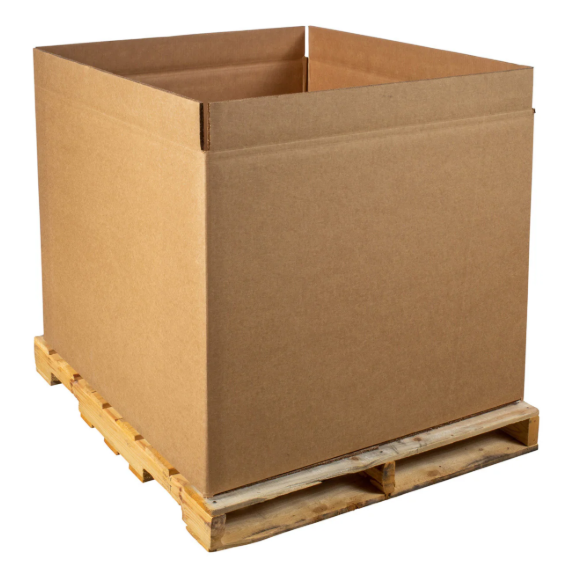
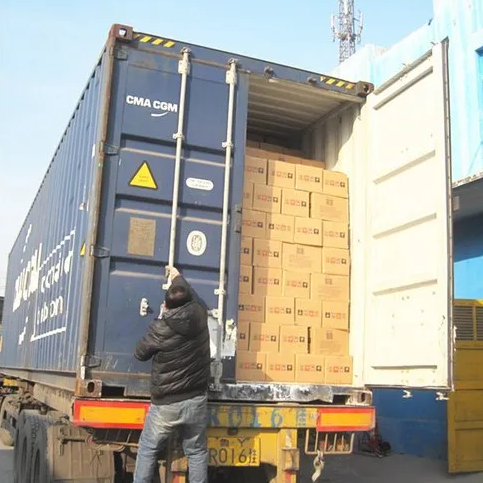
Custom cartons, roll labels, pallet marks, and international delivery
Production Images


Quality and Compliance Documentation
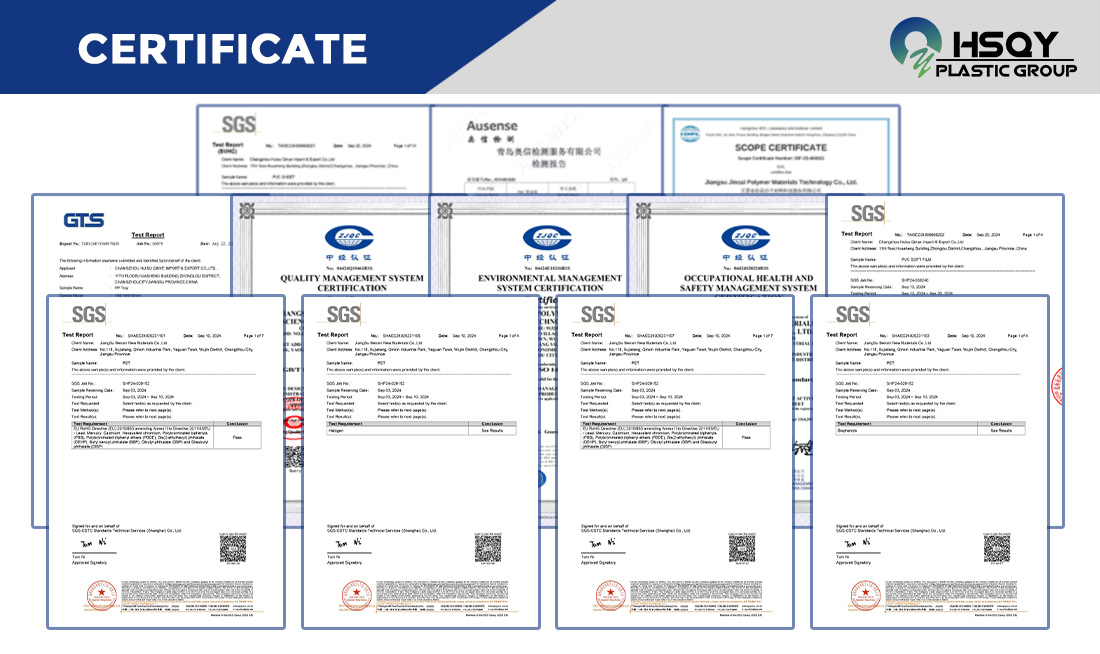
HSQY can provide available quality-management, inspection, and material documentation for the approved grade. Buyers should request the technical data sheet, certificate of analysis, food-contact declaration, migration or compliance reports, peel-force test method, barrier reports when applicable, and roll inspection criteria.
ISO 9001 is a quality-management-system certification and should not be presented as product-specific food-contact approval. SGS or food-contact claims should identify the exact film structure, report number, food type, temperature, duration, and intended conditions of use.

Global Exhibitions

2017 Shanghai Exhibition

2018 Shanghai Exhibition

2023 Saudi Exhibition

2023 American Exhibition

2024 Australian Exhibition

2024 American Exhibition

2024 Mexico Exhibition

2024 Paris Exhibition
Frequently Asked Questions About Easy-Peel PET/PE Film
What is easy-peel PET/PE lidding film?
It is a BOPET/PE laminate with a modified PE sealing layer designed to provide secure tray sealing and controlled consumer opening.
What is the difference between easy peel and easy tear?
Easy peel separates the lid from the tray flange. Easy tear means tearing through the film itself, usually from a notch in a pouch.
Which trays can this film seal?
The standard PE easy-peel layer is mainly intended for PET/PE, PET/EVOH/PE, PE, and PE-coated trays with a compatible PE sealing surface.
Can it seal plain APET, CPET, PP, or PVC trays?
Not automatically. These surfaces may require different or universal sealant chemistry. Send the actual tray for compatibility testing.
Can the peel force be customized?
Yes. Light, medium, or harder peel can be developed within practical limits. Provide the target force, test method, tray sample, and storage conditions.
What causes film shredding during opening?
Possible causes include excessive sealing temperature, high peel force, unsuitable film stiffness, weak lamination, poor tray compatibility, or inadequate peel-tab design.
Can the film provide a one-piece peel?
A one-piece peel can be targeted through correct film structure, tray matching, sealing conditions, and peel-tab design, but it should be validated on the commercial package.
Is standard BOPET/PE high barrier?
Not necessarily. High-barrier performance requires a defined barrier layer, such as EVOH, and measured OTR and WVTR values.
Is anti-fog available?
Yes. Anti-fog can be added for chilled foods where condensation may reduce product visibility.
Can easy-peel film be used for MAP packaging?
Yes, when a suitable barrier structure is selected and the tray, seal integrity, gas mixture, OTR, WVTR, and shelf life are validated.
Can the film be custom printed?
Yes. Printing can include logos, product information, barcodes, QR codes, date-code areas, instructions, and transparent windows.
What sizes are available?
The current page lists 0.052–0.09mm thickness, standard widths of 180mm, 320mm, 400mm, and 640mm, a custom width range of 150–900mm, and 500m roll length.
Is PET/PE easy-peel film recyclable?
It should not automatically be described as recyclable everywhere because PET and PE are different polymer families. Recyclability depends on the complete structure and local collection system.
What is the minimum order quantity?
The current stated MOQ is 1000kg. Sample and trial quantities depend on stock, width, structure, printing, and special functions.
Can I request samples before bulk production?
Yes, subject to material availability and specification. Provide the tray sample, machine details, food application, film dimensions, and required peel behavior.
About HSQY Plastic Group
HSQY Plastic Group supplies easy-peel PET/PE lidding films, PET/PE and PET/EVOH/PE trays, anti-fog films, lock-seal films, high-barrier films, CPET and PP tray films, plastic sheets, and related food-packaging products for international B2B customers.
The team can support tray compatibility, peel-force development, film-structure selection, roll conversion, printing, anti-fog and barrier requirements, samples, production-line trials, quality documentation, export packing, and international delivery.
Contact HSQY for Easy-Peel PET/PE Film