Recycled PET (rPET) Sheet for Blister Packaging and Thermoforming
HSQY Recycled PET (rPET) Sheet is a rigid thermoplastic sheet manufactured with recycled polyethylene terephthalate for blister packaging, vacuum forming, thermoforming trays, clamshells, food containers, retail displays and customized packaging components.
Made from recovered PET raw materials, including post-consumer recycled PET where specified, rPET sheet provides packaging manufacturers with an option to incorporate recycled content into their products. Recycled-content grades can be developed up to 100%, subject to the selected material formulation and production requirements.
The current product range covers thicknesses from 0.12mm to 6.0mm and widths up to 1400mm. Clear and customized colors, high-gloss and matte surfaces, and functional treatments such as anti-fog, anti-UV, anti-static and ESD options are available for project evaluation.
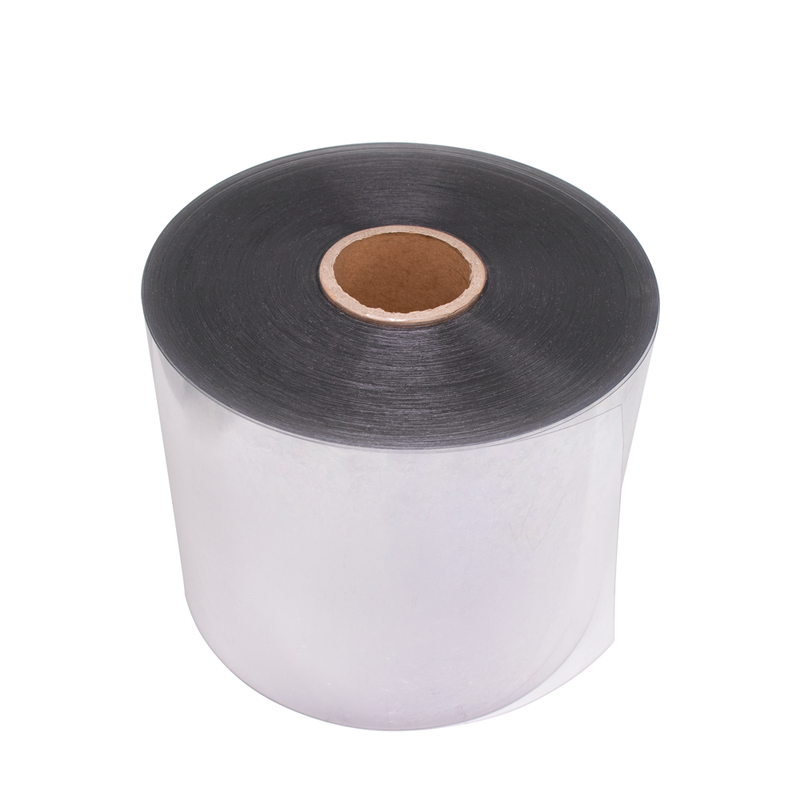
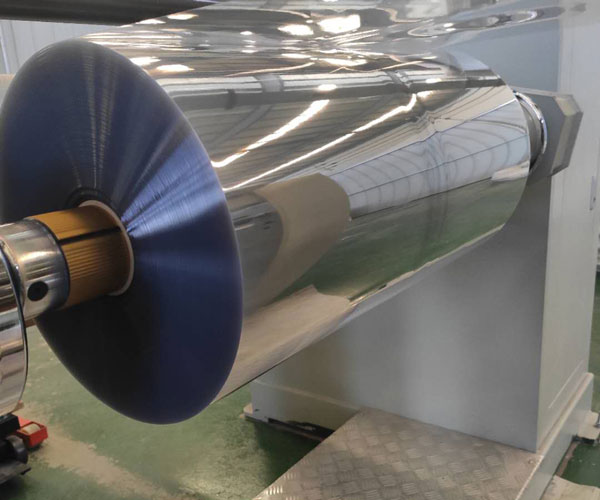
For packaging converters, the correct rPET specification depends on recycled-content percentage, optical clarity, thickness uniformity, forming depth, mold design, heating conditions and finished-package requirements. Roll or sheet supply can be discussed according to material thickness and downstream processing equipment.
Request an rPET Sheet Quotation
Recycled PET Sheet for Blister Packaging Video
Recycled PET (rPET) Sheet Product Images

rPET Sheet Roll

rPET Film for Vacuum Forming

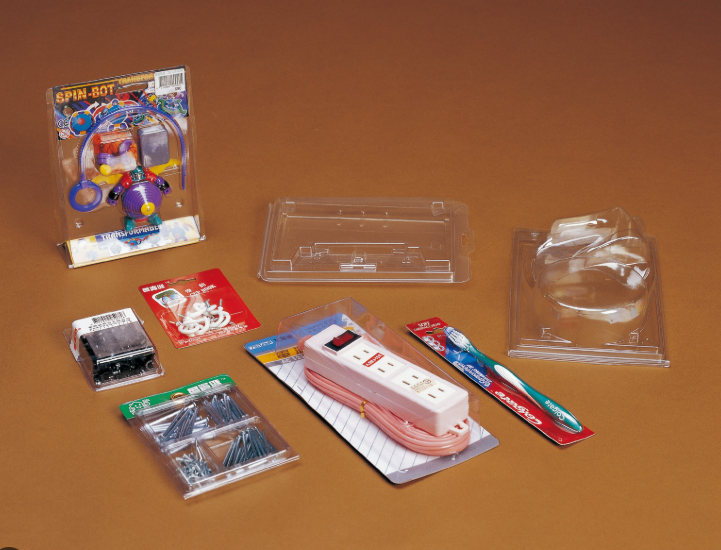
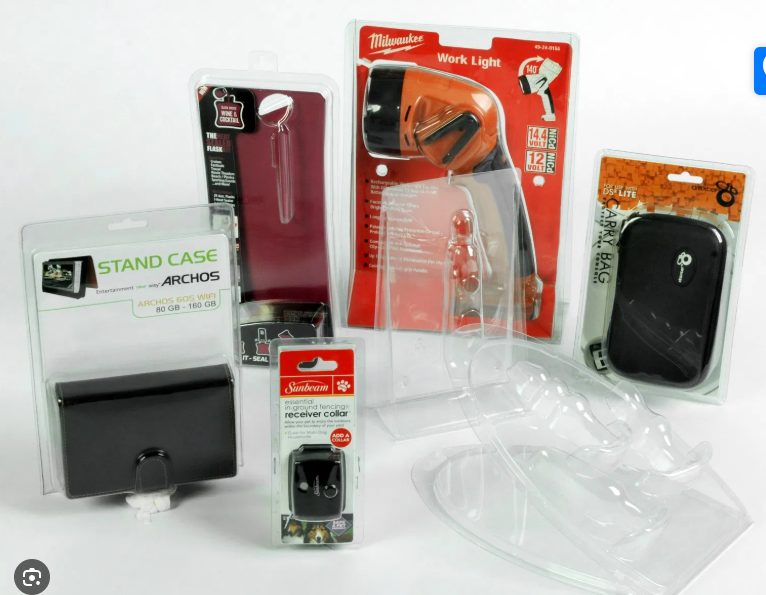
rPET for Blister Packaging
Recycled PET (rPET) Sheet Specifications
The following table summarizes the current product range. Final recycled-content ratio, thickness tolerance, width tolerance, optical properties and functional treatments should be confirmed in the approved technical specification.
| Technical Property |
Specification |
| Product Name |
Recycled PET Sheet / rPET Sheet |
| Material |
Recycled Polyethylene Terephthalate (rPET) |
| Recycled Content |
Up to 100%, depending on selected grade and material formulation |
| Feedstock |
Recovered PET, including post-consumer recycled PET where specified |
| Thickness |
0.12mm–6.0mm |
| Maximum Width |
Up to 1400mm |
| Colors |
Clear / Transparent / Customized Colors |
| Surface Finish |
High Gloss / Matte / Customized Surface |
| Supply Format |
Rolls / Sheets, according to thickness and production requirements |
| Functional Options |
Anti-Fog / Anti-UV / Anti-Static / ESD Options |
| Processing |
Thermoforming / Vacuum Forming / Blister Forming / Die Cutting |
| Applications |
Blister Packaging / Food Trays / Clamshells / Retail Packaging / Industrial Trays |
| MOQ |
1000kg |
| Packaging |
PE Film / Cartons / Pallet Packing / Export Packing |
What Is Recycled PET (rPET) Sheet?
Recycled PET sheet is a thermoplastic sheet made from recovered polyethylene terephthalate. Depending on the selected grade, the recycled raw material can originate from post-consumer PET bottles or other qualified PET waste streams.
Recovered PET is sorted, cleaned, processed and converted into suitable recycled raw material before sheet extrusion. The resulting rPET sheet can be supplied in clear or customized colors for packaging and industrial applications.
Post-Consumer Recycled PET
Post-consumer recycled PET is recovered from PET products that have completed their original consumer use. Reprocessed material can be incorporated into new sheet products according to the selected formulation and processing requirements.
Recycled Content Selection
Different recycled-content ratios can produce different optical, mechanical and processing characteristics. Buyers should specify the required recycled percentage and confirm the available grade, material traceability and documentation before ordering.
Up to 100% Recycled PET Options
The current product range includes options with up to 100% post-consumer recycled PET content. Actual availability depends on the selected thickness, optical requirements, forming application and material grade.
Key Advantages of Recycled PET Sheet
Recycled Material Content
rPET sheet allows packaging manufacturers to incorporate recovered PET into new products. Specified recycled-content levels can support customer purchasing requirements and recycled-material sourcing programs when supported by appropriate traceability documentation.
Clear Product Presentation
Clear rPET grades can provide product visibility for blister packs, trays, clamshells and transparent retail packaging. Actual transparency, haze and color tone depend on recycled-content level, raw material quality, sheet structure and processing conditions.
Thermoforming Capability
Suitable rPET grades can be heated and formed into packaging cavities, trays, inserts and customized components. Consistent heating and controlled forming conditions help achieve the required cavity definition and finished-part dimensions.
Rigidity and Impact Performance
Appropriate sheet thickness and material formulation provide rigidity for product protection, stacking and handling. The actual mechanical performance should be evaluated against the finished package geometry and product weight.
Multiple Thickness Options
The 0.12–6.0mm product range supports different packaging and fabrication requirements, from thin blister-forming materials to thicker rigid sheets for specialized components.
Customized Surface Treatments
High-gloss, matte and selected functional surface options can be discussed according to the packaging application, appearance requirements and downstream converting process.
Applications of Recycled PET Sheet
Blister Packaging
rPET sheet can be thermoformed into transparent blister cavities and protective packaging for electronics, cosmetics, stationery, consumer goods and suitable medical-device components. Material thickness and forming performance should match the cavity geometry and product requirements.
Food Packaging Trays
Suitable rPET grades can be used for fresh-produce trays, bakery packaging, deli containers and transparent food trays. Direct food-contact use requires confirmation of the specific material grade and supporting documentation for the intended market.
Clamshell Packaging
Clear rPET sheet can be formed into hinged clamshell containers for retail products, consumer goods and suitable food packaging applications.
Vacuum-Formed Trays and Inserts
Thermoforming and vacuum forming can convert rPET sheet into custom trays, protective inserts, compartment packaging and product supports according to the mold design.
Electronics and Industrial Packaging
rPET sheet can be evaluated for electronic-component trays, industrial inserts and protective packaging. Anti-static or ESD options should be specified separately according to the required electrical performance.
Retail Displays and Folding Boxes
Suitable PET sheet grades can be used for transparent retail displays, folding cartons, product covers and die-cut packaging components where visibility is important.
rPET Sheet Thickness Selection
Thickness selection should consider the finished package size, cavity depth, required stiffness, forming method and material distribution after forming.
| Thickness Range |
Potential Applications |
Selection Considerations |
| 0.12–0.30mm |
Thin blister packaging and lightweight formed components |
Film feeding, cavity depth and forming stability |
| 0.30–0.60mm |
Blister packs, inserts and lightweight trays |
Clarity, stiffness and wall-thickness distribution |
| 0.60–1.50mm |
Thermoformed trays, clamshells and protective packaging |
Draw depth, cavity geometry and finished-part rigidity |
| 1.50–3.00mm |
Thicker formed components and industrial trays |
Heating capacity, forming pressure and dimensional stability |
| 3.00–6.00mm |
Thick rigid sheets and specialized fabricated components |
Sheet format, machining and fabrication requirements |
These are indicative application ranges rather than fixed production combinations. Actual grade availability and suitable sheet formats should be confirmed for each thickness and recycled-content requirement.
Clear, Colored and Surface-Finished rPET Sheet
Clear Transparent rPET Sheet
Clear rPET sheet is suitable for packaging applications where product visibility is important. Optical performance should be specified using measurable targets such as haze and light transmission when these properties are critical.
Customized Colored rPET Sheet
Customized colors can be discussed for packaging and industrial applications. Buyers should provide a color reference or physical sample to evaluate color consistency and material appearance.
High-Gloss Surface
High-gloss rPET sheet provides a smooth, reflective surface for transparent packaging, display covers and retail presentation.
Matte Surface
Matte rPET sheet can be considered for applications requiring a reduced-reflection appearance or a different surface texture.
Functional rPET Sheet Options
Anti-Fog rPET Sheet
Anti-fog treatment can help reduce visible condensation on selected packaging surfaces. It can be considered for fresh-produce trays and other applications where moisture condensation affects product visibility. Performance should be tested under the actual temperature and humidity conditions.
Anti-UV rPET Sheet
UV-resistant options can be discussed for applications requiring additional protection against ultraviolet exposure. The required UV transmission or weathering performance should be defined before production.
Anti-Static rPET Sheet
Anti-static treatments can be considered for packaging and handling applications where static charge accumulation creates operational problems.
ESD and Conductive rPET Sheet
ESD and conductive options can be evaluated for electronics packaging and component handling. Buyers should provide the required surface-resistance range, electrical test method and intended service conditions before selecting a suitable grade.
Request Customized rPET Sheet Samples
Thermoforming Performance of Recycled PET Sheet
Thermoforming converts a flat PET sheet into a three-dimensional packaging component through controlled heating and forming. Consistent thickness, material conditioning and heating uniformity are important for repeatable production.
Heating and Material Conditioning
PET is moisture-sensitive. Depending on the selected grade, recycled-content formulation and storage conditions, drying or conditioning may be necessary before processing. Follow the applicable technical data sheet and conduct a forming trial rather than assuming that all rPET grades can be processed without pre-drying.
Forming Temperature
The forming temperature depends on the sheet grade, thickness, recycled-content ratio, heating equipment and mold design. Heater settings should be optimized to achieve consistent material softening without overheating or excessive thinning.
Vacuum Forming
Vacuum forming uses negative pressure to draw heated rPET sheet against a mold. It is suitable for compatible trays, packaging inserts, blister cavities and customized protective components.
Pressure Forming and Plug Assistance
For deeper cavities and complex geometries, pressure forming or plug assistance may be used to improve material distribution and mold definition. The appropriate process depends on the equipment and finished-part design.
Cooling and Trimming
After forming, the material is cooled and removed from the mold before trimming and die cutting. Cooling conditions and cutting settings should maintain the required dimensions and finished-edge quality.
How to Select rPET Sheet for Blister Packaging
Blister Cavity Depth
Deep blister cavities require careful thickness and forming-grade selection. The buyer should provide cavity depth, width, shape and any critical corner details when requesting material.
Wall-Thickness Distribution
Material thinning during forming can affect the strength and appearance of the finished blister. Forming trials should check wall-thickness distribution at cavity corners, side walls and base sections.
Clarity and Haze
Where product visibility is important, specify the required transparency and haze level. Recycled-content ratio, raw-material quality and sheet structure can affect optical performance.
Flange and Sealing Area
For blister packs requiring a lidding material, flange flatness, dimensional consistency and compatibility with the selected sealing system should be evaluated.
Finished Package Testing
The finished blister should be evaluated for dimensions, appearance, cavity integrity, trimming quality and compatibility with the intended lidding or secondary packaging system.
Food Packaging and Food-Contact Requirements
Suitable recycled PET grades can be evaluated for food trays, fresh-produce packaging, bakery containers and deli packaging. However, food-contact suitability must be confirmed for the exact recycled material, manufacturing process, final sheet grade and destination market.
Food-Contact Grade Selection
Buyers should identify the food type, direct-contact conditions, temperature, storage duration and target market. The supplier should then confirm whether the selected rPET grade and recycled-material process have the necessary supporting documentation.
Recycled PET Traceability
For projects with recycled-content requirements, material origin, recycled percentage and traceability documentation should be specified. Where GRS certification is required, confirm that the relevant facility, product and supply-chain transactions are covered by a valid certificate.
FDA and European Market Requirements
Food-contact compliance should be assessed according to the applicable requirements of the destination market and the exact recycled PET process. A general statement that all rPET sheet is FDA-approved or suitable for every food-contact application should not replace grade-specific documentation.
Medical and Pharmaceutical Packaging
rPET sheet can be evaluated for suitable protective trays and packaging components used in medical and pharmaceutical supply chains. Sterile barrier applications, validated packaging systems and regulated primary packaging require separate material and finished-package qualification.
rPET Sheet Compared with Virgin PET and PETG
Recycled PET, virgin APET and PETG are different material options. Selection should consider recycled-content requirements, clarity, forming depth, impact behavior, sealing and the intended packaging structure.
| Comparison |
rPET |
Virgin PET / APET |
PETG |
| Material Source |
Contains recovered PET according to specified recycled content |
Primarily virgin PET resin |
Glycol-modified PET resin |
| Recycled Content |
Specified by selected grade |
Normally virgin material |
Depends on available formulation |
| Transparency |
Depends on recycled content and raw-material quality |
Typically consistent optical clarity |
High clarity in suitable grades |
| Thermoforming |
Suitable when grade and process are matched |
Established for trays and blister packaging |
Useful for complex forming applications |
| Main Purchasing Focus |
Recycled ratio, traceability, clarity and forming stability |
Optical consistency and forming performance |
Formability, impact behavior and application compatibility |
The comparison is a material-selection reference. Actual performance depends on resin formulation, sheet structure, thickness and processing conditions.
Quality Control and Inspection
Consistent rPET sheet quality is important for thermoforming efficiency, packaging appearance and repeat-order stability. The following inspection items can be specified according to the application.
| Inspection Item |
Purpose |
| Recycled Content |
Verify the specified recycled-material percentage and supporting records |
| Thickness Uniformity |
Control heating and forming consistency |
| Width Accuracy |
Match roll dimensions and thermoforming equipment requirements |
| Transparency and Haze |
Evaluate visual quality for clear packaging applications |
| Color Consistency |
Control color and optical variation between batches |
| Surface Appearance |
Inspect scratches, contamination, spots and visible defects |
| Mechanical Properties |
Evaluate strength, stiffness and impact behavior according to application |
| Thermoforming Trial |
Check cavity definition, wall distribution and forming stability |
| Functional Treatment |
Verify anti-fog, anti-static, ESD or UV performance where specified |
| Roll Winding |
Check roll alignment, edge condition and winding quality |
| Packaging Inspection |
Protect material during storage and transportation |
Packaging and Delivery
rPET sheet can be packed in roll or sheet format according to thickness, dimensions and downstream processing requirements. Protective packaging helps reduce dust, moisture exposure, scratches and handling damage during transportation.
Sample Packaging
Small rolls or cut sheets can be packed in protective PE bags and cartons for sample evaluation and material testing.
Roll Packaging
Rolls can be wrapped with PE protective film and packed in cartons or on pallets according to roll diameter, width and weight.
Pallet Packaging
Plywood pallet packing can be arranged for bulk shipments. Pallet dimensions and loading weight should be confirmed according to material format, handling equipment and transportation requirements.
Container Loading
Container loading can be planned for 20ft or 40ft shipments according to roll or sheet dimensions, pallet configuration and total cargo weight.
International Delivery
FOB, CIF and EXW terms can be discussed according to the destination, order quantity and shipping arrangements. Production and delivery schedules are confirmed after final material specifications and order details are approved.
Quality Documents and Certifications
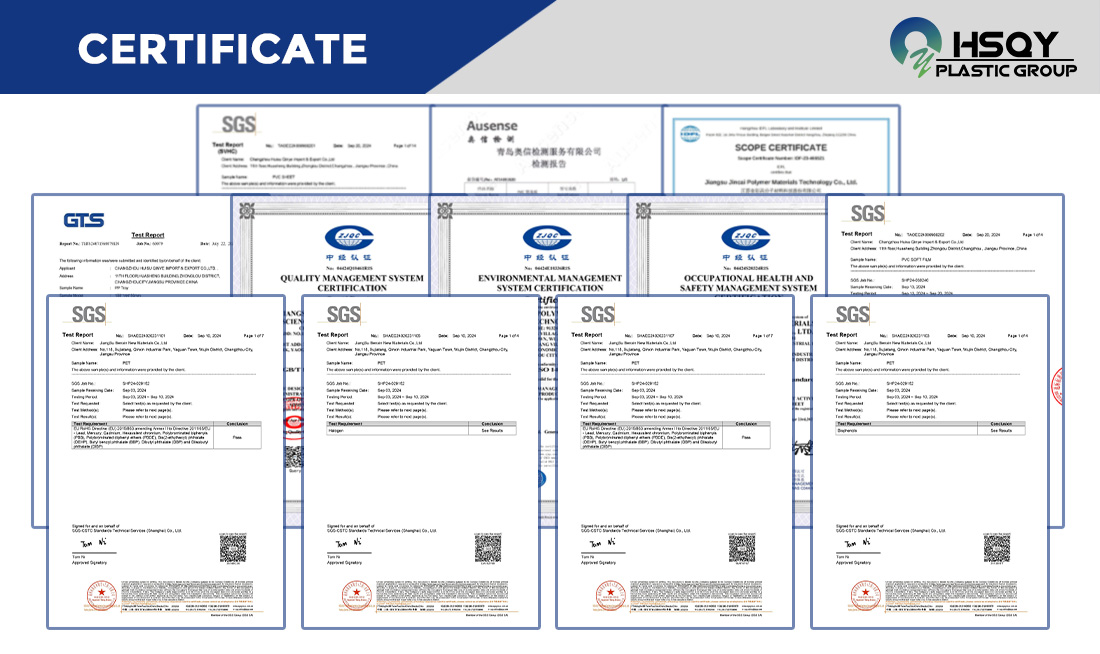
Quality certificates, recycled-content documentation and test reports can be reviewed according to the selected rPET grade and intended application. Buyers should request current document copies and confirm the issuing organization, validity period and applicable product or manufacturing scope.
GRS documentation, where applicable, should correspond to the certified facility and relevant supply-chain transactions. SGS reports, ISO management-system certificates, RoHS/REACH documentation and food-contact declarations serve different purposes and should be evaluated separately.

Global Exhibitions
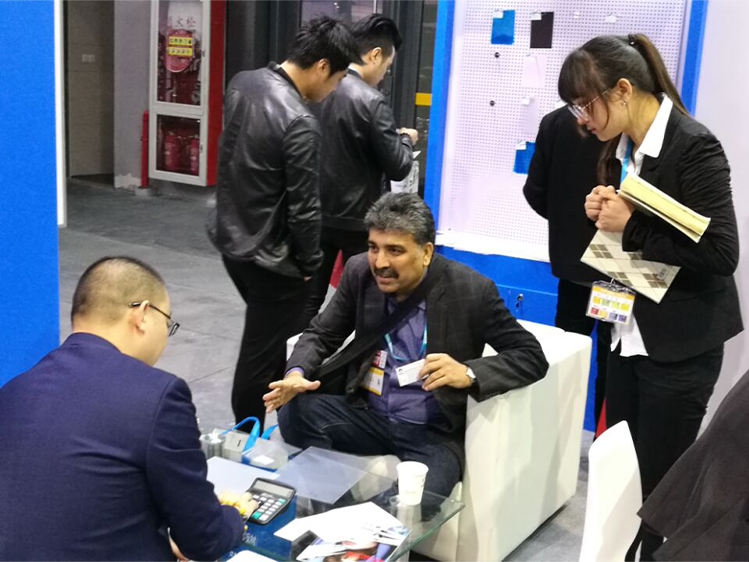
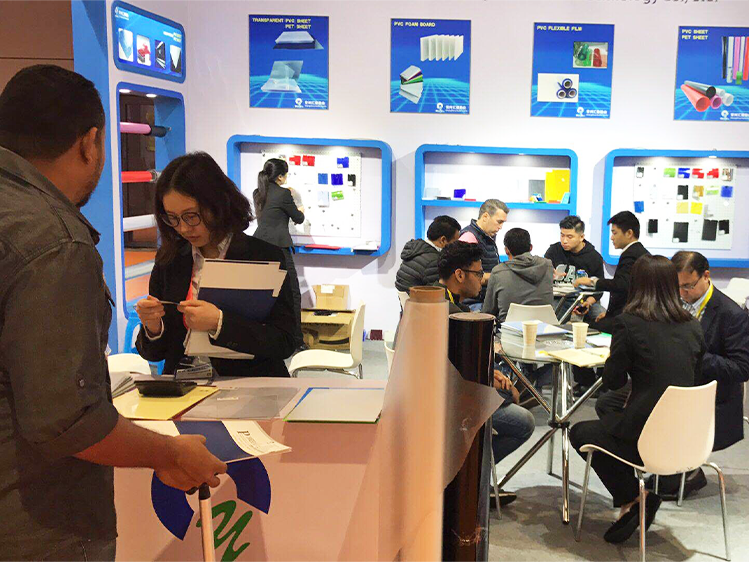
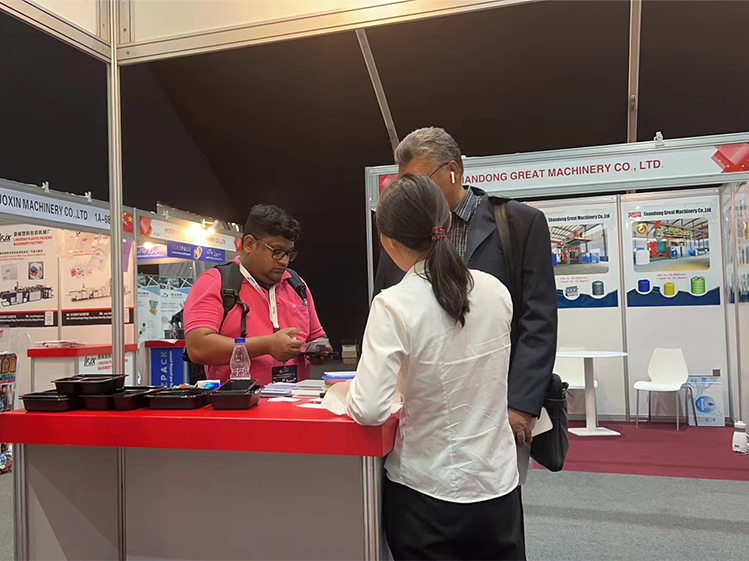
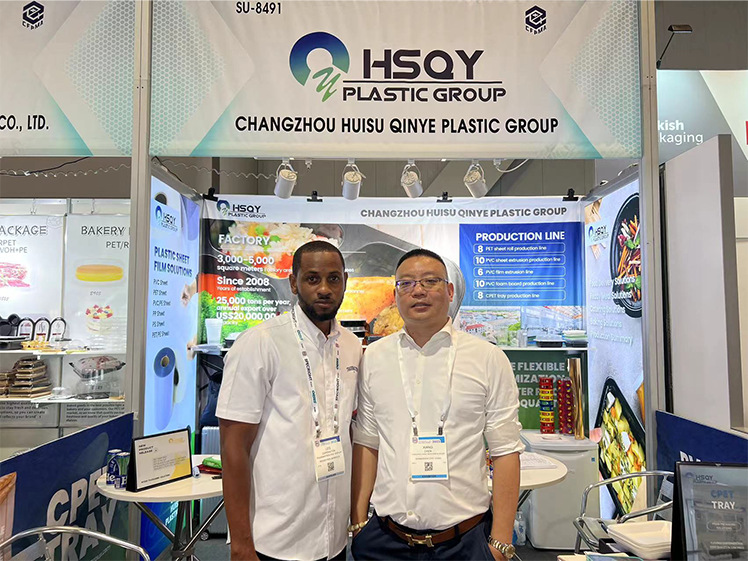
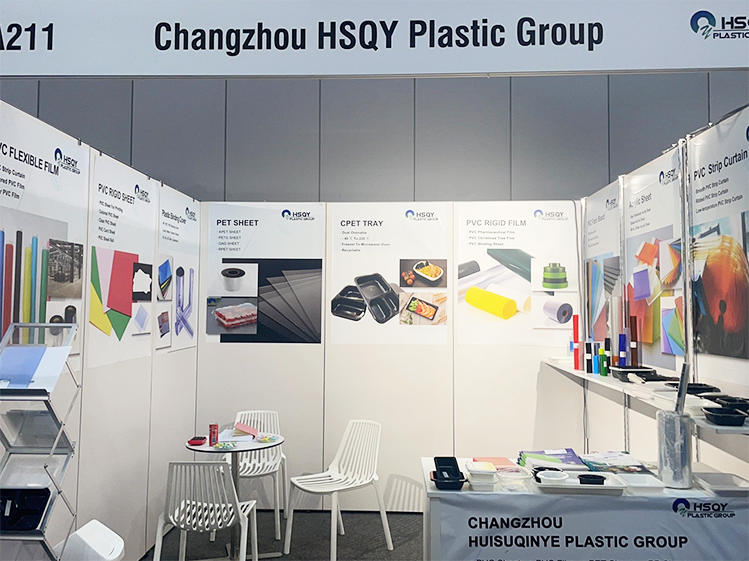
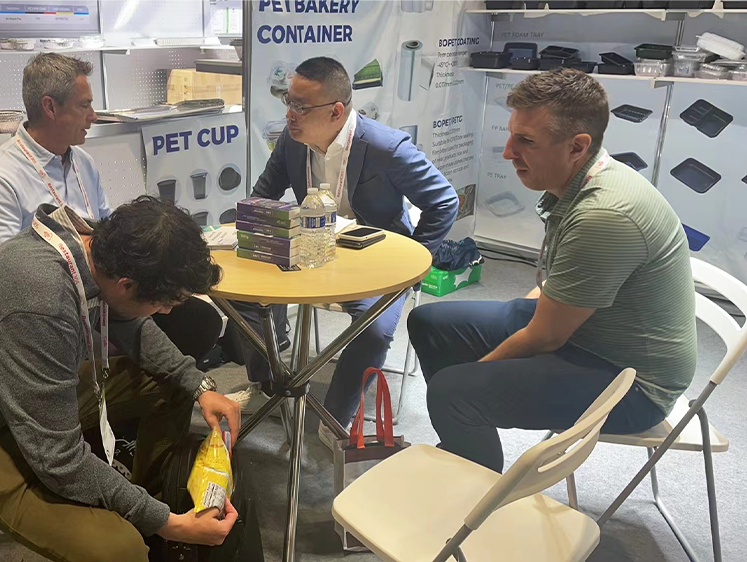
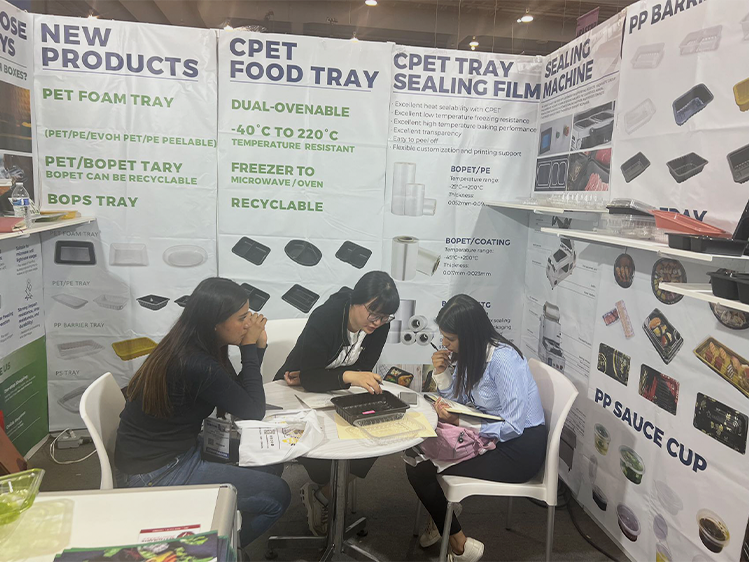
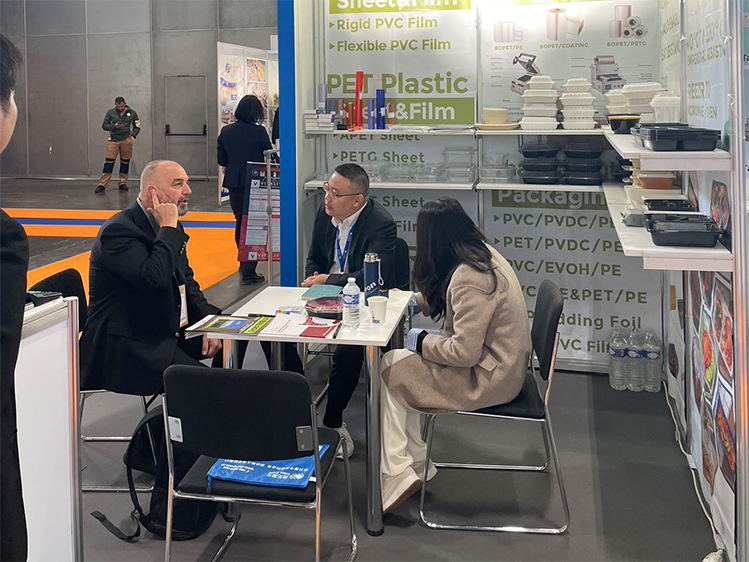
HSQY Plastic Group participates in international exhibitions to communicate with plastic packaging manufacturers, thermoforming factories, distributors and industrial buyers. The following photographs show selected exhibition participation.

2017 Shanghai Exhibition

2018 Shanghai Exhibition

2023 Saudi Exhibition

2023 American Exhibition

2024 Australian Exhibition

2024 American Exhibition

2024 Mexico Exhibition

2024 Paris Exhibition
Frequently Asked Questions About Recycled PET (rPET) Sheet
What is recycled PET (rPET) sheet?
rPET sheet is a thermoplastic sheet manufactured using recovered polyethylene terephthalate. It is supplied in rolls or sheets for blister packaging, thermoforming, vacuum forming, trays and other packaging applications.
What is the maximum recycled content available?
The current product range includes options with up to 100% post-consumer recycled PET content. The actual percentage depends on the selected material grade and production specification.
What thicknesses are available?
The current listed thickness range is 0.12mm to 6.0mm. Final availability depends on the selected recycled-content grade, material structure and supply format.
What is the maximum width of rPET sheet?
The maximum listed width is 1400mm. Custom width requirements should be confirmed according to the production specification.
Can rPET sheet be supplied in rolls and sheets?
Yes. Roll and sheet formats can be discussed according to material thickness, dimensions, processing equipment and order requirements.
Is rPET sheet suitable for blister packaging?
Yes. Suitable rPET grades can be thermoformed into blister cavities and protective packaging for consumer goods, electronics, cosmetics and other compatible products. Thickness and forming properties should match the package geometry.
Can rPET sheet be used for vacuum forming?
Yes. Suitable grades can be vacuum formed into trays, inserts, clamshells and customized packaging components. Heating conditions, mold design and sheet thickness should be optimized through production trials.
Is rPET sheet suitable for food packaging?
Suitable food-contact grades may be available. The exact recycled PET process, material grade, intended food contact and destination-market documentation must be confirmed before use.
Is all rPET sheet FDA compliant?
No. Food-contact suitability depends on the recycled material source, recycling process, specific grade, intended conditions of use and applicable regulatory documentation. It should not be assumed for every rPET sheet.
Can rPET sheet be made from 100% post-consumer PET bottles?
The product range includes grades with up to 100% post-consumer recycled PET content. The feedstock source and recycled-content percentage should be confirmed for the selected grade.
Is rPET as transparent as virgin PET?
Clear rPET grades can provide good transparency, but optical performance may vary according to recycled-content ratio, raw-material quality, processing and sheet structure. Buyers should specify haze and light-transmission targets when clarity is critical.
Does rPET sheet require pre-drying before thermoforming?
PET is moisture-sensitive. Drying or conditioning may be necessary depending on the selected grade, storage conditions and processing requirements. Follow the applicable technical data sheet and conduct a forming trial before mass production.
Can rPET sheet be used for deep-draw thermoforming?
Suitable grades can be evaluated for deeper forming applications. Mold geometry, draw ratio, sheet thickness, heating uniformity and plug assistance all influence the finished wall-thickness distribution.
What colors are available?
Clear and customized colored options are listed. Color availability and optical appearance should be confirmed according to the selected recycled-content formulation.
Can matte and high-gloss surfaces be supplied?
Yes. High-gloss, matte and customized surface options are listed. The appropriate finish depends on the intended packaging appearance and converting process.
Is anti-fog rPET sheet available?
Anti-fog options are listed for applications where condensation may reduce product visibility. The required performance should be evaluated under actual storage and humidity conditions.
Is anti-static rPET sheet available?
Anti-static options can be discussed for packaging and handling applications requiring reduced static charge accumulation.
Can ESD rPET sheet be used for electronics packaging?
ESD options are listed for specialized electronics packaging applications. Buyers should specify the required surface-resistance range and test method to confirm suitable material performance.
Can UV-resistant rPET sheet be supplied?
Anti-UV options are listed. The required UV transmission, exposure conditions and test criteria should be specified before ordering.
What is the difference between rPET and APET?
APET generally describes amorphous PET sheet, while rPET identifies PET material made with recycled feedstock. A sheet may have a recycled PET formulation and an amorphous PET structure, depending on its material specification.
What is the difference between rPET and PETG?
rPET identifies recycled PET content, whereas PETG is glycol-modified PET. They are different material classifications with different forming and processing characteristics. The correct material should be selected according to the finished package requirements.
What is the MOQ for recycled PET sheet?
The current listed minimum order quantity is 1000kg. Final MOQ should be confirmed according to thickness, width, recycled-content percentage and customized treatment requirements.
Can samples be supplied before bulk production?
Sample arrangements can be discussed for checking transparency, thickness, surface appearance and thermoforming compatibility. Sample size, availability and shipping arrangements should be confirmed with the sales team.
What information is required for an rPET sheet quotation?
Please provide thickness, width, roll or sheet format, recycled-content percentage, color, surface finish, application, forming method, mold depth, required functional treatments, order quantity and destination market. Drawings or existing material samples are also helpful.
Request a Quotation for Recycled PET (rPET) Sheet
If you manufacture blister packaging, food trays, clamshells, vacuum-formed inserts, retail packaging or industrial trays, contact HSQY with your required rPET sheet specifications.
HSQY offers recycled PET sheet options with thicknesses from 0.12mm to 6.0mm, widths up to 1400mm, clear or customized colors, high-gloss or matte surfaces and functional treatment options according to the selected grade.
For a faster quotation, provide your required recycled-content ratio, sheet thickness, width, optical requirements, thermoforming process, finished packaging type and estimated order quantity.
Contact HSQY for an rPET Sheet Quotation
About HSQY Plastic Group
HSQY Plastic Group supplies plastic sheets and films for packaging, thermoforming, construction and industrial applications. The product range includes recycled PET sheet, PET film and other customized plastic materials for manufacturers, converters, distributors and international buyers.
For rPET sheet projects, buyers can discuss recycled-content requirements, thickness, width, optical quality, surface treatment, forming applications and packaging specifications with the sales team.