8mm Soundproof Double Wall Polycarbonate Hollow Sheet
HSQY 8mm double wall polycarbonate hollow sheet combines a lightweight twinwall structure, transparency, impact resistance, UV protection and sound insulation for partitions, acoustic enclosures and selected transportation or construction noise-control projects.
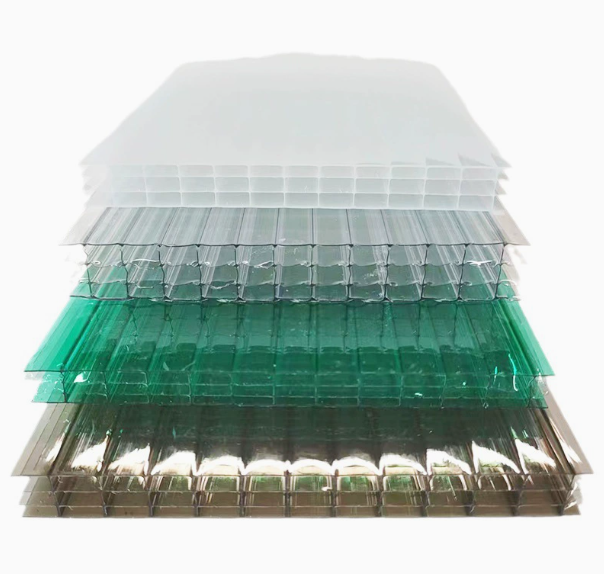
The sheet uses two polycarbonate walls connected by internal ribs to form hollow channels. Compared with solid polycarbonate, the double-wall construction reduces panel weight and adds insulating air spaces, while acoustic performance depends strongly on sheet mass, panel structure, frame, joints and the complete installed system.
The current HSQY product information lists 6mm, 8mm, 10mm and 12mm options, a typical width of 1200mm, clear and colored grades, matte, glossy and line textures, and project use in transportation, construction, commercial and industrial noise-control applications.
8mm Double Wall Polycarbonate Sheet Images
![8mm soundproof double wall polycarbonate hollow sheet]()
8mm Soundproof Polycarbonate Sheet
![8mm double wall polycarbonate hollow sheet for noise reduction]()
8mm Double Wall Polycarbonate Hollow Sheet
Soundproof Polycarbonate Sheet Data Sheet
8mm Soundproof Polycarbonate Sheet Specifications
| Property |
Specification |
| Product Name |
8mm Soundproof Double Wall Polycarbonate Hollow Sheet |
| Material |
Polycarbonate (PC) |
| Structure |
Double Wall / Twinwall Hollow Polycarbonate |
| Featured Thickness |
8mm |
| Other Listed Thicknesses |
6mm, 10mm, 12mm, Customizable |
| Width |
1200mm, Customizable |
| Colors |
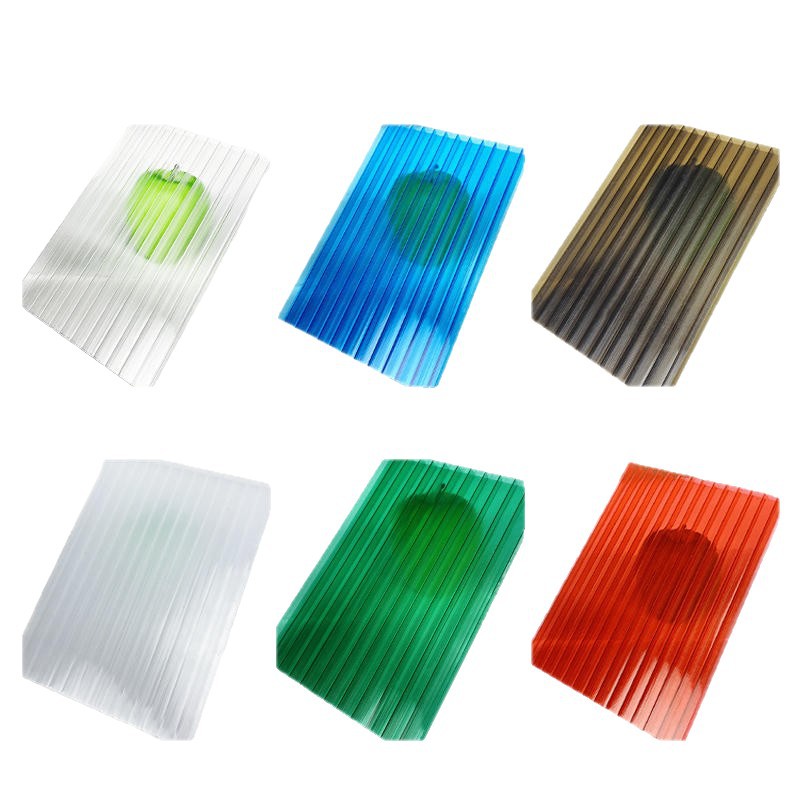
Clear, Lake Blue, Blue, Green, Brown, Customizable |
| Texture |
Matte, Glossy, Line, etc. |
| UV Protection |
UV-resistant option listed in the current product information; confirm exact protected-side configuration |
| 8mm Acoustic Reference |
Current HSQY product data lists up to 31 dB; applicable test method and report should be confirmed before engineering use |
| Certifications |
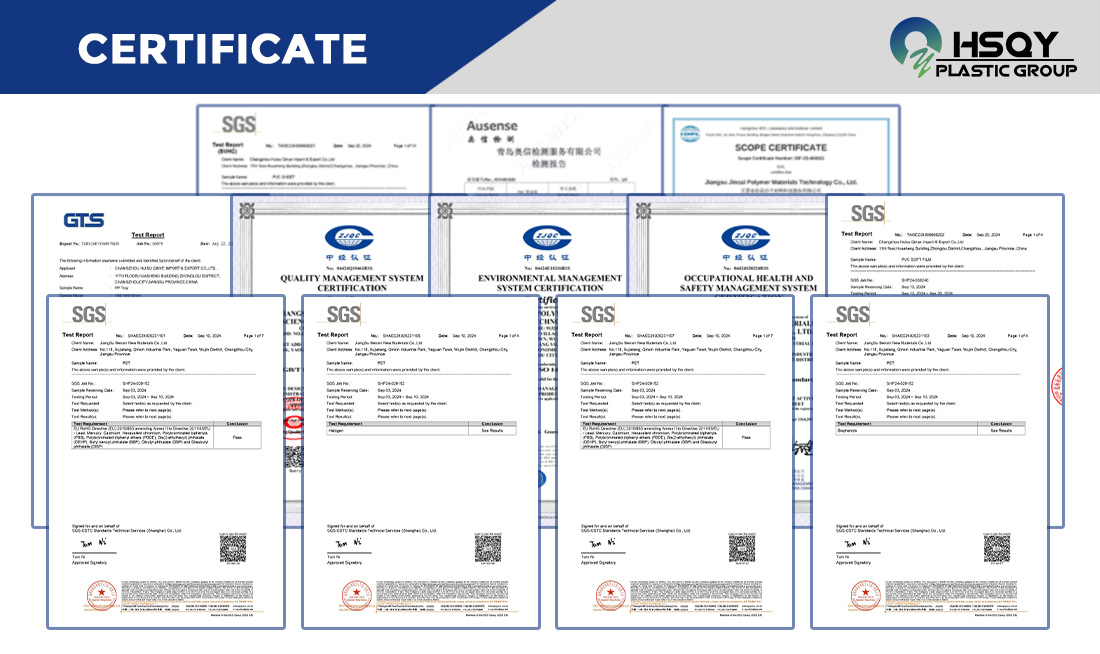
SGS, ISO 9001:2008 listed in current product information |
| MOQ |
1000 kg |
| Payment Terms |
30% deposit, 70% balance before shipment |
| Delivery Terms |
FOB, CIF, EXW |
| Delivery Time |
7-15 days after deposit |
| Applications |
Acoustic partitions, noise-control enclosures, construction panels and selected transportation noise-barrier projects subject to acoustic and structural verification |
What Is an 8mm Double Wall Polycarbonate Acoustic Sheet?
An 8mm double wall polycarbonate sheet consists of two outer polycarbonate layers connected by internal ribs. The ribs create hollow channels through the sheet, reducing panel weight and creating an insulating air space.
The double-wall construction differs from a solid polycarbonate noise-barrier panel. Solid sheet relies primarily on material mass and stiffness for airborne sound insulation, while hollow sheet combines lower weight with an enclosed air structure and is often better suited to projects where acoustic performance must be balanced with weight, thermal insulation and ease of installation.
For major highway, railway or infrastructure noise barriers, the correct structure should be selected from the required acoustic class, test standard, wind load, panel dimensions, frame design and impact requirements rather than using the term “soundproof” alone.
8mm Double Wall Sound Insulation Performance
The current HSQY product page provides the following soundproof index table. These figures are retained as product reference data from the existing specification.
| Thickness |
Current HSQY Soundproof Index Reference |
| 4mm |
27 dB |
| 5mm |
28 dB |
| 6mm |
29 dB |
| 8mm |
31 dB |
| 9.5mm |
32 dB |
| 12mm |
34 dB |
Acoustic Data Note: The table above reproduces the current HSQY product reference values. For an 8mm double-wall hollow sheet, the applicable acoustic test report, specimen structure, area weight, test standard and measurement index should be confirmed before using 31 dB in a project specification.
Different acoustic standards can report different quantities, including Rw, STC, airborne sound reduction index or project-specific insertion loss. These values are not automatically interchangeable.
Why the Complete Noise Barrier System Matters
Noise reduction in an installed barrier is not determined by sheet thickness alone. Sound can also travel through joints, openings, panel edges, supporting structures and gaps between the barrier and surrounding surfaces.
| System Factor |
Why It Matters |
| Sheet Structure |
Solid and double-wall panels have different mass, stiffness and acoustic behavior |
| Area Weight |
Panel mass strongly influences airborne sound transmission loss |
| Panel Dimensions |
Large panels can behave differently from small laboratory specimens |
| Joints & Seals |
Small gaps can significantly reduce overall acoustic performance |
| Frame |
The supporting frame transfers wind loads and can create acoustic leakage paths if poorly sealed |
| Barrier Height & Length |
Installed noise reduction also depends on how effectively the barrier blocks the direct sound path |
| Noise Spectrum |
Traffic, railway and machinery noise contain different frequency distributions |
Sound Insulation vs. Sound Absorption
Sound insulation and sound absorption are different acoustic functions. A polycarbonate panel mainly acts as a sound-insulating or sound-reflective barrier by reducing the amount of airborne sound passing through the panel.
It should not automatically be described as a sound-absorbing material like mineral wool, acoustic foam or perforated absorptive panels. Projects requiring both transmission loss and absorption may combine transparent polycarbonate with separate absorptive components.
Double Wall vs. Solid Polycarbonate for Noise Barriers
| Selection Factor |
8mm Double Wall PC |
Solid PC |
| Structure |
Two walls with hollow air channels |
Continuous solid panel |
| Panel Mass |
Lower for comparable overall thickness |
Higher for comparable overall thickness |
| Thermal Insulation |
Hollow air channels improve thermal insulation |
No hollow insulating air chambers |
| Direct Visibility |
Internal ribs remain visible |
Better suited to clear-view transparent barriers |
| Heavy-Duty Traffic Barriers |
Requires separate acoustic and structural verification |
More commonly selected where high panel mass and clear visibility are required |
| Lightweight Partitions |
Strong candidate where weight and insulation are important |
Heavier but provides different acoustic and impact characteristics |
6mm vs. 8mm vs. 10mm vs. 12mm Double Wall Sheet
| Thickness |
General Selection Direction |
| 6mm |
Lightweight partitions, enclosure panels and supported glazing where low panel weight is important |
| 8mm |
Balanced option for acoustic partitions, commercial enclosures and selected noise-control structures |
| 10mm |
Greater overall panel depth where additional stiffness or insulation is required |
| 12mm |
Projects requiring greater sheet depth, subject to acoustic and structural verification |
Thickness should not be selected only from the reference dB table. Compare actual sheet area weight, wall structure, acoustic test report, panel span, wind load and project requirements.
Highway & Road Noise Reduction
The original HSQY product information lists highway sound barriers as an application. Transparent polycarbonate can help reduce the visual mass of a noise wall while allowing daylight and views through the barrier.
For highway projects, an 8mm double-wall sheet should only be specified after confirming the required airborne sound-insulation class, wind pressure, impact resistance, panel-retention system and applicable infrastructure standard. Solid polycarbonate may be more appropriate for projects requiring higher panel mass or clear-view glazing.
Railway & Rail Transit Noise Barriers
Railway and rail-transit noise-control systems can expose panels to pressure cycles, vibration, wind and debris impact in addition to acoustic loading.
When evaluating double-wall polycarbonate for these projects, provide the required acoustic standard, panel dimensions, aerodynamic or wind pressure, support spacing, impact requirements and applicable railway safety documentation.
Residential Noise Reduction Panels
Double-wall polycarbonate can be considered for residential partitions, balcony screens, property-line barriers and other projects where buyers want a lightweight transparent or translucent panel with some sound-insulation capability.
Residential performance depends on complete sealing. Gaps around the panel perimeter, doors, openings and poorly sealed joints can allow substantial sound leakage even when the panel itself provides useful sound reduction.
Office Partitions & Commercial Enclosures
The lightweight double-wall structure can be used for selected office partitions, commercial dividers and semi-transparent enclosures where reduced weight and light transmission are important.
Where speech privacy or a defined room-to-room acoustic rating is required, evaluate the complete wall assembly rather than the polycarbonate panel alone.
Industrial Machinery Noise Enclosures
Polycarbonate panels can be incorporated into industrial enclosures when operators need visibility around machinery while reducing direct noise transmission.
For machinery enclosures, identify the dominant noise frequencies, required transmission loss, ventilation openings, operating temperature, chemical exposure and impact risk. Where stronger acoustic isolation is required, higher-mass solid panels or combined absorptive systems may be more appropriate.
Soundproof Polycarbonate Sheet Applications
![Polycarbonate acoustic barrier application]()
Polycarbonate Acoustic Barrier Application
![Polycarbonate noise reduction panel application]()
Noise Reduction Panel Application
Impact Resistance
The current HSQY product information describes polycarbonate as having impact resistance up to 80 times that of glass. This is retained as a general material comparison from the existing page.
For highway, railway or industrial safety projects, the relevant impact-test method should be confirmed for the exact double-wall sheet. General material toughness does not establish a project-specific impact, vandal, hail or windborne-debris classification.
UV Protection for Outdoor Applications
The current HSQY product information identifies the soundproof panel as UV resistant. UV protection helps reduce sunlight-related yellowing and deterioration during outdoor use.
For outdoor acoustic barriers, confirm whether the selected sheet has protection on one side or both sides and follow the UV-side markings during installation. A specific outdoor service life or yellowing warranty should only be stated when supported by the applicable product document.
Clear, Blue, Green & Brown Acoustic Panels
| Color |
General Project Direction |
| Clear |
Selected where natural light and visibility are priorities |
| Lake Blue / Blue |
Architectural tinting and selected transportation or commercial applications |
| Green |
Tinted panels for landscape-sensitive or architectural projects |
| Brown |
Reduced visible brightness and darker architectural appearance |
| Custom |
Provide the required color reference, transparency and order quantity |
Matte, Glossy & Line Texture Options
The current specification lists matte, glossy and line-textured surface options. Surface texture affects appearance, visibility and light distribution but should not automatically be assumed to increase acoustic performance.
For transportation or public-space projects, specify the desired surface together with transparency, anti-graffiti, scratch-resistance and cleaning requirements where applicable.
Installation Guidelines for Double Wall Acoustic Panels
Seal Joints Carefully
Acoustic performance can be reduced significantly by gaps around the perimeter or between adjacent panels. Use an engineered frame and compatible gaskets or seals to limit acoustic leakage.
Allow for Thermal Expansion
Polycarbonate expands and contracts with temperature changes. Frame dimensions, fastener holes and edge engagement should allow appropriate thermal movement.
Orient Hollow Channels Correctly
Where moisture drainage is relevant, install the internal channels vertically or in the appropriate drainage direction. Seal exposed ends using suitable tapes or profiles according to the installation environment.
Install the UV-Protected Side Outward
If UV protection is applied to only one surface, that surface should face the exterior. Follow the markings on the protective film supplied with the sheet.
Verify Wind & Structural Loads
Noise barriers can experience significant wind pressure. Panel thickness, width, height, rib direction, frame spacing and edge engagement should be checked against the project structural requirements.
What Information Should You Provide for a Quote?
| Requirement |
Information to Provide |
| Application |
Highway, railway, partition, industrial enclosure, residential barrier or other noise-control project |
| Sheet Structure |
Double wall / twinwall hollow polycarbonate |
| Thickness |
8mm featured product or another required thickness |
| Panel Dimensions |
Width × height / length; current source lists 1200mm standard width |
| Required Acoustic Performance |
Required Rw, STC, EN 1793-2 class or other project-specific acoustic criterion |
| Test Standard |
Specify the required laboratory or infrastructure acoustic standard |
| Color |
Clear, lake blue, blue, green, brown or custom |
| Texture |
Glossy, matte, line or other required surface |
| UV Requirement |
Outdoor exposure and required protected-side configuration |
| Wind Load |
Design wind pressure and support spacing for exterior barrier projects |
| Impact Requirement |
Applicable transportation, vandal, debris or safety-impact requirement |
| Frame Design |
Panel retention, edge engagement, posts, gaskets and joint detail |
| Quantity |
Current product information lists MOQ 1000kg |
| Destination |
Country and destination port |
Frequently Asked Questions About 8mm Double Wall Polycarbonate
What is an 8mm double wall polycarbonate sheet?
It is an 8mm hollow polycarbonate panel with two principal walls connected by internal ribs. The hollow structure reduces panel weight and creates an insulating air chamber.
Is double wall polycarbonate the same as twinwall polycarbonate?
Yes. Double wall and twinwall are commonly used to describe a hollow polycarbonate sheet consisting of two principal skins connected by ribs.
How much sound can an 8mm sheet reduce?
The current HSQY product data lists a 31 dB soundproof index for 8mm sheet. Because acoustic values depend on the test method and sheet structure, request the applicable test report before using 31 dB as a project-design value.
Is 31 dB an Rw or STC value?
The supplied product source does not identify whether the 31 dB figure is Rw, STC or another sound-reduction index. Confirm the test standard and report when a defined acoustic rating is required.
Is double wall polycarbonate sound absorbing?
It primarily acts as a sound-insulating or reflective panel. It should not be treated as a porous sound-absorbing material unless the complete system includes a separate absorptive layer.
Is hollow or solid polycarbonate better for highway noise barriers?
Solid polycarbonate is generally more suitable when a project requires greater panel mass, clear visibility and heavy-duty transparent barrier performance. Hollow double-wall panels can be evaluated where lower weight or other project requirements are important, but acoustic and structural performance should be verified separately.
Can 8mm double wall polycarbonate be used beside railways?
It can be evaluated for selected railway or rail-transit applications, but the required acoustic rating, aerodynamic pressure, wind load, impact requirements and railway standards must be checked before specification.
Can it be used for office partitions?
Yes. Double-wall polycarbonate can be used for lightweight partitions and commercial enclosures. If a specific room acoustic or speech-privacy rating is required, evaluate the complete partition assembly.
Can it reduce machinery noise?
It can form part of an industrial machinery enclosure, but performance depends on noise frequency, enclosure design, openings, seals and panel structure. Higher-mass solid panels may be preferable for demanding noise-control requirements.
What thicknesses are available?
The current product specification lists 6mm, 8mm, 10mm and 12mm, with customization also listed.
What width is available?
The current product information lists 1200mm as the standard width and also lists customized width.
What colors are available?
Current options include clear, lake blue, blue, green, brown and customizable colors.
What surface textures are available?
The current specification lists matte, glossy and line textures, with other options subject to confirmation.
Does the sheet have UV protection?
The current product information describes the panel as UV resistant. Confirm the exact UV-protected surface configuration for the selected grade before outdoor installation.
Is polycarbonate more impact resistant than glass?
The current HSQY source describes polycarbonate as having impact resistance up to 80 times that of glass. Projects requiring a specific impact classification should use the applicable test report for the selected sheet.
How should double wall panels be installed?
Use an engineered frame with compatible gaskets, sealed joints, adequate edge engagement and thermal-expansion allowance. Outdoor projects should also verify wind load and UV-side orientation.
Do gaps affect sound insulation?
Yes. Acoustic leakage through open joints or perimeter gaps can reduce the performance of the complete barrier even when the sheet itself has useful sound-insulation properties.
What certifications are listed?
The current product specification lists SGS and ISO 9001:2008. Confirm which documents apply directly to the supplied product and the destination-market requirement.
What is the MOQ?
The current product information lists a minimum order quantity of 1000kg.
Are samples available?
The current page states that stock samples can be provided with freight paid by the customer. Confirm the available sample thickness, size, color and courier arrangement before shipment.
What is the delivery time?
The current product information lists approximately 7-15 days after deposit, depending on order volume and requirements.
What information should I provide for an accurate quotation?
Please provide sheet thickness, panel dimensions, color, texture, required acoustic rating and test standard, UV requirement, wind load, frame design, impact requirement, quantity and destination.
Packing & Delivery
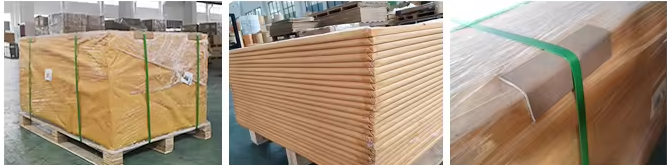
Sample Packaging: Wrapped in protective film and packed in cartons.
Bulk Packaging: Sheets on pallets and wrapped with stretch film.
Pallet Packaging: Standard export pallets, customizable according to project requirements.
Container Loading: Optimized for 20ft and 40ft containers.
Delivery Terms: FOB, CIF, EXW.
Lead Time: 7-15 days after deposit, depending on order volume.
![8mm double wall polycarbonate sheet packaging]()
Soundproof Polycarbonate Sheet Export Packaging
Certifications
The current product information lists SGS and ISO 9001:2008. Buyers should confirm the scope, validity and applicability of available documents to the exact double-wall polycarbonate product and required project standard.
Global Exhibitions
![HSQY Plastic Group 2017 Shanghai Exhibition]()
2017 Shanghai Exhibition
![HSQY Plastic Group 2018 Shanghai Exhibition]()
2018 Shanghai Exhibition
![HSQY Plastic Group 2023 Saudi Exhibition]()
2023 Saudi Exhibition
![HSQY Plastic Group 2023 American Exhibition]()
2023 American Exhibition
![HSQY Plastic Group 2024 Australian Exhibition]()
2024 Australian Exhibition
![HSQY Plastic Group 2024 American Exhibition]()
2024 American Exhibition
![HSQY Plastic Group 2024 Mexico Exhibition]()
2024 Mexico Exhibition
![HSQY Plastic Group 2024 Paris Exhibition]()
2024 Paris Exhibition
About HSQY Plastic Group
HSQY Plastic Group states more than 20 years of experience and operates 8 factories, supplying polycarbonate sheets, PVC rolls, PET sheets and other plastic products for construction, packaging and industrial applications.
For acoustic polycarbonate projects, buyers can provide the required sheet structure, thickness, dimensions, acoustic standard, color, UV requirement, wind load, impact requirement, framing system, quantity and destination for technical and commercial evaluation.




 Download Soundproof Polycarbonate Sheet Data Sheet