Wood Grain PETG Decorative Film for Furniture & MDF Panels
HSQY wood grain PETG decorative film is a copolyester surface material designed to create consistent wood-look finishes on furniture panels, kitchen cabinets, wardrobes, interior doors, wall panels and other decorative interior surfaces.
Available in thicknesses from 0.25mm to 1mm and a reference width of 1250mm with customized widths available, the film is suitable for furniture manufacturers, MDF laminators, cabinet factories, decorative-panel producers, distributors and OEM interior projects.
Wood grain designs can reproduce different timber-inspired colors, grain directions and visual styles. Depending on the selected grade, the decorative design can be combined with matte, high-gloss, smooth or textured surface effects for different furniture collections.
Final appearance and processing performance depend on the selected wood pattern, PETG grade, substrate, adhesive and lamination process. Physical samples should be evaluated before bulk production when color, grain pattern, texture or gloss level is important.
Request Wood Grain PETG Samples & Pricing
Wood Grain PETG Film Images

Wood Grain PETG Decorative Film

Wood Grain PETG Film for Furniture

PETG Wood Grain Furniture Surface
What Is Wood Grain PETG Film?
Wood grain PETG film is a decorative glycol-modified polyester surface material designed to reproduce the visual character of natural wood on compatible furniture and interior panels.
The decorative surface can reproduce different timber-inspired tones, grain lines and visual patterns while providing furniture manufacturers with a repeatable industrial surface material for larger production quantities.
In furniture production, the PETG film is normally laminated onto a structural substrate such as MDF, particle board, plywood or another prepared decorative board. The substrate provides the panel structure while the PETG film provides the visible wood-look surface.
Wood grain PETG is particularly suitable when manufacturers require coordinated decorative surfaces across cabinet doors, wardrobe panels, wall panels and other furniture components without relying on natural wood veneer as the visible surface layer.
Wood Grain PETG Film Specifications
The following information summarizes the current HSQY wood grain PETG decorative film range. Final wood design, texture, gloss, dimensions and functional surface requirements should be confirmed before bulk production.
| Property |
Details |
| Product Name |
Wood Grain PETG Decorative Film |
| Model |
HSPDF |
| Material |
PETG - Glycol-Modified Polyethylene Terephthalate |
| Thickness |
0.25mm–1mm |
| Reference Width |
1250mm; customized widths available |
| Primary Design |
Wood grain and customized wood-inspired decorative patterns |
| Surface Finish |
Smooth, matte, high gloss, embossed or other surface effects according to selected grade |
| Typical Substrates |
Compatible MDF, particle board, plywood, wood panels and selected decorative boards |
| Typical Processing |
Flat lamination and other compatible furniture-surface processes; forming suitability should be confirmed for the selected grade |
| Applications |
Furniture, kitchen cabinets, wardrobes, doors, wall panels and other interior decorative surfaces |
| Custom Development |
Wood pattern, tone, grain direction, texture, gloss, thickness and width subject to project confirmation |
| Optional Surface Requirements |
Scratch, stain, chemical, anti-fingerprint, UV, abrasion or other performance should be confirmed for the exact grade |
| MOQ |
2000kg |
| Payment Terms |
T/T, L/C, Western Union, PayPal |
| Delivery Terms |
EXW, FOB, CNF, DDU |
| Reference Lead Time |
Approximately 7–15 days for standard orders; larger or customized orders subject to confirmation |
Get Wood Grain PETG Specifications
Wood Grain Design Options
Oak-Inspired Wood Grain
Oak-inspired patterns can provide light, medium or darker wood tones for kitchen cabinets, wardrobes, living-room furniture and wall panels. Final pattern and color should be selected from the available collection or approved sample.
Walnut-Inspired Wood Grain
Walnut-style designs provide deeper brown tones and visually stronger grain patterns suitable for premium wardrobes, office furniture, hotel interiors, cabinets and feature furniture.
Light Wood Designs
Light wood tones can support Scandinavian, minimalist and contemporary furniture concepts for kitchens, bedrooms, offices and residential interiors.
Dark Wood Designs
Dark wood patterns can create stronger visual contrast for office furniture, wardrobes, hotel interiors, retail furniture and premium residential projects.
Custom Wood Patterns
Customized wood tones and decorative patterns can be discussed according to project volume and technical feasibility. A physical decorative panel, film sample or high-quality design reference is recommended when developing a custom wood grain.
Matte, Gloss and Textured Wood Grain PETG
Matte Wood Grain PETG
Matte wood grain surfaces reduce strong visible reflection and create a softer wood-look appearance for contemporary kitchens, wardrobes, bedrooms and office furniture.
High-Gloss Wood Grain PETG
High-gloss wood grain surfaces produce stronger reflection and visual depth, making the decorative grain appear brighter and more pronounced on furniture fronts and feature panels.
Textured and Embossed Wood Grain PETG
Physical texture can add tactile character to a printed wood design. Texture depth, grain scale and gloss should be evaluated together to achieve the intended finished-panel appearance.
Wood Grain Direction
Grain direction should be planned before cutting and lamination. Cabinet doors, drawer fronts and adjacent furniture panels should follow the intended grain orientation to maintain a coordinated finished appearance.
Wood Grain PETG vs. Natural Wood Veneer
| Selection Factor |
Wood Grain PETG |
Natural Wood Veneer |
| Pattern Consistency |
Designed for repeatable decorative appearance across production batches. |
Natural grain and color vary from sheet to sheet. |
| Design Selection |
Wood tone, decorative pattern, texture and gloss can be selected from available designs. |
Appearance depends on natural timber species and individual veneer sheets. |
| Surface Finish |
Matte, gloss and textured options can be specified according to grade. |
Usually requires additional finishing depending on the desired appearance. |
| Industrial Production |
Suitable for repeatable panel-lamination processes when film, board and adhesive are properly matched. |
Processing depends on veneer quality, matching and finishing requirements. |
| Best Choice When |
Consistent decorative appearance and industrial reproducibility are priorities. |
Natural timber variation and authentic veneer construction are required. |
Benefits of Wood Grain PETG for Furniture
Repeatable Wood-Look Appearance
Decorative film allows manufacturers to reproduce selected wood patterns across cabinet doors, drawers, wardrobes and other furniture components using a consistent production specification.
Flexible Pattern Selection
Light wood, dark wood and different timber-inspired design directions can support multiple furniture styles and regional interior preferences.
Multiple Surface Effects
Wood grain designs can be combined with matte, high-gloss or textured surfaces to create different visual and tactile results from the same general wood concept.
Suitable for Industrial Panel Lamination
PETG decorative film can be integrated into suitable panel-lamination processes for furniture manufacturers using compatible substrates and adhesive systems.
Custom Surface Performance
Projects requiring defined scratch, stain, chemical, anti-fingerprint, UV or other surface properties should specify the required performance and applicable test method when selecting the PETG grade.
Compatible Substrates for Wood Grain PETG Film
The performance and appearance of a finished wood grain panel depend on the complete material system, including PETG film, substrate, adhesive, surface preparation and lamination conditions.
| Substrate |
Typical Application |
Processing Consideration |
| MDF |
Cabinet doors, wardrobes and furniture fronts |
Confirm board flatness, surface preparation, adhesive, temperature and pressure. |
| Particle Board |
Furniture and cabinet panels |
Surface quality and adhesive compatibility should be evaluated. |
| Plywood |
Furniture and interior decorative panels |
Surface preparation and bonding should be tested before commercial production. |
| Wood-Based Panels |
Doors, wall panels and furniture components |
Confirm coating, primer and adhesive compatibility. |
| Other Decorative Boards |
Special interior and commercial projects |
Trial lamination is recommended using the actual substrate and adhesive. |
How to Laminate Wood Grain PETG Film
Prepare the Panel Surface
The substrate should be flat, clean, dry and free from dust, loose fibers, oil, dents or other contamination that may affect adhesion or remain visible after lamination.
Confirm Grain Direction Before Cutting
Plan the intended wood grain direction before cutting or laminating the film. This is especially important for neighboring cabinet doors, drawers and wardrobe fronts.
Select a Compatible Adhesive
Adhesive selection depends on the PETG film grade, substrate and production equipment. PUR hot-melt and other industrial adhesive systems may be suitable, but bonding performance should be validated under actual production conditions.
Control Lamination Conditions
Adhesive coating, pressure, temperature, line speed and curing conditions can influence adhesion and finished appearance. Trial production is recommended before changing the film, substrate or adhesive system.
Inspect the Finished Panel
Finished panels should be checked for color and pattern consistency, grain direction, bonding, bubbles, wrinkles, contamination, scratches, edge quality and overall decorative appearance.
Discuss Your MDF Lamination Project
Applications of Wood Grain PETG Film
Kitchen Cabinets
Wood grain PETG can be laminated onto compatible cabinet doors, drawer fronts and side panels to create coordinated wood-look kitchen furniture.
Wardrobes and Closet Panels
Light, medium and dark wood designs can be used for wardrobe doors, closet panels, drawers and bedroom furniture.
Furniture Fronts and Panels
Wood grain PETG can be used on suitable desks, shelving, storage furniture, sideboards, entertainment units and office furniture.
Interior Doors
Wood-look PETG provides repeatable decorative surfaces for compatible interior door panels in residential, hospitality and commercial projects.
Decorative Wall Panels
Wood grain decorative surfaces can be used for compatible wall panels in homes, offices, hotels, shops and reception areas.
Hotel, Office and Retail Furniture
Repeatable wood patterns are also suitable for selected hotel furniture, office desks, retail fixtures, display units and other commercial interior furniture.
How to Choose Wood Grain PETG Film
Providing complete design and processing information helps identify a suitable wood grain PETG specification and reduces unnecessary sampling cycles.
| Requirement |
Information to Provide |
| Wood Pattern |
Select an available pattern or provide a physical panel, film sample or design reference. |
| Wood Tone |
Light, medium, dark or another required wood-inspired color direction. |
| Surface Finish |
Matte, high gloss, smooth, embossed or another required finish. |
| Grain Direction |
Provide finished-panel dimensions and intended grain orientation where cutting layout is important. |
| Thickness |
Required PETG thickness within the current 0.25–1mm range. |
| Width |
1250mm reference width or required customized width. |
| Substrate |
MDF, particle board, plywood, wood panel or another compatible substrate. |
| Processing Method |
Flat lamination, post-forming, profile wrapping, vacuum forming or another process. |
| Adhesive |
Existing adhesive type and processing parameters where available. |
| Surface Performance |
Required scratch, stain, anti-fingerprint, chemical, UV, abrasion or other performance. |
| Order Information |
Trial quantity, regular quantity, annual demand, destination and required delivery schedule. |
Send Your Wood Grain PETG Requirements
Frequently Asked Questions About Wood Grain PETG Film
What is wood grain PETG film?
Wood grain PETG film is a decorative copolyester surface material designed to reproduce timber-inspired colors and grain patterns on compatible furniture and interior panels.
What is wood grain PETG film used for?
Typical applications include kitchen cabinets, wardrobes, furniture fronts, interior doors, wall panels, shelving, office furniture and selected commercial interior panels.
Can wood grain PETG be laminated onto MDF?
Yes. Compatible MDF is commonly used for furniture-film lamination. Board preparation, adhesive, temperature, pressure and line speed should be tested with the actual PETG grade before mass production.
Can wood grain PETG be used on plywood or particle board?
Compatible plywood and particle board can be evaluated as substrates. Surface quality, flatness, adhesive compatibility and lamination conditions should be tested first.
What wood grain designs are available?
Different light, medium and dark wood-inspired patterns can be supplied according to the available design collection. Customized patterns can also be discussed according to project requirements.
Can HSQY customize a wood grain pattern?
Custom decorative development can be discussed depending on production quantity and technical feasibility. Providing a physical sample or reference panel is recommended.
Can wood grain PETG have a matte finish?
Yes. Wood grain designs can be combined with matte surface effects according to the selected product grade and available decorative design.
Can wood grain PETG have a high-gloss finish?
High-gloss wood grain finishes can also be discussed. A glossy surface creates stronger reflection and can increase the visible depth of the decorative wood pattern.
Can wood grain PETG be embossed?
Selected wood designs can be combined with embossed or textured surfaces. Exact texture, pattern alignment and availability should be confirmed from the applicable grade or sample.
Why is wood grain direction important?
Grain direction affects the visual continuity of finished furniture. Adjacent cabinet doors, drawers and wardrobe panels should be planned so the wood pattern follows the intended orientation.
What thicknesses are available?
The current HSQY wood grain PETG range is 0.25mm to 1mm. The appropriate thickness depends on the substrate, surface finish and processing method.
What width is available?
The current reference width is 1250mm. Customized widths can be discussed according to production requirements and order quantity.
Is wood grain PETG scratch resistant?
Scratch performance depends on the exact PETG grade, coating and surface finish. If a defined scratch-resistance level is required, specify the applicable test method or reference benchmark.
Is wood grain PETG waterproof?
PETG can tolerate normal contact with moisture, but moisture performance of a finished panel also depends on the substrate, adhesive, edges and joints. The complete panel should be evaluated for the intended environment.
Is wood grain PETG UV resistant?
UV and color-fade performance varies according to the PETG grade, printing system, pigment and surface treatment. Projects with specific UV requirements should define the applicable exposure and test conditions.
Can wood grain PETG be vacuum formed?
PETG has useful forming characteristics, but decorative printing, texture and thickness can affect forming behavior. Provide mold geometry, draw depth and processing conditions when three-dimensional forming is required.
What adhesive is used for wood grain PETG film?
Adhesive selection depends on the PETG grade, substrate and lamination equipment. PUR hot-melt and other industrial adhesive systems may be suitable, but bonding performance should be validated under actual production conditions.
Can I request a physical sample?
Yes. Physical samples are recommended for evaluating wood color, grain scale, gloss and texture and for carrying out adhesive and lamination trials. Existing product information indicates that sample freight is normally covered by the buyer.
What is the MOQ?
The current product summary lists an MOQ of 2000kg. Customized patterns, colors, widths and specialty surface treatments may require different minimum production quantities.
What information should I provide for a quotation?
Provide the required wood pattern or reference sample, surface finish, thickness, width, grain direction, substrate, lamination or forming method, adhesive system if known, performance requirements, quantity, annual demand and destination.
Packing and Delivery
Wood grain PETG decorative film is packed to help protect the decorative surface and roll edges during handling, storage and international transportation.
| Packing Item |
Reference Details |
| Sample Packaging |
Samples packed in PP bags or boxes according to dimensions |
| Roll Packing |
Rolls wrapped with PE film or kraft paper according to specification |
| Pallet Packing |
Approximately 500–2000kg per plywood pallet depending on configuration |
| Container Loading |
Approximately 20 tons subject to film dimensions, packing configuration and legal payload limits |
| Delivery Terms |
EXW, FOB, CNF, DDU |
| Reference Lead Time |
Approximately 7–15 days for standard orders; customized or larger orders subject to confirmation |

Wood Grain PETG Film Export Packing

PETG Film Pallet Packing
Product and Quality Documentation
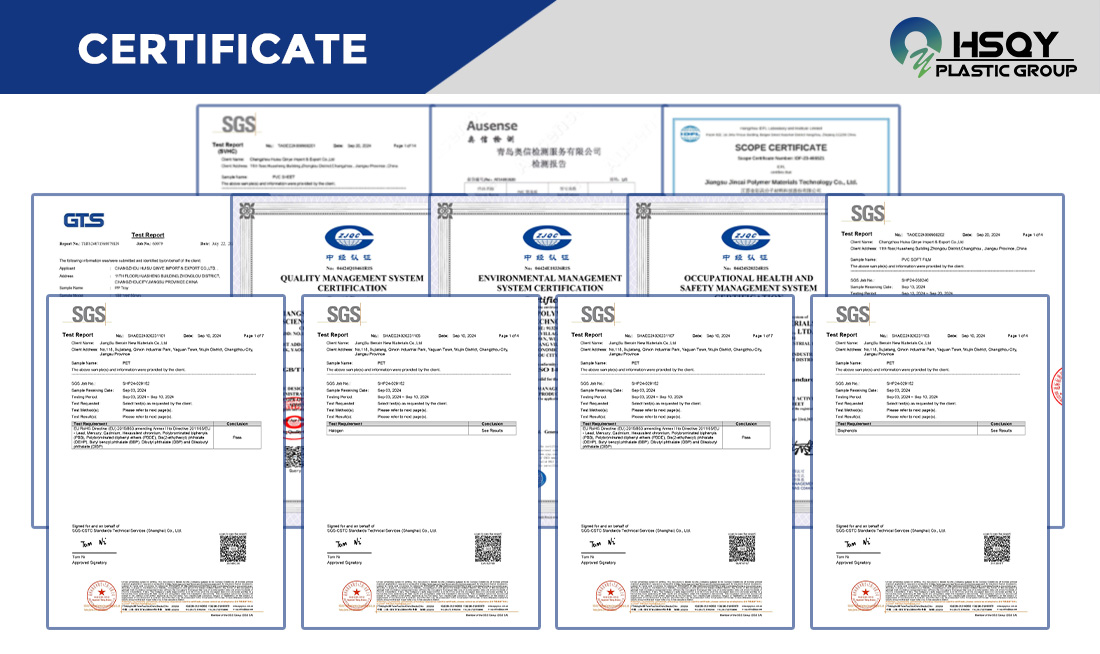
Current product information references SGS and ISO 9001:2008 documentation. Buyers requiring specific material declarations, chemical reports, quality-system certificates or market-specific documents should confirm the current document scope, revision and applicability to the selected PETG film grade.
Documentation for one film grade, decorative print or surface treatment should not automatically be assumed to apply to every customized wood grain PETG specification.
![HSQY wood grain PETG product and quality documentation]()
HSQY at International Industry Exhibitions
HSQY meets furniture manufacturers, panel producers, laminators, distributors and international buyers at plastics, furniture and interior-material exhibitions to discuss wood grain samples, decorative surfaces, lamination requirements and sourcing projects.
![HSQY international furniture and decorative materials exhibition]()
International Furniture Materials
Wood Grain Sample Discussions
Furniture Lamination Projects
Global Decorative Materials
Request a Wood Grain PETG Film Quote
Looking for wood grain PETG decorative film for MDF, cabinets, wardrobes, furniture fronts, doors or wall panels? Send HSQY your required wood pattern, surface finish, thickness, width, substrate and processing method for evaluation.
For custom wood designs, include a physical reference sample where possible together with your required grain direction, gloss level, texture, quantity, annual demand, adhesive system and any defined surface-performance requirements.
Request Samples & Quote Now