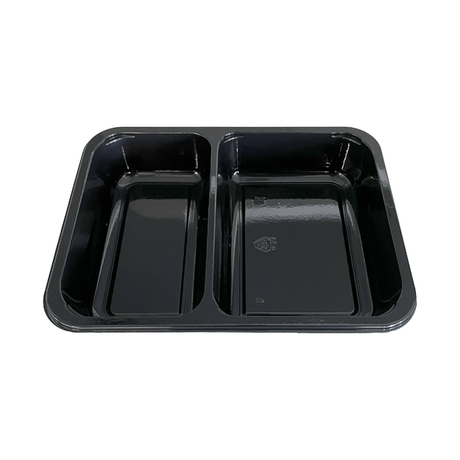
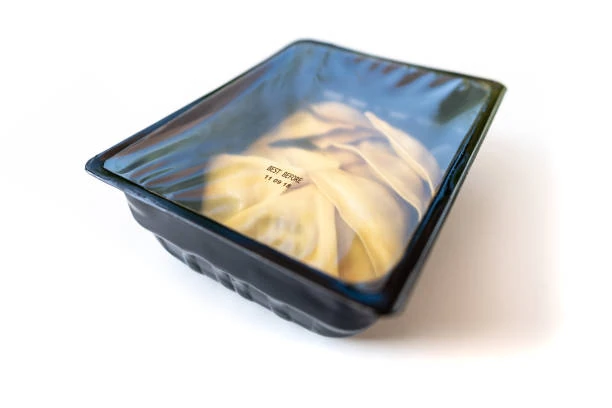
Source heat-sealable lidding film for chilled, frozen and oven-ready meals. HSQY matches the film grade and roll format to your CPET tray, sealing line and reheating process.
CPET tray lidding film is flexible rollstock that heat-seals to the rim of a crystalline polyethylene terephthalate (CPET) food tray. HSQY supplies PET-based and coated BOPET films, as well as PET/PE laminates, for qualified tray surfaces. The film can be specified for controlled peeling, a stronger closure, anti-fog clarity or gas barrier.
Start with the tray’s sealing surface, then specify how the pack will be stored, heated and opened. Confirm compatibility on your actual tray and line before committing to production volumes.
Send your current film spec or roll label, an unsealed tray and the sealer model. Describe what you want to improve, such as leaks, uneven peel or film tracking.
Plan a line trial ↘Start with the tray material and flange, food type, storage and cooking cycle. Decide how the pack should vent and open before shortlisting a film.
Check heating and venting ↘
Share your shelf-life target, artwork or winder limits so HSQY can review the film structure and roll specification.
Choose the opening behavior independently of the film’s heating rating. Test the seal through storage, transport and the intended heating cycle.
| Seal type | How it opens | When to evaluate it |
|---|---|---|
| Easy peel | Pull from a peel tab with controlled force. | Retail or catering meals where consumers open the pack by hand. |
| Heat-release peel | Holds its seal when cold and releases more easily after the validated heating cycle. | Frozen meals and oven-ready meals. Check release and hot peel on the filled pack. |
| Lock seal | Creates a stronger bond. The finished pack may require cutting or puncturing. | Sauced meals or packs that need a stronger closure in distribution. |
Use a lidding film rated for the intended oven cycle and validated with the specific tray and food. The film and tray each have their own thermal limits. For dual-ovenable packaging, validate the conventional oven and microwave cycles separately.
Confirm whether the finished pack calls for removal, peel-back, piercing, an integrated steam vent or leave-on cooking. Base consumer instructions on the filled-pack trial.
Use these reference values for your RFQ. Confirm final dimensions, tolerances, minimum order and lead time for the selected grade.
| Parameter | HSQY reference specification |
|---|---|
| Film structures | PET-based coated film, coated BOPET, BOPET/PE, PET/PE and project-specific high-barrier structures. |
| Thickness | Available in thicknesses of 20–100 μm, depending on the film grade. Common thicknesses are 25–60 μm. |
| Roll dimensions | 150, 230, 250 and 280 mm widths and 500 m lengths for selected rolls. Custom slitting, length, core ID, maximum roll OD and winding direction by project. |
| Seal and finish | Easy peel, heat-release peel or lock seal. Clear or custom printed. Anti-fog, puncture resistance and high-barrier options by grade. |
| Application temperature | Selected grades can be developed for applications within approximately −45°C to 220°C. Confirm the grade’s limits, exposure time and filled-pack performance. |
| Equipment | Rolls can be specified for manual, semi-automatic, rotary or fully automatic tray sealers. |
| Minimum order | Approximately 500–1,000 kg per specification. Structure, print and customization affect the quoted minimum. |
| Production lead time | Approximately 10–20 working days after final specification and order confirmation. |
HSQY can review trays, lidding film and sealer requirements together. Use the trial to agree on acceptance criteria before placing a bulk order.
Share the tray supplier, SKU, dimensions, flange width and finish, and any coating or recycled content. Send a physical tray if the sealing layer is unknown.
On your machine, confirm film orientation, temperature, dwell time and pressure at production speed. Check tooling contact, film tracking and flange cleanliness.
Measure peel and seal strength, leaks, punctures and film integrity after storage, transport and reheating. Agree on grade-specific documents and roll tolerances.
Set the target peel-force range, leak test method and line speed. Record when to test, such as after freezing, transport or reheating. Ask what sample length is available for your machine.
Fill the tray, check the flange for food, oil or moisture, and position the sealant side of the film against the tray. The sealing tool applies heat and pressure for the set dwell time. Let the seal develop as it cools, then cut or rewind the web according to your machine and inspect the finished pack.
For weak seals, first check film orientation, tooling contact and flange cleanliness. For tearing, check peel force, film gauge and tab design. For leaks, check corners and channels, tray cracks and punctures. Check the cook cycle and laminate bond if the film shrinks or delaminates. Ballooning during heating calls for a review of venting and the finished-pack instructions.
Anti-fog treatment helps moisture spread into a transparent layer. Test the treated side against the actual filling temperature, cooling rate and refrigerated storage conditions. For modified atmosphere packaging (MAP), specify the gas mix and oxygen and water vapor transmission targets (OTR and WVTR). Check the compatible barrier tray, seal continuity, residual oxygen and shelf life on the filled pack.
For printed lidding film, share editable artwork, colors, roll width, repeat length, registration marks, unwind and seal-side orientation. Confirm ink and adhesive suitability for the intended food-contact, storage and heating conditions.
Provide the destination market, food type, contact time and temperature, and whether the film is printed. Ask for applicable declarations and migration test documentation for the quoted construction and conditions of use.
Check the tray and film together against local collection, sorting and recycling requirements. Film layers, coatings, inks and adhesives can affect acceptance. A biodegradability claim requires evidence for the exact material and applicable test standard.
Agree on the relevant checks for gauge, web width, roll length, core and outside diameter, winding, appearance and seal or peel performance. Include barrier, anti-fog, puncture, print registration and laminate bond checks where specified.
Ask about protective inner bags, roll-end protection, batch labels, export cartons and pallet packing. Store rolls in their original packaging in a clean, dry area away from direct sun, heat and moisture.
Answers on tray compatibility, cooking, troubleshooting and bulk orders.
Film fit and roll specifications
Film compatibility depends on the exact flange surface. Tray formulation, recycled content and coatings can affect the bond. Use the tray SKU or a physical sample to qualify the film on your sealer.
Typical structures include heat-sealable coated PET, coated BOPET and PET/PE laminates. The coating or sealant layer is selected to match the CPET tray and the required seal and heat performance.
Approximately 25–60 μm is common. HSQY offers 20–100 μm, depending on the film grade.
Selected standard widths are 150, 230, 250 and 280 mm. HSQY can slit film to suit the sealer, tool layout and tray positions.
Selected standard rolls are 500 m. Custom lengths depend on gauge, roll weight and the sealer’s maximum roll diameter.
Heating, storage and opening
Only leave the film on if the selected grade and filled pack have been validated for that use. Depending on the pack, heating may require piercing, peeling back a corner, removing the film or leaving it on with a qualified vent.
Use a microwave-grade film validated with your tray, meal, power setting, reheating time and steam-release instructions.
Use a dedicated conventional-oven grade qualified for the intended temperature, cooking duration and tray load. Check the film’s technical data and filled-pack trial results for the approved conditions.
Dual-ovenable lidding film is a grade specified for both microwave and conventional oven use. Qualify both heating cycles on the finished pack.
Yes, with a qualified freezer-grade film. Verify film flexibility, seal integrity and resistance to impact and punctures after freezing, transport and thawing.
It is designed to hold a secure seal in cold storage and release more easily after a defined heating cycle. Validate the release behavior on the actual meal and tray.
Easy peel opens by hand with controlled force. Lock seal forms a stronger bond and can require cutting or puncturing to open.
Steam can accumulate faster than it escapes. Evaluate how the finished pack vents and verify the appropriate heating instructions with the film and tray supplier.
Performance and customization
Yes, with a qualified high-barrier grade and compatible barrier tray. Verify oxygen transmission, gas retention, hermetic sealing and shelf life using the product and gas mix you intend to pack.
Consider anti-fog when condensation obscures chilled products, especially after warm filling and cooling. Test the treatment at the intended storage temperature and duration.
Selected grades can tolerate limited grease or moisture. Keep the flange clean where possible and test the seal with the type and amount of contamination expected on your line.
Check for residue on the flange, an incomplete seal or channel, film wrinkles or punctures, and cracks in the tray. Verify film compatibility and the machine’s sealing settings.
Excessive seal strength, low film gauge, film damage or an undersized peel tab can make the film tear. Test the peel across the sealing window and at the intended opening temperature.
Yes. Specify the flange surface, desired opening behavior and opening temperature. Agree on an acceptable peel-force range using a sealed tray sample.
Yes. HSQY can quote logos, cooking instructions, codes and registration marks. Supply the artwork, repeat, roll format and conditions of use for the print and laminate review.
It depends on the film and tray construction and on local recycling infrastructure. Confirm acceptance for the exact pack, especially when the lidding contains PE or another polymer layer.
Conventional PET, BOPET and PET/PE grades have no general biodegradability claim. Any such claim requires evidence for the exact material under a recognized test standard.
Ordering and line trials
The reference minimum is approximately 500–1,000 kg per specification. Confirm the quoted MOQ for the film structure, printing and any thermal or barrier requirements.
Reference production time is approximately 10–20 working days after the film specification and order are confirmed. Ask for the delivery estimate for your destination.
Yes. Discuss sample or trial roll availability with HSQY and provide your roll dimensions, sealer model and intended storage and heating conditions.
Check tray-film fit, seal strength, peel force and leaks on your line. Recheck after relevant storage, transport and reheating cycles. Validate steam release, film integrity and grade-specific food-contact documentation.
Send HSQY your application and roll requirements for grade selection, sample availability and bulk pricing.
Let’s Find the Right Plastic Solution