


HSQY Plastic Group
Single-Compartment CPET Trays
Dual-ovenable packaging for ready meals.
Source single-cavity trays for chilled and frozen entrées, airline meals, and bakery products. Shortlist a model, then trial it with your food, lidding film, and sealing equipment.
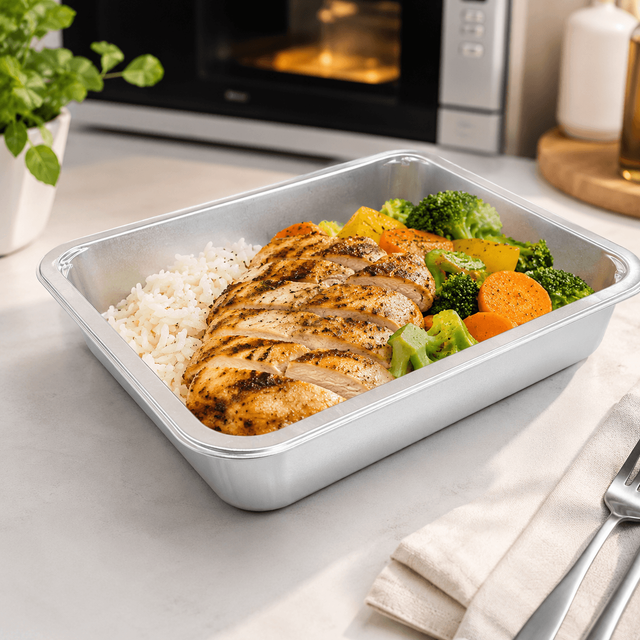
- 6–135 oz
- Published nominal capacities
- −40°C to +220°C
- Published range for selected models
- 34 tray options
- From small portions to bulk catering
Find the right tray for your meal
Filter HSQY’s 1-compartment CPET trays by nominal capacity or finish. Use the model number when requesting a drawing, sample, or quotation. Confirm your chosen color when ordering.
Compare sizes and case packs
Start with the outside dimensions for tooling fit, then confirm the usable fill volume with your recipe. The listed capacities are nominal. Units follow the published model specifications.
Swipe the table to see all specifications.
| Model | Capacity | Shape / color | Published dimensions | Tray wt. / case pack | Typical use |
|---|---|---|---|---|---|
| 028 | 6 oz | Round / white | Ø113 × 48 mm (approx.) | 9 g / 1,440 pcs | Desserts and side portions |
| 023 | 7 oz | Round / white | Ø113 × 48 mm (approx.) | 12 g / 1,440 pcs | Mini pies and baked desserts |
| 032 | 8 oz | Rectangular / black | 123 × 100 × 35 mm (approx.) | 10 g / 900 pcs | Small ready meals |
| LL01 | 10 oz | Rectangular / white | 6.30 × 3.94 × 1.30 in | 13 g / 600 pcs | Airline meals and sides |
| 009 | 12 oz | Rectangular / black | 7.01 × 3.94 × 1.50 in | Confirm weight / 900 pcs | Airline catering |
| 011 | 15 oz | Rectangular / black | 6.48 × 4.98 × 1.50 in | Confirm weight / 720 pcs | Individual entrées |
| 022 | 19 oz | Rectangular / white | 6.48 × 4.98 × 1.87 in | 17 g / 780 pcs | Deep or sauced entrées |
| HS29 | 20 oz | Oval / black | 194.5 × 147.5 × 45 mm | Confirm weight / 400 pcs | Airline and ready meals |
| 002 | 27 oz | Rectangular / black | 8.50 × 6.50 × 1.46 in | 32 g / 450 pcs | Retail ready meals |
| JC01 | 27 oz | Rectangular / black | 8.48 × 6.37 × 1.47 in (approx.) | 30 g (approx.) / 600 pcs | Industrial meal packing |
| 029 | 40 oz | Square / white | 187 × 187 × 52 mm (approx.) | 32 g / 400 pcs | Lasagna and casseroles |
| 003 | 88 oz | Rectangular / black | 12.44 × 10.31 × 1.97 in | 80 g / 140 pcs | Family meals and catering |
| 007 | 118 oz | Rectangular / black | 12.76 × 10.39 × 2.36 in | 100 g / 140 pcs | Bulk catering |
| HS04 | 135 oz | Rectangular / black | 12.52 × 10.31 × 3.15 in | Confirm weight / 120 pcs | Large-format catering |
Confirm the current drawing, weight, case pack, and minimum order for your chosen model. Dimensions are length × width × height unless a diameter is shown.
When a single cavity makes sense
A single-compartment CPET tray is a crystallized polyethylene terephthalate food tray with one uninterrupted cavity. It leaves the full footprint available for one dish and can simplify filling.
Ready meals & frozen entrées
Pack pasta, rice dishes, curries, or casseroles in one cavity. For sauced meals, check fill weight, headspace, and clearance around the sealing flange.
Ready-meal traysAirline & institutional meals
Shortlist compact trays for in-flight sides, rail catering, hospitals, or school meal programs. Check tray dimensions against the service equipment and cartons.
Airline meal traysBakery & oven-ready dishes
Trial round trays for pies and desserts, or larger trays for lasagna and family portions. Test recipe expansion and release for bake-in-pack use.
CPET baking trays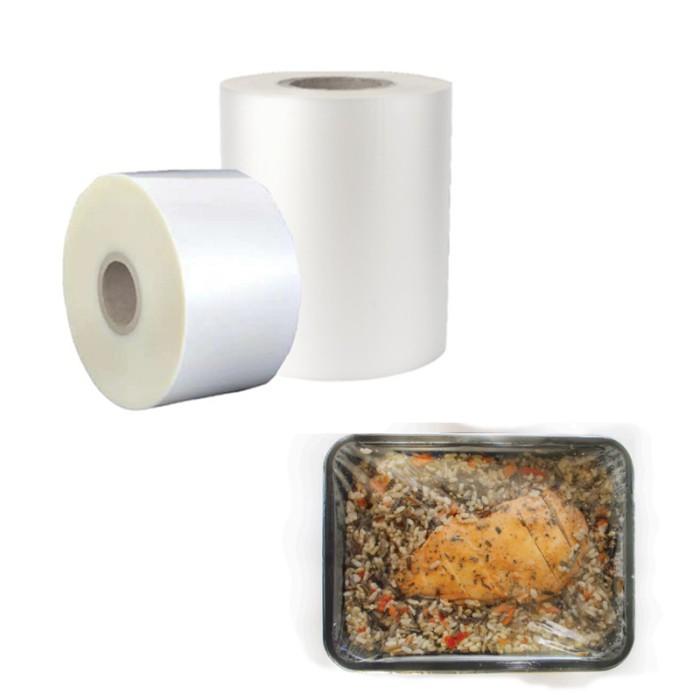
Trial the tray, film, and meal together
Selected HSQY tray models have a published temperature range of approximately −40°C to +220°C (−40°F to +428°F). Set the heating instructions using the exact model, recipe, film, and heating cycle.
-
Set the fill and check your tooling
Measure real portion volume, depth, and headspace. Check flange width and corner radii against your sealing die, and test denesting at line speed.
-
Establish the sealing window
Use a CPET-compatible film. Confirm seal temperature, pressure, and dwell time on a clean flange. Measure peel force or seal retention as specified.
-
Run the cold-chain and heating trial
Test filled, sealed samples through storage and transport. Check package integrity, tray shape, and heating uniformity after the intended oven or microwave cycle.
Additional trial checks
Film selection and modified atmosphere packaging (MAP)
Choose easy-peel film for controlled opening or a weld-seal film where your process calls for higher seal retention. Review ovenable, anti-fog, or printed films against the heating cycle, chilled display conditions, and print specifications.
For MAP, specify the gas mix, residual oxygen, headspace, oxygen transmission rate, storage conditions, and target shelf life. Verify barrier and package integrity for the complete tray and film system with the actual food.
Common line and pack defects
- Weak seals or sauce leaks. Check flange contamination, fill height, corner damage, film compatibility, and seal integrity after handling.
- Warping or uneven reheating. Review food depth, placement, hot spots, and the longest intended oven or microwave cycle.
- Frozen cracks or denesting jams. Test cold impact, corner thickness, stack compression, and dimensional consistency on the line.
How CPET compares with PP, APET, aluminum, and fiber
CPET is a candidate for packaged meals that need microwave and conventional-oven reheating. PP is commonly used for microwave-only programs, and clear APET for cold display. Aluminum is used for conventional-oven programs. With ovenable fiber, check the coating, barrier, and sealing process.
Qualify your tray and supplier
Use the approved drawing and trial samples as the reference for repeat orders. Start with an existing mold if it fits your line. HSQY can evaluate custom footprints, depths, colors, embossing, printed film, and export packing.
- Controlled drawing and sample
- Request the current drawing revision for the shortlisted model. Confirm the flange profile, tolerances, tray weight, stacking, and denesting against your production trial.
- Food-contact documentation
- Ask what documents and test reports are available for the exact tray, color, and film. Include your destination market, food type, storage conditions, and heating cycle.
- Lot traceability and change control
- Ask for an example carton label and agree on lot identification, incoming inspection criteria, and notice of changes to the material, tooling, or packing.
Compare bulk pricing and landed cost
Two trays with the same capacity can have different pack counts, freight costs, and tooling requirements. Ask for a quote against your order volume and delivery point.
- MOQ and pricing tiers
- Many standard models list a 50,000-piece minimum. The silver and gold trays list 100,000 pieces. Confirm the minimum per model and color, the price basis, and any separate tooling or lidding-film charges.
- Carton and pallet configuration
- Ask for trays per case, carton dimensions and gross weight, and pallet configuration. Use these figures to compare freight and warehouse space for the same number of trays.
- Sample and production timing
- State your required delivery date. Ask for the sample dispatch date, any tooling or print-approval schedule, and the production lead time after sign-off.
- Delivery terms and freight
- Give the destination port or delivery postcode. Confirm the currency, applicable Incoterm and named place, and which freight charges the quotation includes.
Single-compartment CPET tray FAQs
Tray selection & ordering
What is a one-compartment CPET tray?
It is a crystallized PET food tray with one open cavity for entrées, side dishes, baked goods, and larger prepared meals.
What capacities does HSQY offer?
The listed single-compartment range runs from the 6 oz Model 028 to the 135 oz Model HS04. These are nominal capacities. Confirm usable fill with your actual food and required headspace.
What shapes and colors are available?
The catalog includes rectangular, square, round, and oval trays. Listed finishes include black, white, blue, silver, gold, and select dual-color options. HSQY can evaluate custom colors by project.
What foods suit a single-compartment tray?
Typical applications include pasta, rice dishes, curries, casseroles, meat entrées, baked desserts, airline meals, and family portions.
How do I choose the right capacity and depth?
Measure your food’s actual volume at the target fill weight. Allow room for headspace and the seal, then trial the filled tray in your storage, transport, and heating conditions.
What is the difference between 1CP and 2CP?
A 1CP tray has one open cavity. A 2CP tray separates two portions, such as an entrée and a side.
Can HSQY make a custom tray?
HSQY can evaluate custom dimensions, depth, color, embossing, mold development, printed film, and export packing. Share a drawing or a sample of your existing tray.
What is the minimum order quantity?
Many standard models list 50,000 pieces. The silver and gold trays list 100,000 pieces. Confirm the MOQ and quotation unit for your tray, color, and packing configuration.
Can I request samples before a bulk order?
Yes. Send your model number or footprint, film and sealing equipment, and intended storage and heating conditions so HSQY can match samples to your trial.
What food-contact documents should I request?
Ask for documentation covering the supplied tray and film, destination market, food type, and actual conditions of use. Specify the color and any recycled-content requirement in your inquiry.
Are CPET trays recyclable?
CPET trays may be recyclable where local systems accept opaque or crystallized PET trays. Check local acceptance for the color and for the complete pack, including film and labels.
Heating & sealing
Are single-compartment CPET trays oven-safe?
Qualified models can be used in conventional ovens within approved time and temperature limits. Validate the tray with the actual recipe, film, and oven program.
Can I use a 1CP CPET tray in a microwave?
Qualified trays can be used for microwave reheating. Test the actual product at the stated microwave power and time, and check for hot spots from uneven food loads, oil, or sugar.
Can a CPET tray go directly from freezer to oven?
Selected models are suitable for this use after testing the filled pack for thermal shock under the actual storage and reheating conditions.
What temperature can HSQY CPET trays withstand?
Selected models have a published range of approximately −40°C to +220°C (−40°F to +428°F). Confirm the approved time and temperature for your model, food, and heating method.
Can the lidding film stay on during heating?
Only if the specific film is designed and tested for that use. Follow the approved instructions for removal, piercing, or venting.
Can CPET trays be sealed with easy-peel film?
Yes. Match a CPET-compatible easy-peel film to the selected flange and verify seal temperature, pressure, dwell time, and peel force on your line.
Are sealed CPET trays leakproof?
Leak resistance depends on the flange, film, seal quality, fill level, and handling. Test complete packs with your actual food after distribution and reheating.
Can single-compartment CPET trays be used for MAP?
Some models can be used for modified atmosphere packaging. Confirm the oxygen barrier and seal integrity of the tray and film together under your target storage conditions.
What is the difference between CPET and PP?
CPET grades can support conventional-oven applications as well as microwave reheating. PP is commonly specified for microwave and lower-temperature uses.
What is the difference between CPET and APET?
CPET is crystallized to improve heat resistance. Clear APET is typically specified for cold or ambient packaging.
Can raw food be baked in a CPET tray?
Some models support bake-in-pack applications. Validate the recipe, expansion, release, baking cycle, and handling with the actual tray.
Can CPET trays go under a grill or broiler?
Keep the tray away from open flames, broiler elements, and uncontrolled radiant heat. Use only the heating conditions approved for the selected tray.
Start your CPET tray inquiry
Use HSQY’s online inquiry form or choose a request below to open a prefilled email.
Samples & line trials
Include the tray model or footprint, food and fill volume, sealer model, and heating cycle.
Email a sample requestDrawings & QA documents
Include the model and color, destination market, and documents your quality team needs.
Email a document requestBulk pricing & delivery
Include the model, quantities per order and year, destination, and required delivery date.
Email a quote request
