Factory-direct plastic sheet solutions for global B2B buyers
About Us     Contact Us     Equipment     Our Factory     Blog     Free Sample
Please Choose Your Language

HSQY Plastic Group

2-Compartment
CPET Trays

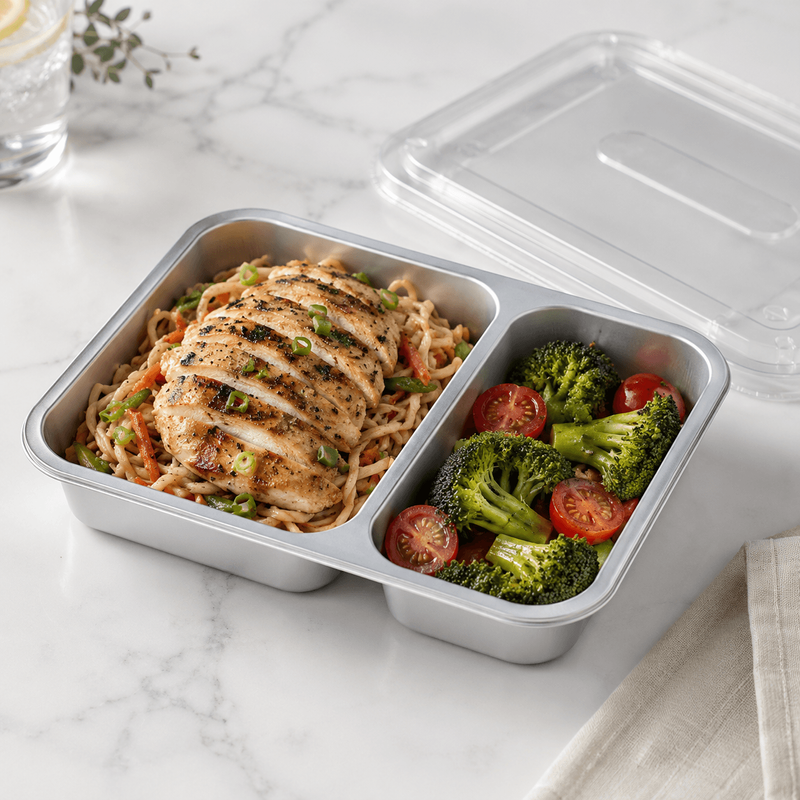
Pack an entrée and a side in one dual-ovenable tray. HSQY manufactures these trays for ready-meal producers, caterers and packaging distributors.

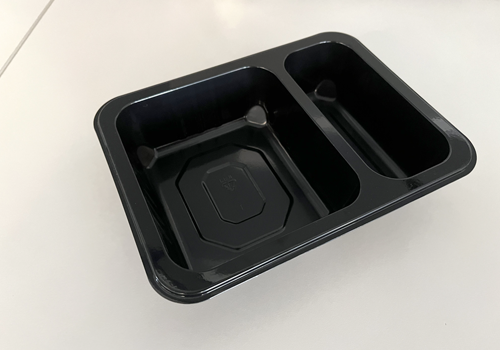
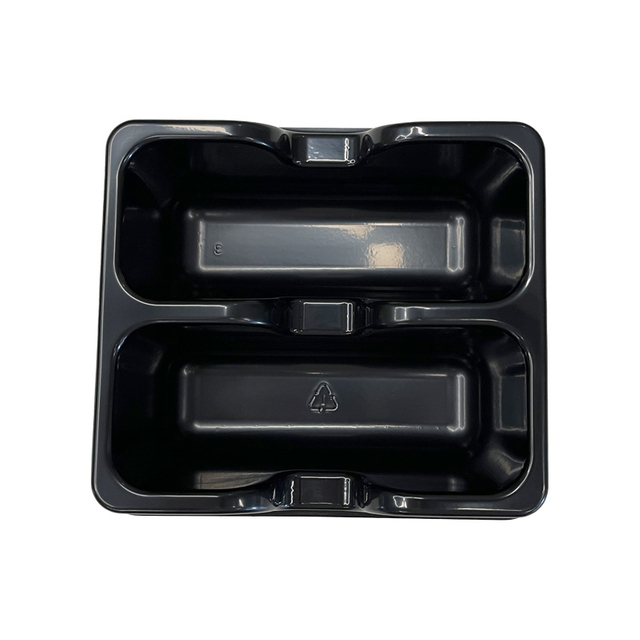
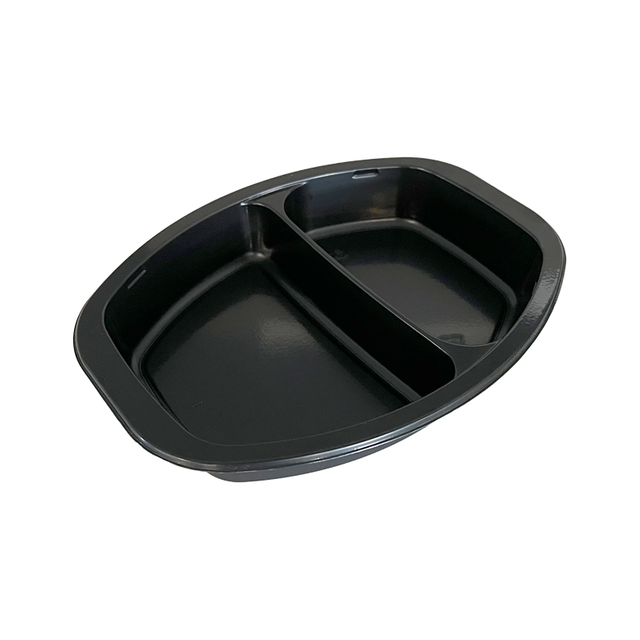
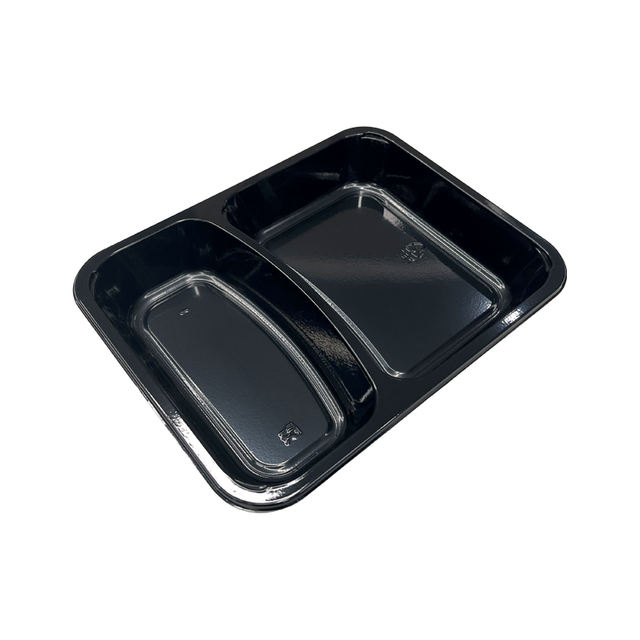
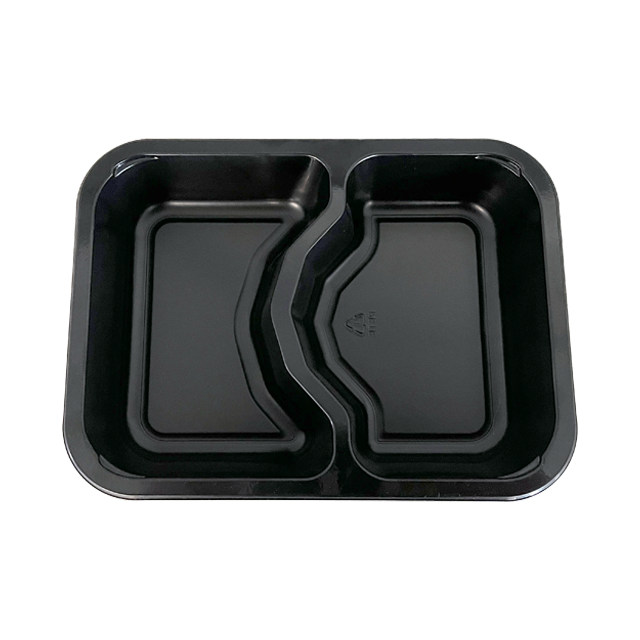
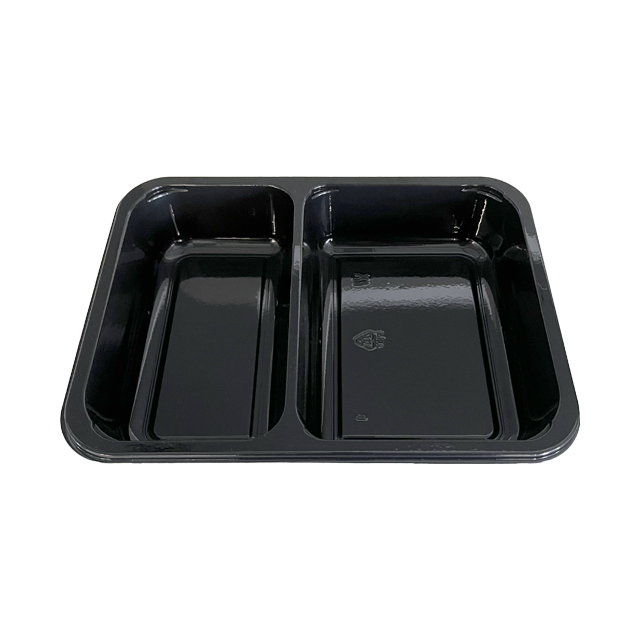
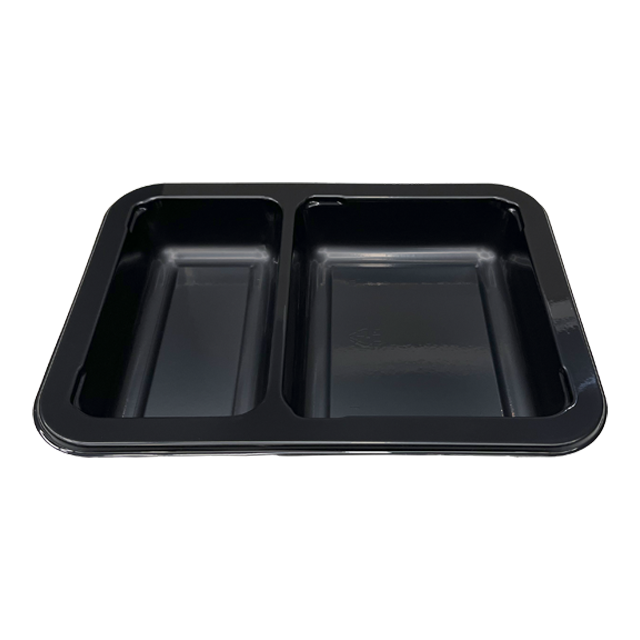
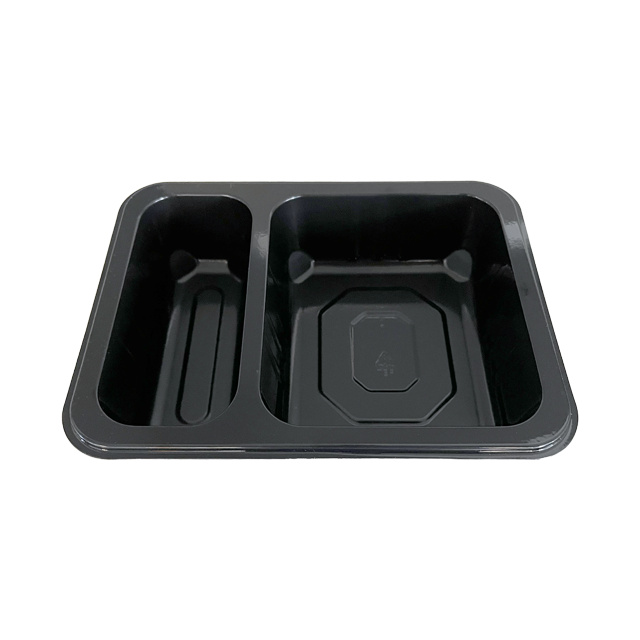
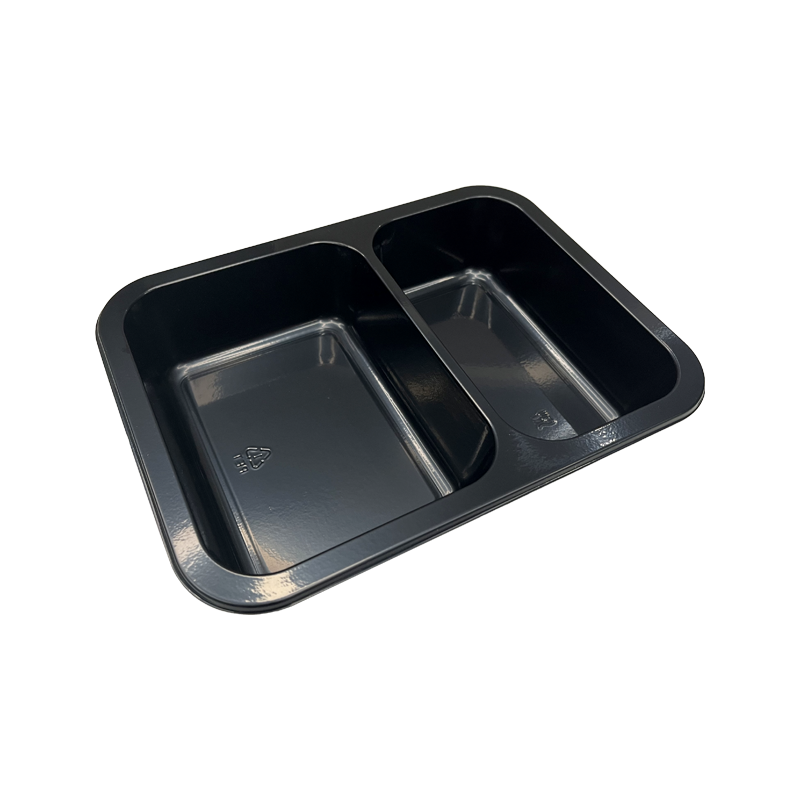
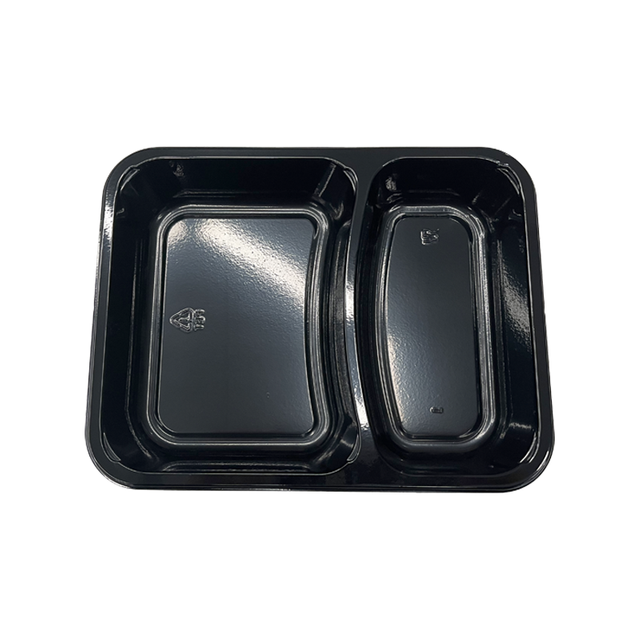
Black HSQY HS12 CPET tray with a deep main compartment and a smaller side compartment
Model HS12 34 fl oz · Deep two-compartment tray
Black tray capacity
15–41 fl oz
Reference range for selected models
−40°C to +220°C
Listed MOQ for black models
50,000 pieces

Compare 2-compartment tray models

Shortlist from 11 black CPET trays. Compare the outside dimensions, total capacity and carton quantity before requesting samples.

Quick fit comparison

34 fl oz · Check height
HS11 is 1.24 in (31 mm) high and HS12 is 2.01 in (51 mm) high. Check the clearance your filled tray needs.
41 fl oz · Check width and height
Model 018 is 6.36 in (162 mm) wide and 1.72 in (44 mm) high. Model 020 is 7.01 in (178 mm) wide and 1.34 in (34 mm) high.
Filter black trays by capacity
HSQY black two-compartment CPET tray specifications
Model Total capacity Outside dimensions L × W × H Listed weight Pieces / carton Typical application
15 fl oz444 mL 6.50 × 5.12 × 1.79 in165 × 130 × 45 mm 21 g 540 Small meal portions
15 fl oz444 mL 5.76 × 5.13 × 2.07 in146 × 130 × 53 mm 24 g 900 Deep compact meals
15 fl oz444 mL 7.66 × 5.81 × 1.18 in195 × 148 × 30 mm 21 g 600 Airline meal service
15 fl oz444 mL 7.36 × 5.39 × 1.42 in187 × 137 × 36 mm 20 g 600 Compact meal sets
25 fl oz739 mL 8.48 × 6.37 × 1.47 in215 × 162 × 37 mm 30 g 600 Supermarket ready meals
27 fl oz798 mL 8.50 × 6.46 × 1.50 in216 × 164 × 38 mm 33 g 360 Frozen and retail meals
34 fl oz1,006 mL 8.74 × 6.69 × 1.24 in222 × 170 × 31 mm 35 g 660 Large shallow meals
34 fl oz1,006 mL 8.70 × 6.61 × 2.01 in221 × 168 × 51 mm 35 g 450 Large deep meals
37 fl oz1,094 mL 8.50 × 6.46 × 1.50 in216 × 164 × 38 mm 32 g 400 Large delivery meals
41 fl oz1,213 mL 8.46 × 6.36 × 1.72 in215 × 162 × 44 mm 33 g 600 Large catering meals
41 fl oz1,213 mL 8.94 × 7.01 × 1.34 in227 × 178 × 34 mm 28 g 400 Wide shallow meal kits

Capacities are nominal totals in US fluid ounces. Metric figures are rounded conversions. Confirm the final tray dimensions, usable volume in each cavity, tray weight and carton specification against the approved drawing and quote.

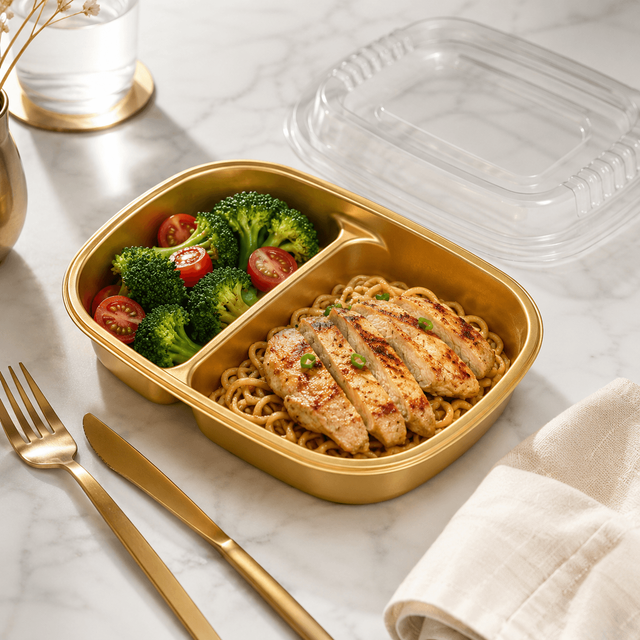
Gold and silver CPET trays

Specify the footprint, depth and cavity split for your meal. Both finishes list an MOQ of 100,000 pieces. Confirm heating compatibility for the final finish and filled tray.

Check your shortlisted trays

Include the model codes, maximum outside dimensions and sealer tooling so HSQY can help you check fit.

Choose a cavity split that fits your meal

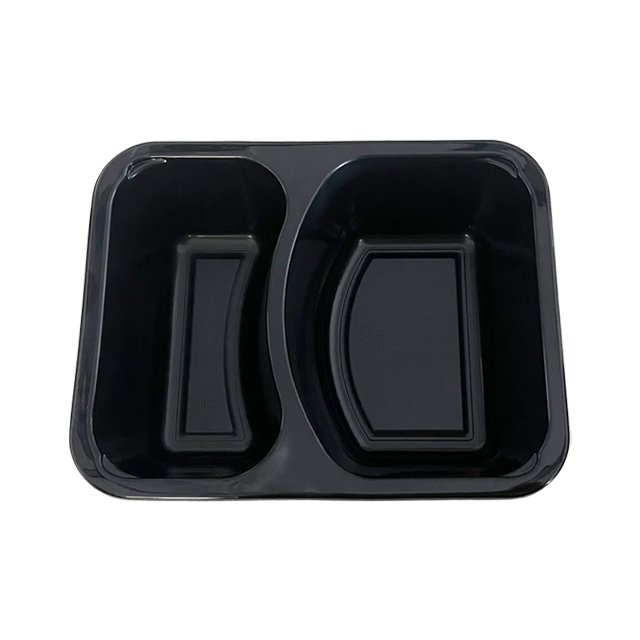
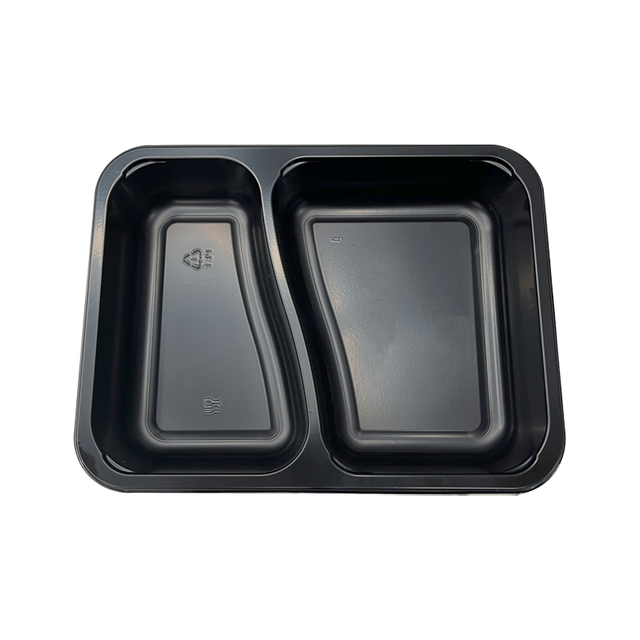
A 2-compartment CPET tray is a food tray made from crystallized polyethylene terephthalate (CPET), with two formed cavities for a main dish and a side. The divider helps control portions and keep components in place during packing and service.

Measure each portion by volume at its target fill weight. Allow headspace below the divider and sealing rim, then check the filled tray for sauce transfer in handling trials.

Frozen and chilled ready meals

Pack dishes such as rice and curry, meat and vegetables, or pasta and sauce. Check that both portions heat through on the same program.

Airline and institutional meals

Start with the required portion size. Check tray height and loaded stack clearance in the trolley, rack or oven.

Meal delivery and central kitchens

Choose a footprint that fits denesting, filling, case packing and transport. Check seal integrity after routine handling.

Validate the tray, film and sealer together

Use the actual meal, lidding film and equipment to test the pack at your target line speed and through your storage and reheating cycle.

  1. Check the tooling fit

    Check denesting, flange dimensions and divider height. Keep food off the sealing surfaces. If both cavities need their own seal, make sure the die contacts the divider ridge.

  2. Set the sealing window

    Trial time, temperature and pressure with a CPET-compatible film. Check peel force and leaks after storage and transport. For modified atmosphere packaging (MAP), validate barrier performance and shelf life on the filled pack.

  3. Approve the heating instructions

    Test the actual fill, tray and closure with your microwave or conventional oven program. Confirm whether to remove, vent or retain the film. Include thermal-shock testing for direct freezer-to-oven use.

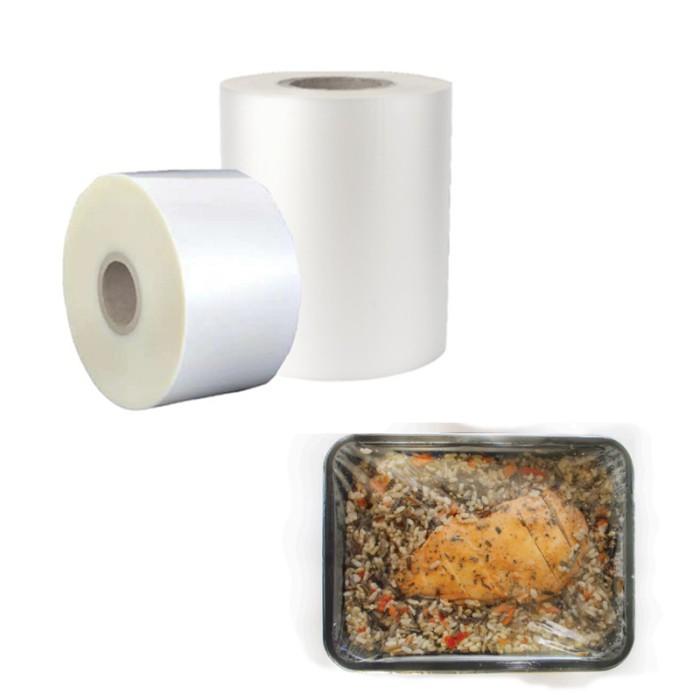
HSQY lidding film rolls alongside a sealed CPET meal tray
Specify easy-peel, anti-fog, printed or high-barrier film according to your pack trial.

From samples to a production order

Start with a tray or a drawing
Request samples of a listed model or submit a drawing for custom footprint, depth, divider height, cavity ratio, color or embossed branding.
Qualify the finished pack
Agree on dimensional checks, seal performance, frozen impact and stacking tests. Request food-contact documents for the tray, color and film matched to your destination market and conditions of use.
Confirm the supply terms
Ask for MOQ, carton dimensions, pieces per case, lead time and any tooling costs for the approved design. Share your first order quantity and estimated annual demand.
Production equipment and packed cartons in the HSQY CPET tray facility
HSQY CPET tray production and packing area

What to approve before a bulk order

Give packaging engineering, quality and purchasing one agreed specification for the tray and film before you issue the purchase order.

Dimensioned drawing
Request the drawing revision, outside tolerances, flange and divider dimensions, and usable fill volume for each cavity.
Food-contact documentation
Ask which documents cover the specified tray, color and lidding film in your destination market and at your intended reheat conditions.
Reference sample and traceability
Keep a signed-off sample from the line trial. Agree on lot identification and how material, color or tooling changes will be reviewed before shipment.

Compare bulk quotes on the same terms

Use the same tray specification, order volume and delivery point. Compare the delivered cost per 1,000 trays and keep one-time charges separate.

Pricing and order minimums
Ask for the pricing unit, price breaks and MOQ by model and color. Request separate lines for lidding film and any sample or tooling charges.
Carton and pallet details
Confirm pieces per carton, outer carton dimensions, gross weight and cartons per pallet for freight and warehouse planning.
Production and ship dates
Ask what starts the lead time, such as sample approval or receipt of deposit. Confirm the production lead time and estimated ship date.
Shipping terms and destination
Request the Incoterm and named place. Include any freight and import costs your team will pay when calculating the delivered cost.

2-Compartment CPET Tray FAQ

Tray selection and reheating

What is a 2-compartment CPET tray?

It is a crystallized PET food tray with two cavities, typically one for a main dish and one for a side. Ready-meal producers use them for portioned chilled and frozen meals.

What capacities does HSQY offer?

The 11 black models range from 15 to 41 US fl oz in nominal total capacity. Gold and silver trays can be specified to a project drawing. Ask for the usable volume of each cavity when comparing models.

Are 2-compartment CPET trays oven-safe?

Selected HSQY models are designed for conventional-oven use under validated conditions. Confirm the maximum temperature and time for the exact tray, food load and closure. Selected models list a reference tray range of approximately −40°C to +220°C.

Can 2-compartment CPET trays go in a microwave?

Use a model qualified for microwave reheating. Test both portions at the intended power and time, since they can heat at different rates. Verify the exact color formulation and follow the film instructions for the approved pack.

Can these trays go straight from freezer to oven?

Selected trays can support direct freezer-to-oven use. Validate thermal shock from the intended starting temperature, check the tray and seal, and confirm the heating program with the actual meal.

How do I choose the compartment ratio?

Measure the working volume at the target fill weight of each portion, then allow room below the divider and flange. Trial the proposed cavity split with your actual meal.

What foods work well in a two-compartment tray?

Typical combinations include rice and curry, an entrée and vegetables, or pasta and sauce. For pourable sauces, test transfer between cavities during handling and reheating.

How do 1-, 2- and 3-compartment CPET trays differ?

A 1-compartment tray has one continuous cavity. A 2-compartment tray separates a main dish and one side. A 3-compartment tray holds three portions separately and requires a third fill position.

Can CPET trays be recycled?

CPET trays may be recyclable where local programs accept opaque or crystallized PET trays. Check local acceptance for the tray color, film, labels and other components of the pack.

Sealing and bulk purchasing

Are the two compartments liquid-tight?

Liquid separation depends on the fill level, divider height and seal over the divider. Test the actual sauce with a tilt and transport trial, especially when the tray will be carried on its side.

Can these trays be sealed with easy-peel film?

Yes. Choose a CPET-compatible easy-peel film, set time, temperature and pressure on your sealer, and verify peel force after the intended storage cycle.

Can the film seal across the divider?

Yes, when the divider ridge and sealing tool are designed to make contact. Check divider height, flatness and cleanliness, then test for seal channels across the ridge.

What determines whether a sealed tray leaks?

Leak resistance depends on the flange, divider, film, sealing settings and handling. Test the filled pack after chilling or freezing, transit and your approved heat cycle.

Can two-compartment CPET trays be used for MAP?

Selected tray and film combinations can be evaluated for modified atmosphere packaging. Confirm the barrier requirement, headspace in both cavities, gas retention, seal integrity and shelf life with the actual food.

Can HSQY customize the compartment ratio?

Yes. Send the individual food weights and volumes, target footprint and depth, sealer drawing or model number, heating conditions and annual demand for a tooling review.

What is the minimum order quantity?

HSQY lists 50,000 pieces for its 11 black models and 100,000 pieces for each gold or silver option. Confirm the final MOQ for your mold, color and packing specification in the quote.

Can I get samples for a line trial?

Yes. Request the model codes or send your drawing. Share your film specification, storage and heating cycle so you can trial the tray on your line before a bulk order.

Get a quote or request samples

Share a model code or the dimensions of your current tray. HSQY can recommend a size, review lidding compatibility and quote bulk supply.

Include in your inquiry

  • Tray dimensions and fill volume for each cavity
  • Sealer model, film and storage conditions
  • Reheat method, temperature and time
  • Order volume, destination and required documents
START AN INFORMED RFQ

Let’s Find the Right Plastic Solution

Looking for plastic sheets, films, food packaging, or a customized solution? Tell us your material, size, quantity, and application requirements. Our team will help you select the right product and provide a competitive quote.
√  Application and conversion process
√ Thickness, width and roll format
√ Color, clarity and surface finish
√ Function, documents, quantity and destination
Request Our Best Quotation

Our materials experts will help identify the right solution for your application, put together a quote and a detailed timeline.

Plastic Sheet

Trays

Lidding Films

Support

© COPYRIGHT  2026 HSQY PLASTIC GROUP ALL RIGHTS RESERVED.