Compact • JC03
22 oz
Portion-controlled meals for airlines, schools and institutional catering.
View JC03
HSQY Plastic Group • Factory-direct food packaging
Package an entrée and two sides in one tray. Source three-compartment CPET trays for frozen and chilled ready meals, with dual-ovenable options and compatible lidding films.
Compare tray modelsFor food manufacturers, institutional caterers and packaging distributors.
Tray selection
Start with portion size, then check tray depth, sealing-tool fit and case count. The nominal capacity is for the whole tray. Ask for the cavity drawing to check each portion.
Compact • JC03
Portion-controlled meals for airlines, schools and institutional catering.
View JC03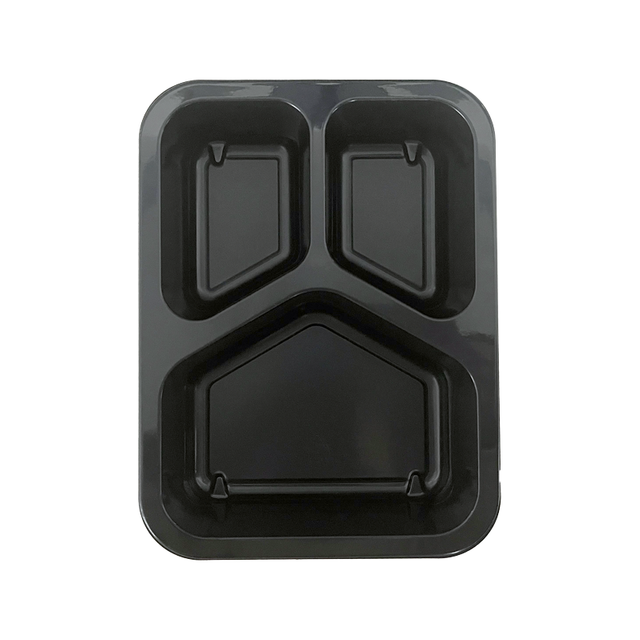
Standard • 006
An entrée and two sides for frozen retail, central kitchens and foodservice.
View 006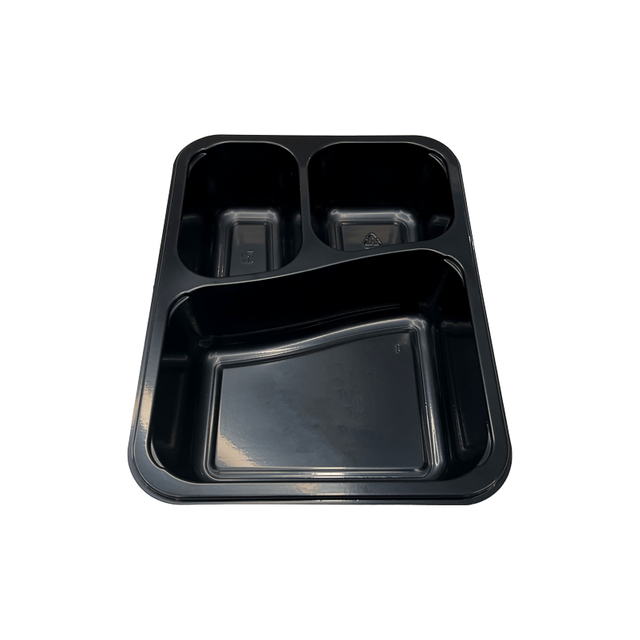
Request the dimensions, case pack and sample availability for these separate three-compartment listings.
Send a drawing, the current tray model or a physical reference. If you already have sealing tooling, include the sealer model and tooling drawing or photos.
Applications
A three-compartment CPET tray is made from crystallized polyethylene terephthalate. Its three formed cavities help portion an entrée and two sides for filling, sealing, chilled or frozen distribution and reheating under validated conditions.

Pack complete frozen entrées, chilled supermarket meals and private-label meal sets.
Standardize portions across institutional menus, canteens and Meals on Wheels programs.
Check tray footprint, stack height and reheating requirements for transport catering.
Match the tray to batch filling, transport stacking and reheat-and-serve workflows.
Line and package validation
Run the exact tray and lidding film on your equipment at production speed, then test the sealed meal through its expected storage, handling and reheating cycle.
Measure the actual volume and target fill weight for the entrée and both sides. Leave headspace and keep sauces below the dividers and away from sealing surfaces.
Check denesting, filler alignment and flange fit. Where the design calls for internal seals, verify tool contact across both divider ridges. Set temperature, pressure and dwell time with the selected film.
Check seals after chilling or freezing, compression and vibration. Measure food temperature in every cavity during the intended oven or microwave cycle, then verify the film instructions.
Selected HSQY models list approximately −40°C to +220°C (−40°F to +428°F). Validate the time and temperature on the exact tray, film and meal. Follow the approved instructions for removing, piercing or venting the film. Keep CPET away from open flames and exposed broiler elements.
Discuss easy-peel, weld-seal, anti-fog or printed options. For MAP projects, qualify gas retention and barrier performance on the complete pack.
Explore CPET lidding filmsAsk for sample quantities that cover filling, sealing, distribution and reheating checks. Specify which tray and film you want to evaluate together.
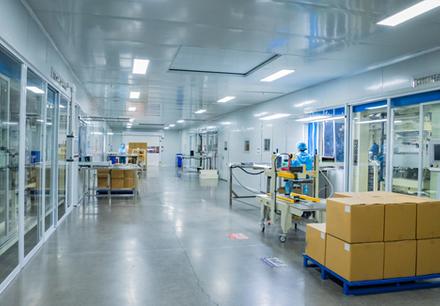
Factory supply
Identify the tray and film, destination market, food type and heating conditions so HSQY can review the scope of the request.
Many black tray models list an MOQ of 50,000 pieces. Request the confirmed minimum, pricing basis and delivery terms for the exact SKU and order volume.
Buyer questions
Answers on model choice, sealing, reheating and wholesale orders.
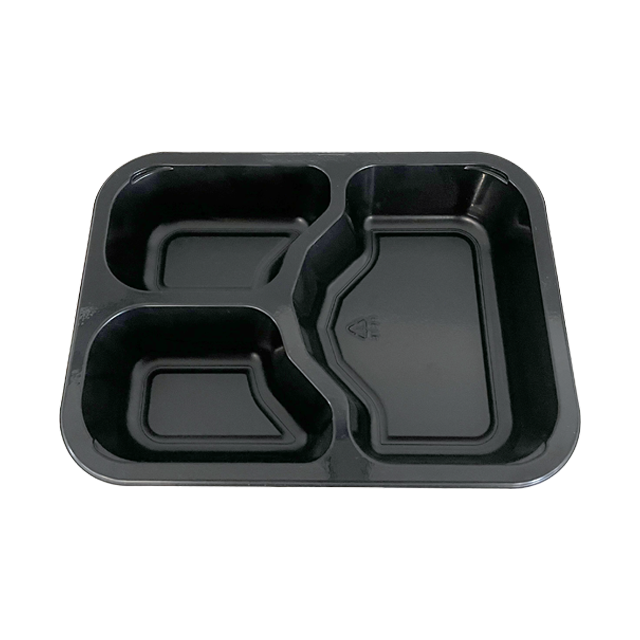
It is a food tray made from crystallized polyethylene terephthalate (CPET), with three molded cavities for an entrée and two separately portioned sides.
HSQY’s rectangular black models range from 22 to 47 oz in nominal total capacity. Use the approved drawing and a filled sample to check usable volume in each cavity.
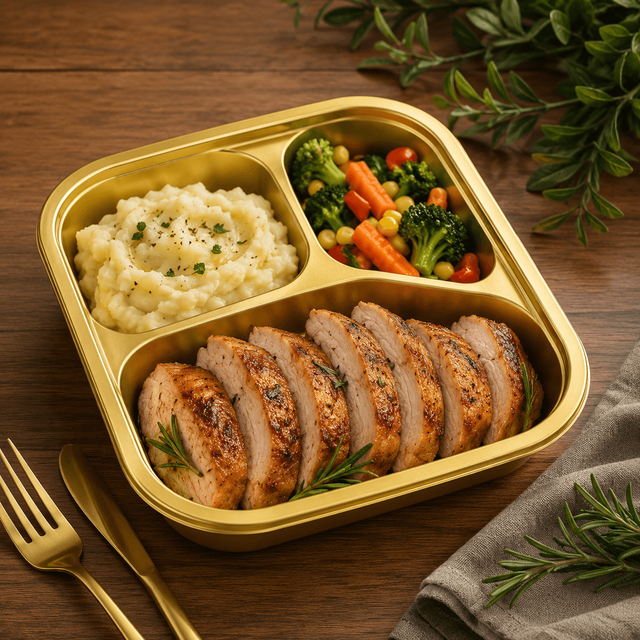
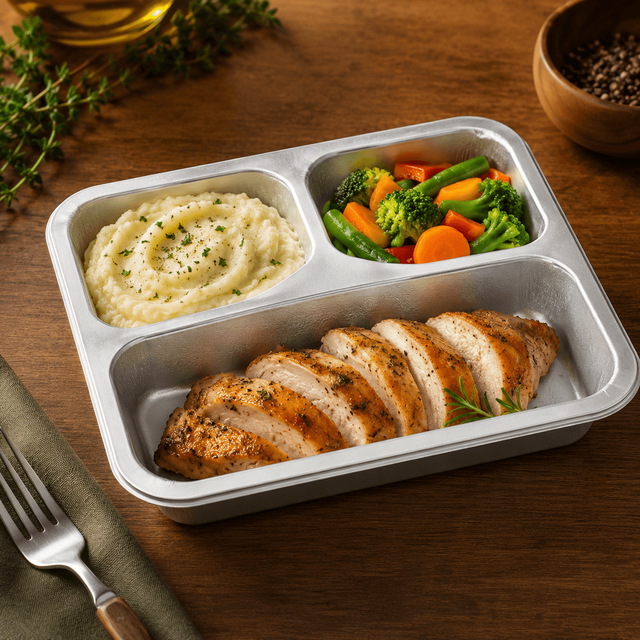
The catalog lists ten rectangular black models and two additional listings with gold and silver finishes. Ask for current availability and specifications for the selected tray.
Black is the standard color for the model range. Gold and silver finishes are listed separately. White, natural and custom colors are subject to project review.
Selected models support conventional oven and microwave reheating. Validate the tray, film, all three food portions and the intended heating cycle together.
Qualified trays can be used for microwave reheating. Run the final power and time settings with a filled tray and check the food temperature in every cavity.
Selected models can support freezer-to-oven use. Test for thermal shock with the actual frozen meal, tray, lidding film and oven program.
HSQY lists approximately −40 to +220 °C (−40 to +428 °F) for selected models. Confirm the approved time and temperature limits for your exact tray, film and meal.
Molded dividers separate portions. Thin sauces and juices can cross the ridges during filling, transport or reheating. Test your fill levels and handling conditions with the actual meal.
Record each portion’s target weight and volume, including sauce. Check the usable volume and headspace in each cavity with a filled sample.
Portion mass, moisture, density, shape and starting temperature affect heating. Measure the center temperature in all three cavities when developing reheating instructions.
Keep the film in place only if the exact film and heating cycle have been validated for that use. Follow the approved instructions for removing, piercing or venting the film.
Yes. Choose a CPET-compatible film and check the seal temperature, pressure, dwell time and peel force on your equipment.
Yes, when the tray and sealing tool are designed to make contact at both ridges. Check ridge height, flatness, cleanliness and pressure with the selected film.
Leak resistance depends on the tray flange, divider seals, film, sealing settings and handling. Test filled and sealed packs after transport and reheating.
Selected tray and film combinations may be suitable for modified atmosphere packaging (MAP). Check the required barrier performance, seal integrity and gas retention for your product.
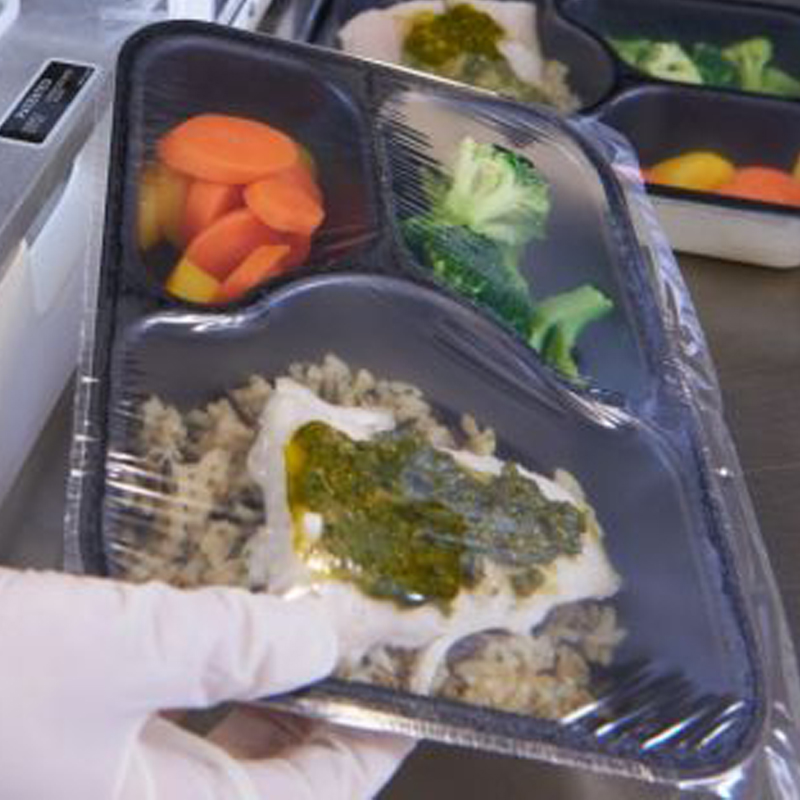
Typical examples include chicken with rice and vegetables, pasta with two sides, and portioned meals for hospitals, schools and airline catering.
A 2CP tray has two cavities for a main dish and one side. A 3CP tray has three cavities for a main dish and two sides.
CPET is commonly specified for qualified conventional oven and microwave cycles. Polypropylene (PP) is commonly used for microwave reheating and lower-temperature applications. Confirm the specific grade and heating limits before choosing either material.
HSQY can evaluate a custom cavity ratio. Share the target portion weights and volumes, sauce consistency, tray dimensions, sealing equipment and estimated annual demand.
Recycling depends on whether local collection and sorting systems accept the specific tray. Check the color, film and label materials against the requirements in your destination market.
Many HSQY model listings show a minimum of 50,000 trays. Ask for the quoted MOQ and ordering unit for your model, color, packaging and customization.
Yes. Use samples to check fit, filling, sealing, storage, transport and reheating with your actual meal, film and equipment.
Share the tray model or drawing, target portion weights, storage and reheating conditions, film and sealer details, order volume, packing requirements and destination market.
Samples and wholesale pricing
Send your current drawing or tray model and the meal you plan to pack. HSQY can review catalog options, lidding film and custom tooling for your application.